-
Glass Fused To Steel Tanks (596)
-
Stainless Steel Tanks (434)
-
Fusion Bonded Epoxy Tanks (592)
-
Galvanized Steel Tanks (321)
-
Aluminum Dome Roofs (1316)
-
Wastewater Storage Tanks (231)
-
Welded Steel Tanks (457)
-
Pressure Vessels (295)
-
Anaerobic Digester (201)
-
Industrial Water Tanks (349)
-
Glass Lined Steel Tanks (180)
-
Bolted Steel Tanks (390)
-
Sludge Storage Tank (115)
-
Biogas Storage Tank (173)
-
Leachate Storage Tanks (133)
-
Agricultural Water Storage Tanks (179)
-
Fire Water Tank (166)
-
Grain Storage Silos (146)
-
Biogas Projects (425)
-
Wastewater Treatment Projects (788)
-
Double Membrane Roof (223)

|
Welded Steel Emergency Fuel Oil Storage Tanks with Internal Floating Roofs: Guarantees long-term readiness and fuel quality
| Brand Name: | Shijiazhuang Zhengzhong Technology Co., Ltd (Center Enamel) |
|
Detail Information |
|||
Product Description
Welded Steel Emergency Fuel Oil Storage Tanks with Internal Floating Roofs: Guarantees long-term readiness and fuel quality
In critical infrastructure sectors—ranging from healthcare and data centers to national security and emergency response hubs—the reliability of backup power is non-negotiable. These facilities rely on massive reserves of diesel or heavy fuel oil to power generators when the primary grid fails. However, the greatest threat to emergency power is not the mechanical failure of the generator itself, but the degradation of the fuel during extended periods of inactivity. Fuel that sits stagnant in a traditional tank is subject to oxidation, moisture contamination, and microbial growth, all of which can lead to engine failure at the exact moment power is needed most. The Welded Steel Emergency Fuel Oil Storage Tank with an Internal Floating Roof has been engineered to solve this exact problem. This specialized containment system is utilized because it guarantees long-term readiness and fuel quality by creating a stable, isolated environment that protects the energy source from the damaging effects of atmospheric exposure.
Shijiazhuang Zhengzhong Technology Co., Ltd, operating globally as Center Enamel, is a premier leader in the design and fabrication of high-performance energy storage solutions. We specialize in Welded Steel Emergency Fuel Oil Storage Tanks that integrate advanced Internal Floating Roof technology. Our engineering philosophy is centered on the concept of "Ready-to-Use" infrastructure. We recognize that emergency fuel is a dormant asset that must remain in pristine condition for years. By utilizing high-grade steel and precision welding techniques, we provide a robust containment shell that meets the most rigorous international standards, such as those set by the American Petroleum Institute. Our tanks are designed to be a permanent and dependable fortress for emergency energy, ensuring that when the time comes, the fuel is as clean and effective as the day it was delivered.
The Challenge of Long-Term Fuel Preservation
Storing fuel for emergency use is fundamentally different from storing fuel for daily consumption. In a standard operational tank, the constant turnover of fuel prevents significant aging. However, emergency reserves may sit for long durations.
Preventing Oxidative Degradation: When fuel is exposed to oxygen, it undergoes a chemical process called oxidation. This leads to the formation of gums and insoluble particulates that can clog high-pressure fuel injectors and filters. By placing a floating deck directly on the liquid surface, the system eliminates the air-liquid interface, effectively blocking oxygen from reacting with the fuel. This proactive measure is the primary way the tank guarantees long-term readiness and fuel quality.
Eliminating Moisture and Sludge: In a traditional fixed-roof tank, the "vapor space" above the fuel is subject to temperature fluctuations. As the air in this space cools, moisture condenses into liquid water and falls into the fuel. This water accumulates at the bottom, fostering the growth of bacteria and fungi that create a thick, corrosive sludge. The internal floating roof removes the vapor space entirely, preventing the condensation cycle and keeping the fuel dry and free from biological contamination.
The Critical Role of Aluminum Dome Roofs
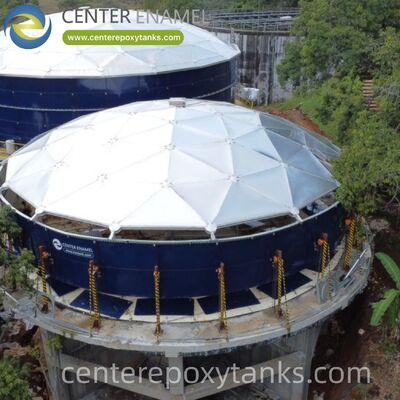
For emergency storage, where the tank may be located in harsh or varied climates, the integration of Aluminum Dome Roofs is an essential component of the design. While the internal floating roof manages the fuel surface, the Aluminum Dome Roof provides the ultimate external shield.
Superior Weather Protection: The Aluminum Dome Roof acts as a permanent, maintenance-free cover that protects the internal floating roof from rain, snow, and wind-blown debris. For emergency tanks, ensuring that no external water enters the system is vital for maintaining the stability of the fuel.
Corrosion Resistance and Longevity: Aluminum is naturally resistant to atmospheric corrosion, making it an ideal choice for roofs in coastal or industrial environments. Unlike steel roofs, which require regular sandblasting and repainting to prevent rust, an aluminum dome remains structurally sound for decades without intensive maintenance. This ensures the long-term readiness of the entire storage facility.
Stable Internal Environment: The reflective properties of aluminum help to minimize heat absorption from sunlight. By keeping the internal temperature of the tank more consistent, the dome reduces the thermal stress on the fuel and the internal sealing systems, further extending the shelf life of the emergency reserves.
Clear-Span Engineering: Because aluminum is lightweight yet strong, these domes can span large diameters without the need for internal support columns. This is a critical feature for tanks with internal floating roofs, as it allows the deck to move vertically without obstruction, ensuring a perfect seal at all fuel levels.
Structural Integrity through Welded Steel Fabrication
The foundation of any high-reliability storage system is its structural shell. Welded Steel is the undisputed material of choice for emergency fuel storage due to its unmatched physical properties.
Monolithic Strength: Precision welding fuses steel plates into a continuous, leak-proof structure. This provides the structural integrity necessary to hold immense volumes of fuel safely, resisting hydrostatic pressure and external environmental loads such as high winds or seismic activity.
Precision Construction: Our welding processes ensure that the tank shell remains perfectly cylindrical and vertically aligned. This precision is mandatory for the operation of the internal floating roof, allowing the deck's seals to maintain constant, airtight contact with the tank wall throughout the entire height of the structure.
Secure Containment: The permanence of a welded steel structure provides peace of mind for facilities that cannot afford a leak or a failure. These tanks are designed for a service life that spans many decades, making them a cost-effective and reliable investment for critical infrastructure.
Product Advantages and Features
The Welded Steel Emergency Fuel Oil Storage Tank with an Internal Floating Roof provides a comprehensive set of benefits for mission-critical facilities:
Guaranteed Fuel Purity: By isolating the fuel from air and moisture, the system prevents the two primary causes of fuel failure: oxidation and microbial growth.
Maximized Readiness: The tank ensures that the stored fuel remains within its required technical specifications for much longer than traditional storage methods, reducing the need for expensive fuel "polishing" or frequent replacement.
Enhanced Safety and Fire Protection: By eliminating the vapor space, the risk of an explosive atmosphere forming inside the tank is virtually removed. This is a critical safety feature for tanks located near hospitals, data centers, or government buildings.
Environmental Compliance: The internal floating roof and Aluminum Dome Roof work together to minimize the emission of volatile vapors, ensuring the facility meets all local air quality regulations.
Reduced Operational Costs: While the initial engineering is sophisticated, the long-term savings are significant. The reduction in fuel degradation, the prevention of tank corrosion, and the low-maintenance nature of the aluminum dome result in a lower total cost of ownership.
Product Applications
This advanced storage technology is utilized wherever the failure of the power supply is not an option:
Healthcare and Medical Complexes: Hospitals rely on these tanks to store the diesel required for life-saving backup systems, ensuring that power remains available for operating rooms and intensive care units.
Data Centers and Tech Hubs: Large-scale server farms use Welded Steel Emergency Fuel Oil Storage Tanks to guarantee that their generators are fed with high-quality, sludge-free fuel during a grid outage.
National Security and Military Bases: Strategic defense facilities utilize these tanks for the secure, long-term containment of fuel reserves that must be ready for use at a moment's notice.
Public Utility and Water Treatment Plants: Critical infrastructure that provides water and electricity to the public relies on these tanks to maintain service continuity during emergencies.
Financial and Telecommunications Centers: Institutions that manage global communication and financial transactions use these storage systems to protect their backup power assets from fuel-related failures.
Company Advantages: Why Choose Center Enamel?
Partnering with Center Enamel gives you access to world-class engineering and a commitment to quality that is unmatched in the storage industry.
Advanced Design Capabilities: Our engineering team works closely with each client to design a tank that meets the specific requirements of their site and the fuel being stored. We specialize in the integration of Aluminum Dome Roofs and IFR technology.
Strict Quality Control: Every weld is subjected to non-destructive testing, including radiography and vacuum box testing, to ensure that the tank shell is completely flawless and leak-tight.
Global Expertise: With a history of successful projects on every continent, we possess the logistical and technical experience to support international infrastructure development.
Integrated Solutions: We provide the entire containment system, ensuring that all components—from the welded steel shell to the aluminum dome—work together in perfect harmony to protect your energy assets.
Conclusion
In an era of increasing reliance on continuous power, the quality of your emergency fuel is just as important as the generators that use it. The Welded Steel Emergency Fuel Oil Storage Tank with an Internal Floating Roof is a proven engineering solution that guarantees long-term readiness and fuel quality. By reinforcing this system with an Aluminum Dome Roof, Center Enamel provides a comprehensive, low-maintenance, and highly reliable storage environment that protects your most critical assets.