-
Glass Fused To Steel Tanks (596)
-
Stainless Steel Tanks (434)
-
Fusion Bonded Epoxy Tanks (592)
-
Galvanized Steel Tanks (321)
-
Aluminum Dome Roofs (1336)
-
Wastewater Storage Tanks (232)
-
Welded Steel Tanks (457)
-
Pressure Vessels (295)
-
Anaerobic Digester (201)
-
Industrial Water Tanks (349)
-
Glass Lined Steel Tanks (180)
-
Bolted Steel Tanks (389)
-
Sludge Storage Tank (115)
-
Biogas Storage Tank (173)
-
Leachate Storage Tanks (133)
-
Agricultural Water Storage Tanks (179)
-
Fire Water Tank (166)
-
Grain Storage Silos (146)
-
Biogas Projects (425)
-
Wastewater Treatment Projects (978)
-
Double Membrane Roof (223)
|
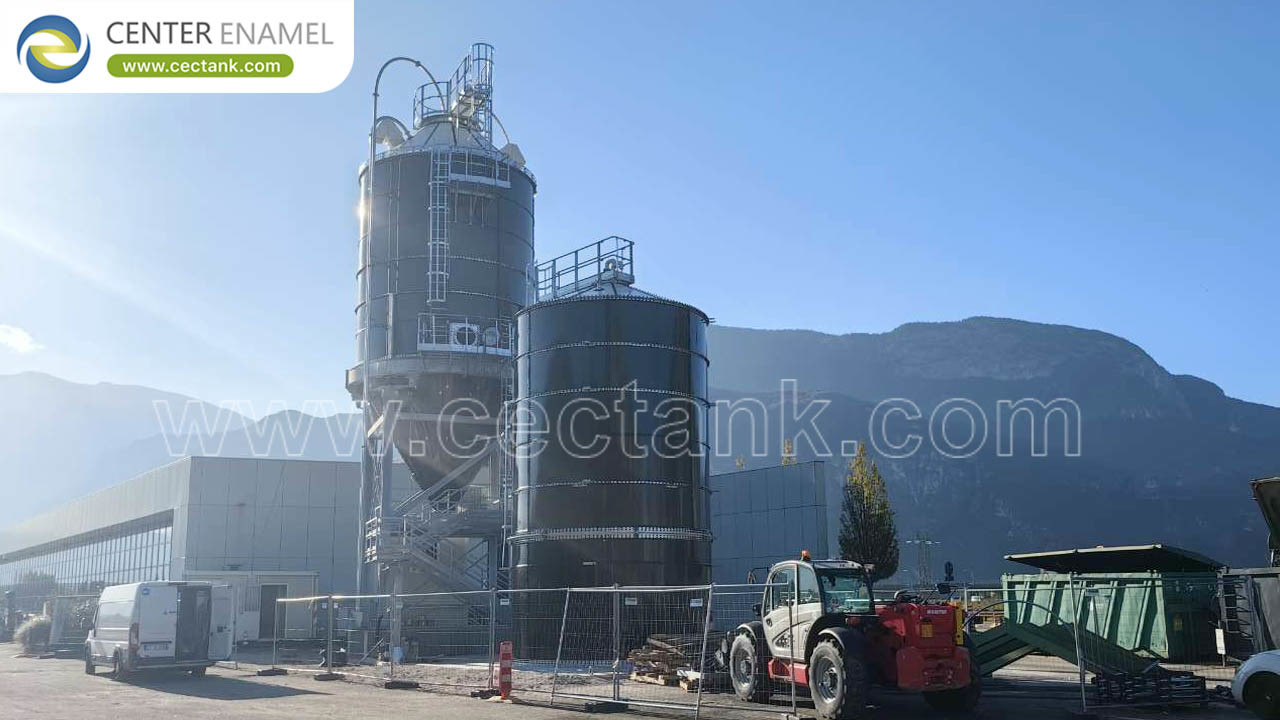
Glass-Fused-to-Steel Tanks as Grain Storage Silos for Corn and Seeds Storage: The Ideal Solution for Agricultural Efficiency
| Place of Origin: | CHINA |
| Brand Name: | CEC TANKS |
| Certification: | ISO 9001:2008, AWWA D103 , OSHA , BSCI |
| Model Number: | W20180508003 |
| Minimum Order Quantity: | 1 SET |
| Price: | $5000~$20000 one set |
| Packaging Details: | PE poly-foam between each two steel plates;wooden pallets and wooden box |
| Delivery Time: | 10-30 days after deposit received |
| Payment Terms: | L/C,T/T |
| Supply Ability: | 60 sets per month |
|
Detail Information |
|||
Product Description
Glass-Fused-to-Steel Tanks as Grain Storage Silos for Corn and Seeds Storage: The Ideal Solution for Agricultural Efficiency
Direct Answer: In modern commercial agriculture and grain processing, Glass-Fused-to-Steel (GFS) tanks serve as advanced, high-efficiency silos for storing corn and sensitive seed stocks. These engineered storage systems merge the structural strength of high-tensile carbon steel with the total environmental inertness of a silica-glass coating.
By delivering a completely smooth, abrasion-resistant, and tightly sealed internal environment, GFS silos effectively eliminate the primary drivers of post-harvest crop loss: moisture infiltration, localized fungal/mycotoxin outbreaks, insect infestations, and mechanical grain damage during unloading. This makes them a highly reliable option for seed producers, commercial feed mills, and grain terminals looking to optimize operational efficiency.
1. Challenges in Corn and Seed Storage: The Moisture and Abrasion Threats
Storing corn and high-value seeds poses unique challenges compared to standard small grains like wheat or barley:
The Threat of High Moisture & Mycotoxins
Corn is frequently harvested at higher moisture levels (often between 15% and 20%) and must be systematically dried down to 13% to 14% for long-term containment. Standard corrugated steel bins can develop internal condensation cycles when ambient temperatures drop, causing moisture to migrate and accumulate along the silo walls. This localized humidity triggers the growth of fungi such as Aspergillus flavus, which produces hazardous aflatoxins that can ruin the commercial value of an entire crop yield.
High Mechanical Abrasion
Corn kernels are dense, heavy, and highly abrasive. As millions of kernels slide down a silo's interior walls during gravity discharging, they exert high frictional wear on the shell surface. In traditional galvanized silos, this continuous abrasion gradually strips away the protective zinc coating, exposing the underlying raw steel to rapid atmospheric rust.
Pest and Insect Harborages
Corrugated steel bins rely on thousands of overlapping interior seams and exposed fastener threads. These microscopic gaps provide ideal breeding environments and harborages for persistent grain pests like the maize weevil (Sitophilus zeamais) and the lesser grain borer, making thorough chemical fumigation difficult to achieve.
2. Technical Performance Matrix: Agricultural Silo Engineering
Evaluating structural choices based on preservation performance and lifecycle costs highlights the key functional differences between standard silo designs:
| Engineering Parameter | Glass-Fused-to-Steel (GFS) Silos | Corrugated Galvanized Steel Bins | Reinforced Concrete Silos |
| Interior Surface Profile | Ultra-Smooth Glass. Frictionless; zero grain hang-up points. | Corrugated Horizontal Ribs. Accumulates dust and grain residues. | Porous & Rough. Subject to micro-cracking and dust shedding. |
| Abrasion Resistance | Superior (Mohs Hardness 6.0). Glass lining cannot be scratched by grain. | Poor to Moderate. Zinc coating gradually wears away over time. | Moderate. Experiencing structural surface wear and aggregate erosion. |
| Sealing Integration | High Hermetic Capability. Airtight panel overlapping prevents moisture leaks. | Low. Prone to ambient air and moisture leaks along extensive seams. | Variable. Requires continuous external elastomeric sealants. |
| Pest Mitigation Efficiency | Excellent. Completely eliminates internal joint crevices. | Poor. Corrugation joints create extensive pest harborages. | Moderate. Micro-fissures can trap organic dust and breed insects. |
| Typical Asset Service Life | 30 to 50+ Years with minimal maintenance. | 15 to 25 Years before zinc failure or structural rusting. | 40 to 50 Years but requires structural crack repair. |
3. Interactive Grain Storage Density & Volume Engine
To size an agricultural silo accurately, engineers must match the volumetric capacity of the tank with the specific bulk density metrics of the target crop.
Use the processing tool below to calculate required silo dimensions and estimate safe storage tonnages based on crop selections.
4. Why GFS Technology Optimizes Agricultural Efficiency
The integration of GFS tanks into agricultural storage networks offers concrete, measurable advantages for large-scale operations:
Frictionless Discharge and Seed Integrity
The glass lining features a low coefficient of friction. During discharge, corn kernels flow smoothly along the walls without sticking or creating high-stress pressure points. This unimpeded mass flow reduces internal grain pressure and friction, minimizing the risk of kernel cracking or seed coat damage—a crucial advantage for retaining high seed germination rates.
Simplified Chemical Fumigation
When an insect outbreak occurs, a silo must be sealed for effective gas fumigation (typically using phosphine, $PH_3$). Because GFS tanks are assembled using precision-manufactured bolted panels lined with specialized, gas-impermeable EPDM gaskets, the entire structure can achieve a near-hermetic seal. This tight containment allows for lower chemical dosages while ensuring complete pest eradication throughout the grain column.
Resistance to Weather and Thermal Shock
The thermal expansion coefficient of Center Enamel’s proprietary glass lining matches that of its high-strength steel backing plate. This ensures that during extreme temperature swings—such as hot summer days followed by cold nights—the glass coating expands and contracts in unison with the steel. This prevents delamination, cracking, or micro-fissuring, keeping the protective barrier completely intact.
5. Frequently Asked Questions (FAQ)
Can standard GFS wastewater tanks be converted directly into grain silos?
While the GFS panel material provides excellent corrosion and abrasion resistance for both applications, a grain silo requires unique structural considerations. Granular agricultural solids exert high lateral pressures and vertical compressive forces (frictional drag) along the tank walls during discharging. Therefore, a GFS tank intended for grain containment must be explicitly engineered with proper plate gauges and vertical stiffener columns to satisfy standard agricultural codes, such as Eurocode EN 1991-4.
How does the smooth interior wall of a GFS silo affect aeration efficiency?
The smooth surface prevents the accumulation of fine organic dust and grain hulls along the silo perimeter. In corrugated bins, this dust accumulation creates dense zones that restrict lateral airflow. In a GFS silo, air forced through the bottom plenum flows evenly up through the grain mass, ensuring more uniform cooling and drying cycles.
Is the glass coating vulnerable to damage if large stones enter with the grain?
The glass-fused-to-steel lining is exceptionally durable, boasting a high impact resistance that easily withstands standard agricultural grain flow. To safeguard the coating from large, heavy debris (such as rocks or metal fragments), facilities utilize standard pre-cleaning equipment like scalpers or magnetic separators at the intake conveyor elevator before the grain enters the silo.