-
Glass Fused To Steel Tanks (596)
-
Stainless Steel Tanks (434)
-
Fusion Bonded Epoxy Tanks (592)
-
Galvanized Steel Tanks (321)
-
Aluminum Dome Roofs (1336)
-
Wastewater Storage Tanks (232)
-
Welded Steel Tanks (457)
-
Pressure Vessels (295)
-
Anaerobic Digester (201)
-
Industrial Water Tanks (349)
-
Glass Lined Steel Tanks (180)
-
Bolted Steel Tanks (389)
-
Sludge Storage Tank (115)
-
Biogas Storage Tank (173)
-
Leachate Storage Tanks (133)
-
Agricultural Water Storage Tanks (179)
-
Fire Water Tank (166)
-
Grain Storage Silos (146)
-
Biogas Projects (425)
-
Wastewater Treatment Projects (978)
-
Double Membrane Roof (223)

|
Biogas Storage Tanks with PVC Double Membrane Gas Holder Roof: A Sustainable Solution for Anaerobic Digestion
| Place of Origin: | CHINA |
| Brand Name: | CEC TANKS |
| Certification: | ISO 9001:2008, AWWA D103 , OSHA , BSCI |
| Model Number: | W20180508007 |
| Minimum Order Quantity: | 1 SET |
| Price: | $5000~$20000 one set |
| Packaging Details: | PE poly-foam between each two steel plates;wooden pallet and wooden box |
| Delivery Time: | 10-30 days after deposit received |
| Payment Terms: | L/C,T/T |
| Supply Ability: | 60 sets per month |
|
Detail Information |
|||
Product Description
In the global shift toward renewable energy, anaerobic digestion (AD) has become a cornerstone of sustainable waste management. Whether you are operating a municipal sewage treatment plant, a large-scale agricultural farm, or an industrial food-waste processing facility, your biogas storage infrastructure is the critical link between raw waste and usable energy.
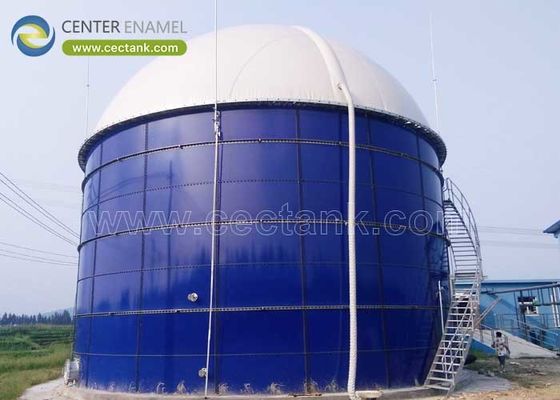
The biogas storage tank integrated with a PVC double membrane gas holder roof represents the modern industry standard for gas containment. This system offers a high-performance, cost-effective, and safe solution for managing biogas production while maximizing return on investment.
The double membrane gas holder is not just a roof; it is a dynamic, pressure-regulated storage vessel that sits atop your digester. It consists of two layers of high-strength, PVC-coated polyester fabric:
Inner Membrane: A gas-tight, flexible chamber that expands and contracts based on the volume of biogas produced. It directly contains the raw biogas.
Outer Membrane: An air-supported, weather-resistant dome that protects the inner membrane from UV radiation, wind, snow, and rain.
Air Support System: An automated air blower maintains a slight, constant positive pressure in the space between the two membranes. This ensures the outer dome remains inflated and rigid, regardless of the gas volume in the inner membrane.
For engineers and facility owners, moving to a double membrane system offers several operational improvements over traditional rigid roofs:
By maintaining a stable, low-pressure environment (typically 10–50 mbar), the membrane roof ensures a consistent flow of biogas to downstream equipment like Combined Heat and Power (CHP) engines or upgrading units. This prevents pressure surges that can damage gas turbines or burner systems.
Raw biogas is highly corrosive, often containing hydrogen sulfide (H₂S) and moisture. Traditional steel roofs are prone to rapid oxidation and degradation. In contrast, the high-grade PVC membranes are chemically inert and immune to the acidic conditions produced within the digester.
Integrating the gas holder directly onto the top of the digester tank eliminates the need for separate, dedicated gas storage infrastructure. This reduces the project footprint, cuts down on piping complexity, and lowers the overall capital expenditure (CAPEX).
The double membrane system provides a "buffer" for biogas production. During fluctuations in feedstocks or production rates, the system naturally expands or contracts, preventing the need for frequent flaring (burning off) of excess gas, thereby protecting your energy yield.
| Feature | Double Membrane Roof | Fixed Steel Roof | Concrete Roof |
| Corrosion Resistance | Excellent (Inert PVC) | Low (Requires Coating) | Low (Acid Attack) |
| Gas Storage | Integrated (Buffer) | None (Needs External) | None (Needs External) |
| Installation Speed | Fast | Slow | Very Slow |
| Maintenance | Minimal | Moderate | High (Crack Sealing) |
| Operational Pressure | Constant | Variable | Variable |
Safety is paramount in any biogas operation. Modern double membrane systems are engineered with critical safety features:
Pressure Relief Valves: Redundant safety valves prevent over-pressurization.
Level Monitoring: Ultrasonic or radar sensors track the gas volume in real-time, providing integrated control with the plant's SCADA system.
Fire Resistance: High-quality membrane materials are often treated with flame retardants, meeting international fire safety standards like DIN 4102 B1.
A: Under normal operating conditions with proper maintenance, high-quality PVC double membranes typically provide a service life of 10–15 years before replacement of the fabric is required. The tank structure itself (e.g., GFS) will last 30+ years.
A: Yes. The air-supported outer membrane is engineered to withstand wind and snow loads. In extreme environments, the air blower system can be fitted with heaters or air-curtain designs to prevent snow accumulation.
A: Sizing is determined by your daily biogas production volume and your facility's energy demand. A standard buffer capacity of 4–6 hours of production is common for CHP plants, though this can be scaled up depending on your specific project requirements.
At Center Enamel, we specialize in high-performance, integrated storage solutions. We combine our industry-leading Glass-Fused-to-Steel (GFS) digester tanks with state-of-the-art PVC double membrane roofs to provide a complete, turn-key biogas storage package.
Are you ready to optimize your biogas infrastructure? Contact our engineering team today for a technical consultation, capacity assessment, and site-specific proposal.