-
Glass Fused To Steel Tanks (596)
-
Stainless Steel Tanks (434)
-
Fusion Bonded Epoxy Tanks (592)
-
Galvanized Steel Tanks (321)
-
Aluminum Dome Roofs (1336)
-
Wastewater Storage Tanks (232)
-
Welded Steel Tanks (457)
-
Pressure Vessels (295)
-
Anaerobic Digester (201)
-
Industrial Water Tanks (349)
-
Glass Lined Steel Tanks (180)
-
Bolted Steel Tanks (389)
-
Sludge Storage Tank (115)
-
Biogas Storage Tank (173)
-
Leachate Storage Tanks (133)
-
Agricultural Water Storage Tanks (179)
-
Fire Water Tank (166)
-
Grain Storage Silos (146)
-
Biogas Projects (425)
-
Wastewater Treatment Projects (948)
-
Double Membrane Roof (223)

|
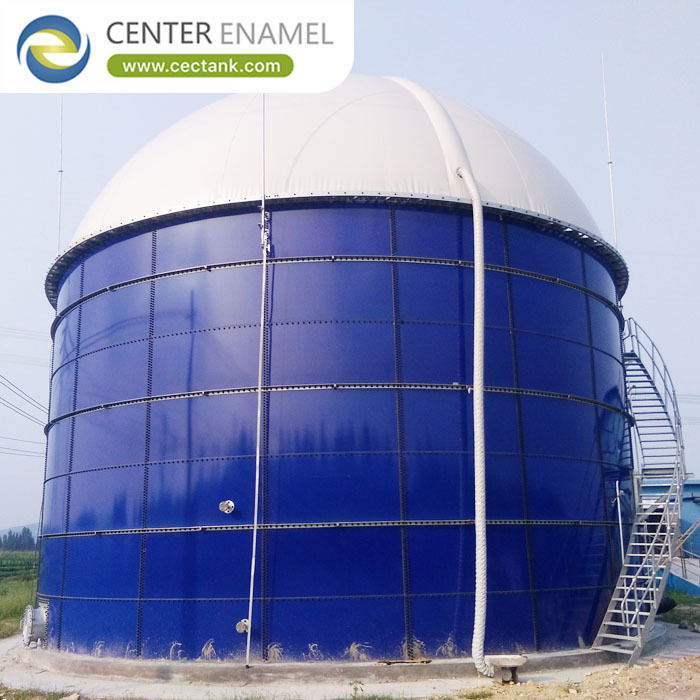
Optimizing Renewable Energy: High Air Tightness Farm Biogas Digesters (20m³ – 60,000m³)
| Place of Origin: | China |
| Brand Name: | CEC TANKS |
| Certification: | ISO 9001:2008, AWWA D103 , OSHA , BSCI |
| Model Number: | J2016012654 |
| Minimum Order Quantity: | 1set |
| Price: | $5000~$20000 one set |
| Packaging Details: | PE poly-foam between each two steel plates ; wooden pallet and wooden box |
| Delivery Time: | 0-60 days after deposit received |
| Payment Terms: | L/C,T/T |
| Supply Ability: | 60 sets per month |
|
Detail Information |
|||
| Place of Origin | China | Brand Name | CEC TANKS |
|---|---|---|---|
| Certification | ISO 9001:2008, AWWA D103 , OSHA , BSCI | Model Number | J2016012654 |
| Adhesion: | 3,450N/cm | Elastic: | Same As Steel Sheet ,around 500KN /mm |
| Acid And Alkalinity Proof: | Standard Sheet PH:3~11 Special Sheet PH: 1~14 | Service Life: | ≥30 Years |
| Permeability: | Gas And Liquid Impermeable | Material: | Glass And Steel |
| Coating Color: | Can Be Customized | Coating Thickness: | 0.25mm~0.40mm & Double Coating |
| Highlight: | 25000m3 Farm Biogas Digester,glass steel Farm Biogas Digester |
||
Product Description
Optimizing Renewable Energy: High Air Tightness Farm Biogas Digesters (20m³ – 60,000m³)
In the evolving landscape of sustainable agriculture and renewable energy, the anaerobic digester (AD) stands as a pivotal technology. By converting organic waste—such as livestock manure, food processing residues, and agricultural byproducts—into methane-rich biogas, farms can transform potential environmental liabilities into valuable energy assets.
However, the efficiency of an anaerobic digestion system is only as good as its structural integrity. High air tightness is the non-negotiable requirement for maximizing methane yield and ensuring operational safety. Whether your facility requires a compact 20m³ unit or a massive 60,000m³ industrial plant, selecting the right storage infrastructure is the most critical decision for your project's ROI.
The Critical Role of Air Tightness in Anaerobic Digestion
Anaerobic digestion is a biological process that occurs in the absence of oxygen. If your storage tank suffers from air leaks, the entire process is compromised. Here is why air tightness is the foundation of biogas production:
-
Maximizing Methane Yield: Oxygen ingress inhibits the methanogenic bacteria responsible for biogas production. A single leak allows oxygen to enter, killing the bacteria, reducing methane output, and creating a safety hazard.
-
Preventing Methane Loss: Methane is your revenue. Even micro-leaks in structural seams can lead to significant cumulative losses over time, impacting the economic viability of your farm.
-
Environmental & Safety Compliance: Biogas is a potent greenhouse gas. Strict air tightness ensures compliance with international emission standards and mitigates the risk of fire or explosion.
Scalability: Meeting Needs from 20m³ to 60,000m³
Modern biogas technology is remarkably flexible. By utilizing modular engineering, storage solutions can be tailored to the specific energy and waste management needs of your facility, regardless of scale.
Small-Scale (20m³ – 500m³)
For individual farms or small community cooperatives, compact digesters are ideal for on-site manure management.
-
Benefits: Reduces odor, manages nutrient runoff, and provides localized heating or cooking fuel.
-
Design Focus: Compact, pre-fabricated units that occupy a minimal footprint.
Mid-to-Large-Scale (500m³ – 10,000m³)
Designed for commercial livestock operations or medium-sized food processing plants.
-
Benefits: Enables Combined Heat and Power (CHP) generation and supports grid-injection projects.
-
Design Focus: High-throughput systems with advanced mixing technologies (CSTR) to handle diverse feedstock.
Industrial-Scale (10,000m³ – 60,000m³)
For municipal sewage treatment plants or large-scale regional waste-to-energy facilities.
-
Benefits: High-volume biogas production, large-scale waste diversion, and maximum return on investment.
-
Design Focus: Massive, multi-tank configurations with integrated gas holders and state-of-the-art process controls.
Why Glass-Fused-to-Steel (GFS) is the Industry Standard
When searching for "high air tightness," Glass-Fused-to-Steel (GFS) technology stands alone. By fusing silicate glass frit to high-tensile steel plates at temperatures exceeding 820°C, manufacturers create a material that combines the strength of steel with the chemical inertness of glass.
-
Impermeable Surface: The glass surface is non-porous, meaning it cannot absorb gases or moisture, ensuring a 100% gas-tight seal for the tank shell.
-
Chemical Immunity: Anaerobic digestion produces hydrogen sulfide ($H_2S$) and organic acids, which aggressively corrode concrete and carbon steel. GFS is immune to this "biogenic sulfuric acid," preventing structural degradation.
-
Modular Construction: GFS tanks are assembled using bolted panels, allowing for rapid deployment and easy expansion if your biogas production needs to scale up in the future.
Comparative Analysis: Tank Technologies
| Feature | Glass-Fused-to-Steel (GFS) | Poured Concrete | Welded Carbon Steel |
| Air Tightness | Excellent (Sealed) | Moderate (Micro-cracking) | Moderate (Weld Defects) |
| Corrosion Resistance | Superior (Inert Glass) | Low (Acid Susceptible) | Low (Needs Coating) |
| Construction Speed | Fast (Modular) | Slow (Weeks/Months) | Moderate |
| Maintenance | Minimal | High (Crack Repair) | High (Recoating) |
| Lifespan | 30+ Years | 20–30 Years | 15–25 Years |
Frequently Asked Questions (FAQ)
Q: Can an air-tight GFS tank be expanded later?
A: Yes. The bolted, modular nature of GFS tanks allows you to add rings to increase height or expand capacity as your feedstock supply increases, protecting your long-term capital investment.
Q: How do you verify the air tightness of a digester?
A: Professional digesters undergo rigorous pressure and vacuum testing (using soap solution or digital pressure gauges) during commissioning to ensure that every seam and seal is completely leak-proof.
Q: Why is GFS better than concrete for large-scale (60,000m³) tanks?
A: At large scales, concrete is prone to micro-cracking due to thermal expansion and soil settling. These cracks allow methane to escape and air to enter. GFS panels provide the structural flexibility and chemical resistance to maintain an airtight seal for decades.
Partner with the Global Leader in Biogas Storage
At Center Enamel, we specialize in high-capacity, high-tightness GFS biogas digesters. With over 30 years of global experience, we provide end-to-end support—from structural engineering and gas-capture design to professional, modular assembly.
Ready to maximize your biogas yield? Contact our engineering team today to discuss your capacity requirements and receive a site-specific feasibility analysis.