-
Glass Fused To Steel Tanks (596)
-
Stainless Steel Tanks (434)
-
Fusion Bonded Epoxy Tanks (592)
-
Galvanized Steel Tanks (321)
-
Aluminum Dome Roofs (1336)
-
Wastewater Storage Tanks (232)
-
Welded Steel Tanks (457)
-
Pressure Vessels (295)
-
Anaerobic Digester (202)
-
Industrial Water Tanks (349)
-
Glass Lined Steel Tanks (180)
-
Bolted Steel Tanks (389)
-
Sludge Storage Tank (115)
-
Biogas Storage Tank (173)
-
Leachate Storage Tanks (133)
-
Agricultural Water Storage Tanks (179)
-
Fire Water Tank (166)
-
Grain Storage Silos (146)
-
Biogas Projects (424)
-
Wastewater Treatment Projects (1258)
-
Double Membrane Roof (223)
|
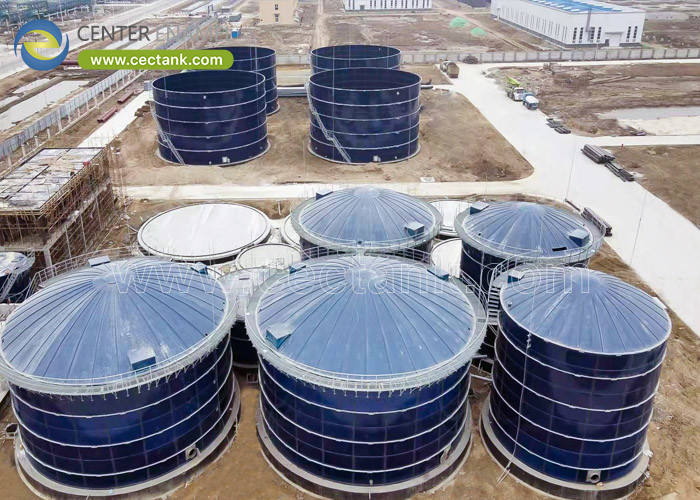
Anaerobic Digestion Tanks: Revolutionizing Wastewater Treatment with Advanced Technology
| Place of Origin: | China |
| Brand Name: | CEC TANKS |
| Certification: | ISO 9001:2008, AWWA D103 , OSHA , BSCI |
| Model Number: | J2016012643 |
| Minimum Order Quantity: | 1set |
| Price: | $5000~$20000 one set |
| Packaging Details: | PE poly-foam between each two steel plates ; wooden pallet and wooden box |
| Delivery Time: | 0-60 days after deposit received |
| Payment Terms: | L/C,T/T |
| Supply Ability: | 60 sets per month |
|
Detail Information |
|||
Product Description
As global industries and municipalities face mounting pressure to achieve net-zero carbon targets, reduce energy consumption, and manage tightening environmental regulations, traditional wastewater treatment paradigms are undergoing a massive transformation. Conventional aerobic treatment plants—while effective at pollutant removal—demand continuous, high-energy mechanical aeration and generate substantial volumes of secondary biological sludge that incur high dewatering and disposal costs.
In response, advanced anaerobic digestion tanks have emerged as the cornerstone of sustainable wastewater management. By utilizing specialized microbial communities to break down complex organic matter in an oxygen-free environment, modern anaerobic digestion infrastructure converts municipal sludge and high-strength industrial effluent into valuable renewable biogas and stabilized nutrient-rich digestate.
Inside a sealed anaerobic digestion tank, organic pollutants undergo a sophisticated four-stage biological conversion process:
-
Hydrolysis: Complex macromolecules (fats, proteins, and carbohydrates) are broken down by extracellular enzymes into soluble simpler monomers like sugars and amino acids.
-
Acidogenesis: Acid-forming bacteria convert these monomers into volatile fatty acids (VFAs), alcohols, carbon dioxide, and ammonia.
-
Acetogenesis: Acetogenic bacteria transform the intermediate organic acids into acetic acid, hydrogen, and carbon dioxide.
-
Methanogenesis: Specialized archaea consume acetate, hydrogen, and carbon dioxide to produce high-purity biogas (containing 55% to 75% methane) alongside inert mineralized digestate.
The structural integrity and chemical resilience of the digestion vessel dictate the long-term viability of any wastewater treatment facility. Traditional poured-in-place concrete basins are vulnerable to sulfuric acid attack, concrete carbonation, and long-term micro-cracking. To overcome these limitations, modern engineering relies heavily on prefabricated Glass-Fused-to-Steel (GFS) bolted tanks.
-
Thermal Fusion Superiority: Glass enamel frit is thermally fused to high-strength structural steel plates at extreme temperatures between 820°C and 930°C, creating an inseparable molecular bond.
-
Absolute Chemical Inertness: The vitreous glass surface completely resists aggressive hydrogen sulfide ($H_2S$), volatile fatty acids, and high-moisture operating environments typical of anaerobic digestion.
-
Rapid Modular Deployment: Prefabricated bolted panels allow rapid on-site erection by local crews, slashing construction timelines by up to 30% compared to traditional concrete formwork.
| Evaluation Metric | Advanced Anaerobic Digestion Tanks | Conventional Aerobic Treatment Basins | Cast-in-Place Concrete Digesters |
|---|---|---|---|
| Energy Consumption & Profile | Net Energy Producer (Generates renewable methane; low electrical draw) | High (Continuous electrical demand for mechanical blowers and aerators) | Moderate (Passive containment; requires external mixing power) |
| Excess Sludge Generation | Minimal (Significantly reduces final biosolids volume, lowering disposal costs) | High (Generates massive volumes of secondary waste sludge requiring dewatering) | Moderate (Prone to internal sediment buildup and scum layers) |
| Corrosion & Chemical Defense | Superior (Inert glass-fused or high-grade stainless surfaces resist acids and $H_2S$) | Moderate (Standard concrete subject to biological sulfuric acid corrosion) | Low to Moderate (Vulnerable to cracking, seepage, and sulfate attack) |
| Construction & Scalability | High (Modular bolted design allows swift installation and future expansion) | Low (Permanent civil infrastructure; difficult to modify or expand) | None (Rigid permanent civil asset requiring extensive demolition to alter) |
Engineering Assurance: Modern anaerobic digestion tanks comply strictly with international engineering and public health standards, including AWWA D103-09, ISO 28765, ISO 9001, and NSF/ANSI 61, guaranteeing uncompromised safety, structural reliability, and environmental compliance for global wastewater projects.
A: An anaerobic digestion tank is a sealed, oxygen-free reactor vessel where specialized microorganisms break down organic waste solids and high-COD industrial wastewater. The process stabilizes the organic matter, significantly reduces sludge volume, and generates renewable biogas rich in methane for on-site energy recovery.
A: GFS tanks combine the high tensile strength of steel with the chemical inertness of glass. Inside an anaerobic digester, they offer exceptional resistance to corrosive hydrogen sulfide, volatile fatty acids, and moisture, ensuring an extended service life exceeding 30 years with minimal maintenance.
A: Anaerobic digesters capture fugitive greenhouse gas emissions by containing biological decomposition. They convert organic waste into clean, renewable biogas that can replace fossil fuels for heating or electricity generation, while producing nutrient-rich digestate that can be safely repurposed.
A: High-performance anaerobic digestion tanks are engineered in strict compliance with global quality and safety benchmarks, including AWWA D103-09 (for bolted steel tanks), ISO 28765, ISO 9001 quality management systems, and OSHA safety guidelines.