-
Glass Fused To Steel Tanks (896)
-
Stainless Steel Tanks (434)
-
Fusion Bonded Epoxy Tanks (660)
-
Galvanized Steel Tanks (321)
-
Aluminum Dome Roofs (1336)
-
Wastewater Storage Tanks (280)
-
Welded Steel Tanks (457)
-
Pressure Vessels (461)
-
Anaerobic Digester (202)
-
Industrial Water Tanks (364)
-
Glass Lined Steel Tanks (180)
-
Bolted Steel Tanks (389)
-
Sludge Storage Tank (115)
-
Biogas Storage Tank (173)
-
Leachate Storage Tanks (133)
-
Agricultural Water Storage Tanks (179)
-
Fire Water Tank (166)
-
Grain Storage Silos (146)
-
Biogas Projects (424)
-
Wastewater Treatment Projects (1792)
-
Double Membrane Roof (223)

|
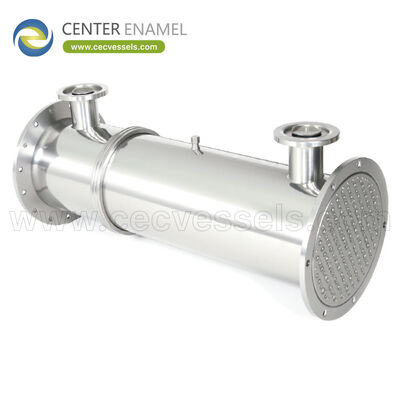
China Juice Processing Heat Exchanger Manufacturer Providing Heat Transfer Solutions For Juice Manufacturing Applications
| Place of Origin: | China |
| Brand Name: | Center Enamel |
| Certification: | ISO 9001,CE, NSF/ANSI 61, WRAS, ISO 28765, LFGB, BSCI, ISO 45001 |
| Minimum Order Quantity: | 1 Sets |
| Price: | 2000 |
| Delivery Time: | 2 months |
| Payment Terms: | L/C,T/T |
| Supply Ability: | 200 sets / days |
|
Detail Information |
|||
Product Description
A juice processing heat exchanger heats and cools juice during pasteurization and aseptic filling, where pulp, sugar and heat sensitivity make the design different from water-like fluids.
This article covers the duties, the hygiene and cleanability needs, and how to specify a juice exchanger that protects both safety and flavour.
Where Heat Transfer Happens In Juice LinesJuice is pre-heated, pasteurized at holding temperature, then flash-cooled before filling. A regenerative section recovers heat from the hot pasteurized juice to warm the incoming stream.
Concentrate and pulp streams add viscosity and fouling, shifting the design toward robust, cleanable equipment.
Pasteurization And Aseptic CoolingPasteurization uses a plate pack with a holding tube; aseptic cooling follows so the product reaches the filler safely. Regeneration reduces the utility load substantially.
- Regeneration: recovers heat from hot juice to pre-warm incoming juice.
- Holding: maintains pasteurization temperature for the required time.
- Aseptic cooling: brings product to filler temperature under sterile path.
Wetted parts are 316L stainless with polished finish; gaskets are food-grade. Pulp and fibres foul plates, so cleanability and CIP compatibility are specified up front.
Drainability and crevice-free design support both food safety and batch changeover between fruit types.
Plate Selection For Viscous JuiceHigher pulp content raises viscosity; the corrugation pattern and velocity are chosen to keep heat transfer high without excessive pressure drop that could damage the product.
Comparing Plate And TubularPlate exchangers serve most juice pasteurization; tubular or scraped-surface units are reserved for very high pulp or particulate products that would foul plates.
Sizing The DutyDuty follows juice flow, specific heat, temperature lift and fouling allowance. The plate count is set for the required overall coefficient and acceptable pressure drop.
Process IntegrationThe exchanger links reception, pasteurization, cooling and filling, with flow diversion protecting under-processed product. Utilities are matched to the pack.
Specifying A Juice ExchangerProvide juice type and pulp content, flow, temperatures, fouling expectation and any standard (3-A / EHEDG). The supplier returns a plate arrangement and utility loads.
Procurement Acceptance And DocumentationFor a juice processing heat exchanger, the purchase decision should be closed by verifying documents that prove the delivered unit matches the agreed specification, not by the nameplate alone. Hygiene validation and pulp-fouling cleanability are the decisive checks.
Request material certificates for every wetted plate, shell course or tube, together with the welding procedure and welder qualification records. Critical seams should carry radiographic or ultrasonic examination reports, and the pressure test should be witnessed or certified by a recognised third party.
For export, confirm the applicable code marking - ASME U-stamp or CE/PED - and any destination-required inspection sign-off before shipment. Material traceability from mill certificate to finished vessel protects both parties if a field issue arises later.
A practical acceptance check is to confirm the calibrated operating range, not only the rated value, covers your worst-case duty, and that spares (gaskets, bolts, tube bundles where relevant) are specified because the service will eventually need maintenance.
Juice Exchanger Types ComparedType |
Serviceability |
Best use |
Gasketed plate |
Openable |
Pasteurization, cooling |
Tubular |
Robust |
High pulp / particulate |
Scraped surface |
Mechanical rotor |
Very viscous product |
Parameter |
Typical value |
Note |
Material |
316L stainless |
Polished Ra <= 0.8 um |
Type |
Gasketed plate |
Multi-section pack |
Regeneration |
85 - 95 percent |
Energy recovery |
Standards |
3-A / EHEDG where required |
Food hygiene |
Utilities |
Steam, chilled water, glycol |
Matched to duty |
A juice heat exchanger is a hygiene-led, fouling-aware device: 316L polish, drainable design and CIP survival decide fitness, while regeneration cuts energy.
Use a multi-section plate pack for pasteurization, size from flow and temperature lift, and confirm cleanability before purchase.
About Center EnamelCenter Enamel is a pressure vessel and process equipment manufacturer in China, producing stainless steel and carbon steel heat exchangers, separators, reactors and boilers for food, energy, chemical and water-treatment applications.
Manufacturing follows ASME VIII Div.1, GB/T 150 and ISO 9001 with CE/PED options. Units ship with material traceability, pressure testing, NDT and export documentation.
- Material range: 304/316L stainless, duplex, carbon steel with lining for corrosion duty.
- Standards: ASME VIII Div.1, GB/T 150, ISO 9001, CE/PED.
- Commercial terms: MOQ 1 unit, lead time about 2 months, L/C or T/T.
It heats juice for pasteurization and cools it for aseptic filling, with heat recovery between the streams.
Why regeneration matters in juice?Recovering heat from hot pasteurized juice to pre-warm incoming juice cuts energy and utility load.
What material is used?Normally 316L stainless steel with a polished food-grade surface.
How is pulp handled?Through corrugation and velocity selection plus CIP-compatible, drainable design.
Plate or tubular?Plate for standard juice; tubular or scraped-surface for high pulp or particulate product.
What standards apply?3-A or EHEDG where required by market, supporting cleanability validation.
What is a holding tube for?It keeps juice at pasteurization temperature for the required time.
How is under-processed juice prevented?Flow diversion sends off-spec product away from the filler.
What utilities are needed?Steam or hot water for heating, chilled water or glycol for cooling.
How is fouling managed?Conservative design, controlled velocity and a documented CIP routine.
What data should I give a supplier?Juice type, pulp content, flow, temperatures, fouling and any hygiene standard.
Can one pack heat and cool?Yes, a multi-section plate pack does regeneration, heating and cooling in one frame.
What lead time from a China manufacturer?Around 2 months for an engineered hygienic unit.
Is the exchanger openable?Gasketed plate units open for inspection; brazed types are sealed.
How is food safety validated?Through material certificates, cleanability validation and CIP compatibility.
Suggested CTA: Request a technical quotation with your duty, temperature, pressure and fluid data, or discuss your project with a Center Enamel engineer.