-
Glass Fused To Steel Tanks (896)
-
Stainless Steel Tanks (434)
-
Fusion Bonded Epoxy Tanks (660)
-
Galvanized Steel Tanks (321)
-
Aluminum Dome Roofs (1336)
-
Wastewater Storage Tanks (280)
-
Welded Steel Tanks (457)
-
Pressure Vessels (461)
-
Anaerobic Digester (202)
-
Industrial Water Tanks (364)
-
Glass Lined Steel Tanks (180)
-
Bolted Steel Tanks (389)
-
Sludge Storage Tank (115)
-
Biogas Storage Tank (173)
-
Leachate Storage Tanks (133)
-
Agricultural Water Storage Tanks (179)
-
Fire Water Tank (166)
-
Grain Storage Silos (146)
-
Biogas Projects (424)
-
Wastewater Treatment Projects (1792)
-
Double Membrane Roof (223)

|
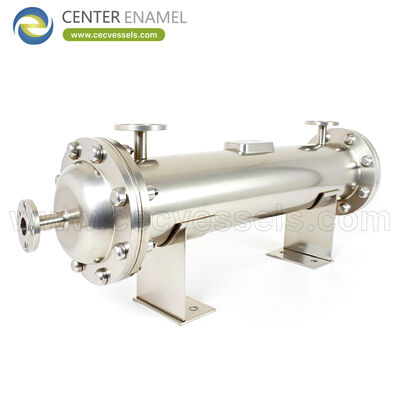
China Palm Oil Heat Exchanger Manufacturer Delivering Thermal Management Solutions For Palm Oil Refining
| Place of Origin: | China |
| Brand Name: | Center Enamel |
| Certification: | ISO 9001,CE, NSF/ANSI 61, WRAS, ISO 28765, LFGB, BSCI, ISO 45001 |
| Minimum Order Quantity: | 1 Sets |
| Price: | 2000 |
| Delivery Time: | 2 months |
| Payment Terms: | L/C,T/T |
| Supply Ability: | 200 sets / days |
|
Detail Information |
|||
Product Description
China Palm Oil Heat Exchanger Manufacturer Delivering Thermal Management Solutions For Palm Oil Refining
A palm oil heat exchanger serves both the mill (sterilizer condensate, digester heating) and the refinery (bleaching, deodorization, fractionation), where high temperature and high viscosity dominate.
This article explains the duties across the palm value chain and the design choices - especially heat recovery - that matter for a palm oil plant.
Palm Oil Across Mill And Refinery
At the mill, heat recovers from sterilizer condensate and heats process water; at the refinery, exchangers handle bleaching-earth heating, deodorization and fractionation. The duties differ in temperature and cleanliness.
Because palm oil is processed in large volume, even small recovery gains scale into major energy savings.
Deodorization And Fractionation
Deodorization runs hot under vacuum, like edible-oil refining; fractionation cools the oil through controlled temperature steps to split olein and stearin.
Both steps need exchangers that perform across the oil's changing viscosity.
- Sterilizer recovery: captures heat from mill condensate.
- Deodorizer duty: high-temperature heating under vacuum.
- Fractionation: controlled cooling for olein/stearin split.
High-Temperature Material Choice
Deodorizer and fractionation sections run hot; stainless steel 304/316L is standard, with higher-rated alloys where the temperature and vacuum demand it.
Plate Versus Shell-And-Tube
Plate exchangers suit moderate-viscosity, clean refinery streams with compact footprint; shell-and-tube handles very high temperature, pressure and fouling services.
Energy Recovery As Design Goal
Recovering heat from hot deodorized oil and from mill sterilizer condensate is the main payback. Designing the train thermally as one system beats isolated heaters and coolers.
Viscosity-Aware Sizing
Sizing uses the oil's temperature-dependent viscosity and specific heat; velocity and corrugation keep transfer high without excess pressure drop.
Fouling And Cleaning
Polymerised material can foul hot spots. Conservative coefficients, CIP where possible, and mechanical cleaning access manage this.
Specifying A Palm Oil Exchanger
Provide oil stream, flow, viscosity curve, inlet/outlet temperatures, fouling and utility data. The supplier returns an arrangement and utility loads.
Procurement Acceptance And Documentation
For a palm oil heat exchanger, the purchase decision should be closed by verifying documents that prove the delivered unit matches the agreed specification, not by the nameplate alone. Food-grade finish and high-temperature alloy confirmation protect product and uptime.
Request material certificates for every wetted plate, shell course or tube, together with the welding procedure and welder qualification records. Critical seams should carry radiographic or ultrasonic examination reports, and the pressure test should be witnessed or certified by a recognised third party.
For export, confirm the applicable code marking - ASME U-stamp or CE/PED - and any destination-required inspection sign-off before shipment. Material traceability from mill certificate to finished vessel protects both parties if a field issue arises later.
A practical acceptance check is to confirm the calibrated operating range, not only the rated value, covers your worst-case duty, and that spares (gaskets, bolts, tube bundles where relevant) are specified because the service will eventually need maintenance.
Plate Vs Shell-And-Tube For Palm Oil
Criterion |
Plate |
Shell-and-tube |
Heat transfer |
High |
Moderate |
Footprint |
Compact |
Larger |
High temp / pressure |
Limited |
Strong |
Fouling access |
Openable (gasketed) |
Bundle pull |
Typical Palm Oil Exchanger Specification
Parameter |
Typical value |
Note |
Material |
304 / 316L stainless |
Food-grade finish |
Deodorizer temp |
Up to ~240 C |
Under vacuum |
Type |
Plate or shell-and-tube |
By duty |
Recovery |
Mill + refinery heat recovery |
Energy saving |
Standards |
Food hygiene applicable |
Market dependent |
Conclusion
Palm oil heat exchangers span the mill and refinery, governed by high temperature, viscosity and a large heat-recovery opportunity.
Pick plate or shell-and-tube from the actual duty, use food-grade materials, and design the train for recovery rather than isolated heating and cooling.
About Center Enamel
Center Enamel is a pressure vessel and process equipment manufacturer in China, producing stainless steel and carbon steel heat exchangers, separators, reactors and boilers for food, energy, chemical and water-treatment applications.
Manufacturing follows ASME VIII Div.1, GB/T 150 and ISO 9001 with CE/PED options. Units ship with material traceability, pressure testing, NDT and export documentation.
- Material range: 304/316L stainless, duplex, carbon steel with lining for corrosion duty.
- Standards: ASME VIII Div.1, GB/T 150, ISO 9001, CE/PED.
- Commercial terms: MOQ 1 unit, lead time about 2 months, L/C or T/T.
Frequently Asked Questions (FAQ)
What does a palm oil heat exchanger do?
It transfers heat in mill sterilization, refining, fractionation and deodorization, with strong recovery potential.
Where is it used in the mill?
Recovering heat from sterilizer condensate and heating process water.
What happens in fractionation?
The oil is cooled through controlled steps to split olein and stearin fractions.
Why is deodorization demanding?
It runs hot, often around 240 C, under vacuum to strip odour without oxidation.
Plate or shell-and-tube?
Plate for clean refinery streams; shell-and-tube for high temperature, pressure or fouling.
What material is used?
304/316L stainless, with higher-rated alloys for the hottest duties.
How is viscosity handled?
Through temperature-dependent sizing and velocity/corrugation choice.
What is the main energy saving?
Recovering heat from hot deodorized oil and mill condensate.
How is fouling managed?
Conservative coefficients, CIP where possible, mechanical cleaning access.
What data should I send a supplier?
Stream, flow, viscosity curve, temperatures, fouling and utility data.
Does it affect oil quality?
Yes - controlled heating avoids local overheating that harms flavour and stability.
What utilities are typical?
Thermal fluid or steam for heating, water/glycol for cooling.
What lead time from a China manufacturer?
About 2 months for an engineered unit.
Why integrate thermally?
Treating mill and refinery as one thermal system recovers more heat and shrinks utilities.
Is food-grade finish required?
Yes for edible product contact, per market hygiene rules.
Suggested CTA: Request a technical quotation with your duty, temperature, pressure and fluid data, or discuss your project with a Center Enamel engineer.