-
Glass Fused To Steel Tanks (896)
-
Stainless Steel Tanks (434)
-
Fusion Bonded Epoxy Tanks (660)
-
Galvanized Steel Tanks (321)
-
Aluminum Dome Roofs (1336)
-
Wastewater Storage Tanks (280)
-
Welded Steel Tanks (457)
-
Pressure Vessels (461)
-
Anaerobic Digester (202)
-
Industrial Water Tanks (364)
-
Glass Lined Steel Tanks (180)
-
Bolted Steel Tanks (389)
-
Sludge Storage Tank (115)
-
Biogas Storage Tank (173)
-
Leachate Storage Tanks (133)
-
Agricultural Water Storage Tanks (179)
-
Fire Water Tank (166)
-
Grain Storage Silos (146)
-
Biogas Projects (424)
-
Wastewater Treatment Projects (1792)
-
Double Membrane Roof (223)

|
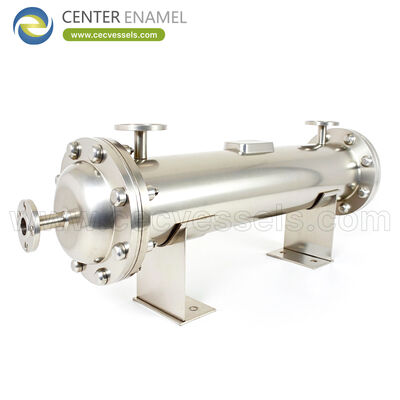
China Power Generation Heat Exchanger Manufacturer Delivering Heat Transfer Solutions For Energy Production Facilities
| Place of Origin: | China |
| Brand Name: | Center Enamel |
| Certification: | ISO 9001,CE, NSF/ANSI 61, WRAS, ISO 28765, LFGB, BSCI, ISO 45001 |
| Minimum Order Quantity: | 1 Sets |
| Price: | 2000 |
| Delivery Time: | 2 months |
| Payment Terms: | L/C,T/T |
| Supply Ability: | 200 sets / days |
|
Detail Information |
|||
Product Description
China Power Generation Heat Exchanger Manufacturer Delivering Heat Transfer Solutions For Energy Production Facilities
A power generation heat exchanger recovers and manages heat across the energy cycle - feedwater heating, steam condensation, heat-recovery steam generation and cooling - where reliability outweighs almost everything else.
This article covers the main exchanger types in power plants and the design priorities that keep them running.
Heat Exchangers In The Power Cycle
In a thermal plant, feedwater heaters raise feedwater temperature using extracted steam, the condenser rejects low-grade heat to cooling water, and HRSG modules recover heat from exhaust gas in combined cycles.
Each exchanger sits at a different temperature and pressure, so the family is broad rather than a single device.
Feedwater Heaters
High-pressure and low-pressure feedwater heaters use extracted steam to pre-warm boiler feedwater, improving cycle efficiency. Tube-side (feedwater) and shell-side (steam) duties demand careful material and expansion design.
Condensers
Surface condensers turn exhaust steam back to water while rejecting heat to cooling water or air. Tube integrity and vacuum maintenance are the operating priorities.
- Cycle efficiency: feedwater heating recovers extracted steam heat.
- Condensing: closes the steam loop and maintains vacuum.
- HRSG: recovers exhaust-gas heat in combined cycles.
Heat Recovery Steam Generators
In combined-cycle plants, HRSG modules use exhaust heat to raise steam, often with multiple pressure levels. The exchangers are packaged as economizer, evaporator and superheater sections.
Reliability And Materials
Power exchangers run continuously, so creep, corrosion and thermal cycling drive material choice. Carbon steel, low-alloy and stainless are selected by temperature and the cooling medium.
Shell-And-Tube Dominance
Large power duties use shell-and-tube for pressure, volume and maintainability. Plate and welded-plate types appear in clean auxiliary loops.
Cooling Water Exchangers
Whether wet or dry cooling, the heat-rejection exchanger must handle large flow andbiofouling or airborne fouling on the cooling side.
Specifying A Power Exchanger
Provide fluid, flow, temperatures, pressures, duty (heating/condensing/recovery) and cooling-medium properties. The supplier returns a sized unit with material schedule.
Procurement Acceptance And Documentation
For a power generation heat exchanger, the purchase decision should be closed by verifying documents that prove the delivered unit matches the agreed specification, not by the nameplate alone. Reliability documentation and material creep/corrosion rating outweigh peak efficiency on acceptance.
Request material certificates for every wetted plate, shell course or tube, together with the welding procedure and welder qualification records. Critical seams should carry radiographic or ultrasonic examination reports, and the pressure test should be witnessed or certified by a recognised third party.
For export, confirm the applicable code marking - ASME U-stamp or CE/PED - and any destination-required inspection sign-off before shipment. Material traceability from mill certificate to finished vessel protects both parties if a field issue arises later.
A practical acceptance check is to confirm the calibrated operating range, not only the rated value, covers your worst-case duty, and that spares (gaskets, bolts, tube bundles where relevant) are specified because the service will eventually need maintenance.
Power Exchanger Types Compared
Type |
Duty |
Key priority |
Feedwater heater |
Extracted-steam heating |
Cycle efficiency |
Surface condenser |
Steam condensation |
Vacuum + tube integrity |
HRSG module |
Exhaust-gas recovery |
Multi-pressure steam |
Cooling exchanger |
Heat rejection |
Fouling resistance |
Typical Power Generation Exchanger Specification
Parameter |
Typical value |
Note |
Type |
Shell-and-tube |
Large duties |
Material |
CS / low-alloy / SS |
By temperature |
Pressure |
Low to high |
Per duty |
Standards |
ASME / GB150 |
With NDT |
Duty |
Heating, condensing, recovery |
Cycle specific |
Conclusion
Power generation heat exchangers are a reliability-led family spanning feedwater heating, condensation, HRSG recovery and cooling.
Specify from the exact duty and cooling medium, prefer shell-and-tube for large services, and weight material choice toward creep and corrosion resistance.
About Center Enamel
Center Enamel is a pressure vessel and process equipment manufacturer in China, producing stainless steel and carbon steel heat exchangers, separators, reactors and boilers for food, energy, chemical and water-treatment applications.
Manufacturing follows ASME VIII Div.1, GB/T 150 and ISO 9001 with CE/PED options. Units ship with material traceability, pressure testing, NDT and export documentation.
- Material range: 304/316L stainless, duplex, carbon steel with lining for corrosion duty.
- Standards: ASME VIII Div.1, GB/T 150, ISO 9001, CE/PED.
- Commercial terms: MOQ 1 unit, lead time about 2 months, L/C or T/T.
Frequently Asked Questions (FAQ)
What heat exchangers are in a power plant?
Feedwater heaters, surface condensers, HRSG modules and cooling-water exchangers across the cycle.
What does a feedwater heater do?
It pre-warms boiler feedwater with extracted steam, raising cycle efficiency.
Why is the condenser important?
It turns exhaust steam back to water and maintains vacuum, rejecting low-grade heat.
What is an HRSG?
A heat-recovery steam generator that uses turbine exhaust to raise steam, often at multiple pressures.
Which type dominates?
Shell-and-tube for large duties; plate types in clean auxiliary loops.
What materials are used?
Carbon steel, low-alloy and stainless chosen by temperature and cooling medium.
How is reliability ensured?
Through material selection for creep/corrosion and designs that tolerate thermal cycling.
How is cooling-water fouling handled?
By fouling-resistant layouts and maintenance access on the cooling side.
What data should I send a supplier?
Fluid, flow, temperatures, pressures, duty and cooling-medium properties.
Are these ASME coded?
Yes, normally ASME VIII Div.1 or GB/T 150 with NDT and test records.
What is the main design priority?
Reliability and continuous operation outweigh peak efficiency.
Can one supplier cover the train?
A process-equipment manufacturer can supply multiple duty-specific exchangers.
What lead time from a China manufacturer?
About 2 months, longer for large or high-alloy units.
How is heat recovered in combined cycle?
Exhaust gas heats HRSG sections to raise steam for the steam turbine.
What documentation ships?
Material certificates, NDT reports, pressure-test records and inspection where required.
Suggested CTA: Request a technical quotation with your duty, temperature, pressure and fluid data, or discuss your project with a Center Enamel engineer.