-
Glass Fused To Steel Tanks (896)
-
Stainless Steel Tanks (434)
-
Fusion Bonded Epoxy Tanks (652)
-
Galvanized Steel Tanks (321)
-
Aluminum Dome Roofs (1336)
-
Wastewater Storage Tanks (280)
-
Welded Steel Tanks (457)
-
Pressure Vessels (426)
-
Anaerobic Digester (202)
-
Industrial Water Tanks (349)
-
Glass Lined Steel Tanks (180)
-
Bolted Steel Tanks (389)
-
Sludge Storage Tank (115)
-
Biogas Storage Tank (173)
-
Leachate Storage Tanks (133)
-
Agricultural Water Storage Tanks (179)
-
Fire Water Tank (166)
-
Grain Storage Silos (146)
-
Biogas Projects (424)
-
Wastewater Treatment Projects (1722)
-
Double Membrane Roof (223)
|
Biogas Upgrading and Gas Storage: Tank and Vessel Considerations
| Place of Origin: | China |
| Brand Name: | CEC TANKS |
| Certification: | ISO 9001:2008, AWWA D103 , OSHA , BSCI |
| Model Number: | J2016012311 |
| Minimum Order Quantity: | 1set |
| Price: | $5000~$20000 one set |
| Packaging Details: | PE poly-foam between each two steel plates ; wooden pallet and wooden box |
| Delivery Time: | 0-60 days after deposit received |
| Payment Terms: | L/C,T/T |
| Supply Ability: | 60 sets per month |
|
Detail Information |
|||
Product Description
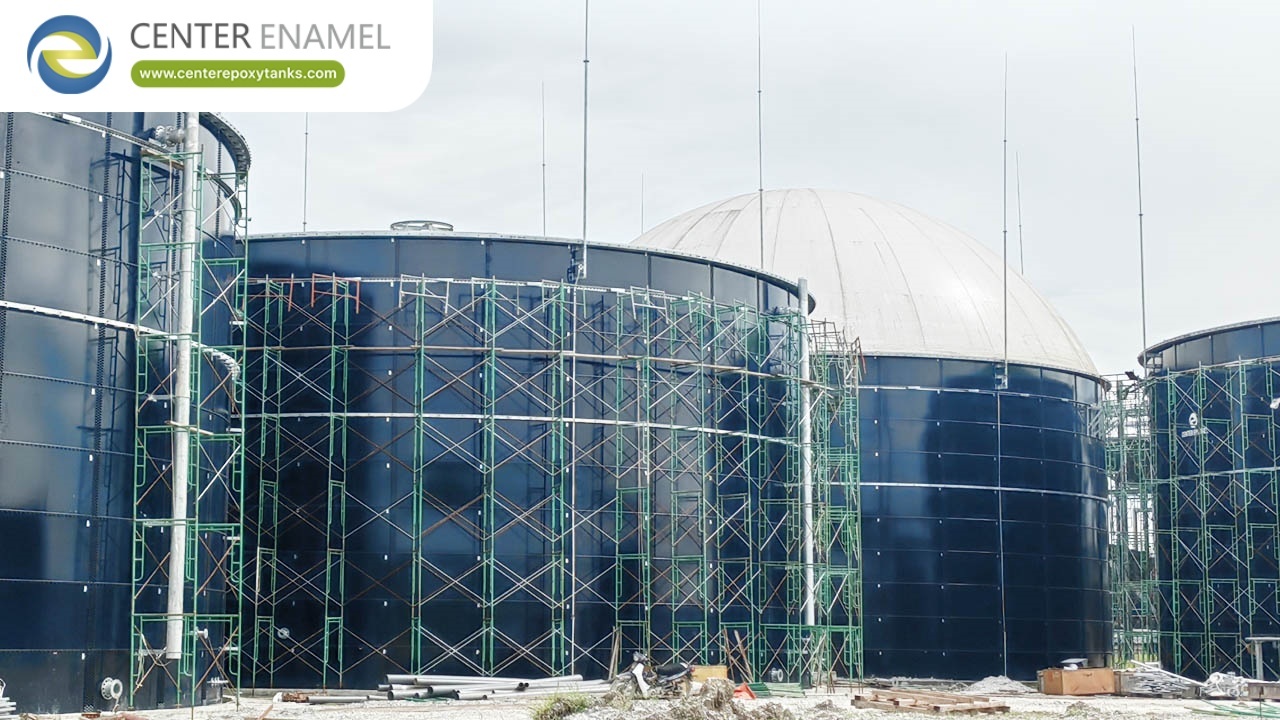
A digester makes raw biogas; getting usable energy out of it usually means upgrading (removing CO2, H2S and water) and buffering the gas so supply matches demand. This article covers the tank and vessel considerations for biogas upgrading and gas storage - distinct from the digester-reactor focus of the general biogas article - anchored to verified Center Enamel deliveries in Malaysia (5,087 m3 carbon steel, 2025) and Sweden (5,504 m3, 2024).
Beyond digestion, biogas needs upgrading and buffer storage so supply matches demand; that means gas holders, buffer vessels and process tanks chosen for pressure and gas compatibility. Center Enamel delivered a verified carbon-steel biogas tank in Malaysia (5,087 m3, 2025) and a GFS digester in Sweden (5,504 m3, 2024); diameters and heights are not disclosed and reported as Not Provided. Select the vessel from the gas pressure and purity duty, then confirm the welding and inspection standard.
Raw biogas is mostly methane plus CO2, water and trace H2S. Upgrading removes the CO2 and sulfur to reach pipeline or vehicle-fuel quality, while buffer storage absorbs the mismatch between continuous production and intermittent demand. The tanks and vessels around the upgrading skid are where that buffering and conditioning happens.
- Raw gas: CH4 + CO2 + H2O + trace H2S.
- Upgrading lifts gas to pipeline quality.
- Buffer storage matches supply to demand.
- Vessels condition and hold the gas.
Low-pressure gas is held in flexible membrane holders or floating-roof buffers on the digester; higher-pressure buffer uses steel vessels. The choice follows the pressure step the upgrading process requires. Carbon steel (as in Malaysia) serves where the process route and pressure favor fabricated vessels; GFS serves the lower-pressure digester and holder side.
- Membrane or floating-roof for low pressure.
- Steel vessels for higher-pressure buffer.
- Choice follows the upgrade pressure step.
- Carbon steel where fabrication route dictates.
Wet biogas carries water and trace H2S that corrode carbon steel, so vessels need internal protection and dryness control, while the digester-side GFS face shrugs off the aqueous corrosive stream. Matching the material to the gas condition - dry vs wet, high vs low pressure - prevents the common failure modes.
- Wet gas corrodes carbon steel without protection.
- Dry the gas or line the vessel.
- GFS face resists the aqueous digester side.
- Match material to dry/wet and pressure.
A Malaysian biogas project used 1 carbon steel tank of 5,087 m3 in 2025 - a process-vessel-scale delivery. A Swedish biogas project used 1 GFS tank of 5,504 m3 in 2024 on the digester side. Diameter and height are not disclosed in the public records.
Country / Year |
Volume |
Material |
Role |
Malaysia / 2025 |
5,087 m3 |
Carbon steel |
Process / gas vessel |
Sweden / 2024 |
5,504 m3 |
GFS bolted |
Digester side |
Pressure vessels and gas holders follow pressure-equipment rules (for example ASME Section VIII where applicable, or the local pressure-equipment directive) with weld inspection and periodic testing. Even the low-pressure membrane holders are inspected for integrity because a gas release is both a safety and an emissions event.
- Pressure-equipment rules for vessels.
- Weld inspection and periodic testing.
- Membrane holder integrity checks.
- Gas release is safety and emissions risk.
Upgrading only makes sense against a target gas specification, so the vessel and holder choices follow the number the off-take demands. Pipeline injection typically requires methane above about 95-98% with CO2, H2S and water driven to tight limits; vehicle fuel is similarly strict; on-site boiler use is more forgiving and may skip full upgrading. The trace H2S in particular drives corrosion on unprotected steel, so the gas condition - dry vs wet, high vs low pressure - sets the vessel material and lining. The verified Malaysia (5,087 m3 carbon steel, 2025) and Sweden (5,504 m3, 2024) references sit on different points of this spectrum, which is why one is carbon steel and the other GFS; specify the vessel to the gas spec, not the other way round.
- Target methane >95-98% for pipeline use.
- Drive CO2, H2S and water to spec.
- Match vessel material to gas condition.
- Size the upgrade to the off-take demand.
Biogas upgrading and buffer storage sit at the intersection of process and pressure equipment, so the compliance shortlist is specific. Confirm the pressure regime: low-pressure holders versus higher-pressure steel vessels, and apply the right code (for example ASME Section VIII where applicable, or the local pressure-equipment directive) with weld inspection and periodic testing. Control wet-gas corrosion on steel with drying and internal protection. Keep membrane holders inspected for integrity because a gas release is both a safety and an emissions event. Specifying against this shortlist prevents the two common failures: wet-gas corrosion on unprotected steel and holder damage from poor inspection.
- Confirm low vs high pressure regime.
- Apply the right pressure code and testing.
- Dry and protect steel against wet gas.
- Inspect membrane holders on schedule.
Upgrading removes carbon dioxide, water and trace hydrogen sulfide from raw biogas to reach pipeline or vehicle-fuel quality, leaving mostly methane.
Biogas is produced continuously but demand is intermittent, so a buffer holder or vessel absorbs the mismatch and lets the upgrading skid run steadily.
Carbon steel is used where the process pressure, temperature or fabrication route dictates a welded vessel, as in the Malaysia (5,087 m3, 2025) reference; it then needs internal protection.
Yes - Center Enamel delivered a 5,087 m3 carbon steel biogas tank in Malaysia (2025) and a 5,504 m3 GFS digester in Sweden (2024); diameters and heights are not disclosed.
Dry the gas and apply internal lining or coating, with scheduled weld and thickness inspection under pressure-equipment rules.
ASME Section VIII where applicable, or the local pressure-equipment directive, with weld inspection and periodic pressure testing.
GFS serves the lower-pressure digester and holder side with its inert face; higher-pressure buffering uses steel vessels.
Wet-gas corrosion on unprotected steel and membrane holder damage are the common failures, both addressed by drying, lining and inspection.
Follow the pressure step the upgrading process requires: membrane or floating roof for low pressure, steel vessels for higher-pressure buffer.
Beyond the digester, biogas needs upgrading and buffer storage so supply matches demand - gas holders, buffer vessels and process tanks chosen for pressure and gas compatibility. Center Enamel's verified deliveries include a 5,087 m3 carbon steel biogas tank in Malaysia (2025) and a 5,504 m3 GFS digester in Sweden (2024); diameters and heights are not disclosed and reported as Not Provided. Select the vessel from the gas pressure and purity duty, dry or line steel against wet-gas corrosion, and confirm the pressure-equipment welding and inspection standard.
Suggested CTA: Share your upgrading route and gas pressure and we will specify the right holder, buffer vessel and inspection package.