-
Glass Fused To Steel Tanks (896)
-
Stainless Steel Tanks (434)
-
Fusion Bonded Epoxy Tanks (652)
-
Galvanized Steel Tanks (321)
-
Aluminum Dome Roofs (1336)
-
Wastewater Storage Tanks (280)
-
Welded Steel Tanks (457)
-
Pressure Vessels (426)
-
Anaerobic Digester (202)
-
Industrial Water Tanks (349)
-
Glass Lined Steel Tanks (180)
-
Bolted Steel Tanks (389)
-
Sludge Storage Tank (115)
-
Biogas Storage Tank (173)
-
Leachate Storage Tanks (133)
-
Agricultural Water Storage Tanks (179)
-
Fire Water Tank (166)
-
Grain Storage Silos (146)
-
Biogas Projects (424)
-
Wastewater Treatment Projects (1722)
-
Double Membrane Roof (223)

|
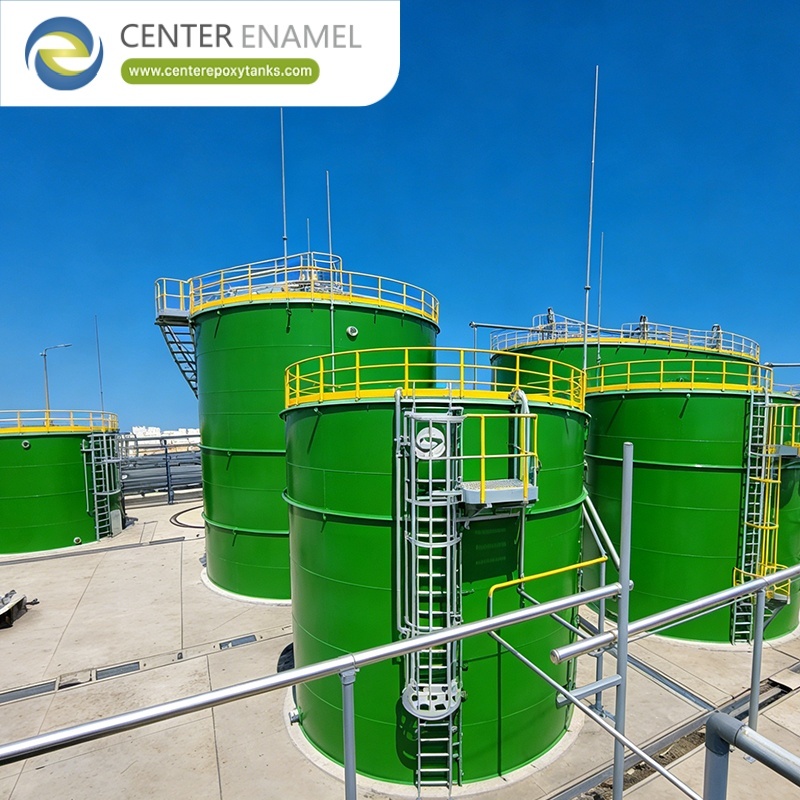
Anaerobic Digestion Tanks for Farm and Livestock Wastewater
| Place of Origin: | China |
| Brand Name: | CEC TANKS |
| Certification: | ISO 9001:2008, AWWA D103 , OSHA , BSCI |
| Model Number: | J2016012311 |
| Minimum Order Quantity: | 1set |
| Price: | $5000~$20000 one set |
| Packaging Details: | PE poly-foam between each two steel plates ; wooden pallet and wooden box |
| Delivery Time: | 0-60 days after deposit received |
| Payment Terms: | L/C,T/T |
| Supply Ability: | 60 sets per month |
|
Detail Information |
|||
| Place of Origin | China | Brand Name | CEC TANKS |
|---|---|---|---|
| Certification | ISO 9001:2008, AWWA D103 , OSHA , BSCI | Model Number | J2016012311 |
| PH Range: | A Grade Sheet PH:3-11, AA Grade Sheet PH : 1-14 | Coating Thickness: | Two Coating Internal And External |
| Corrosion Resistance: | Excellent ! Suitable For Waste Water Salt Water, Sea Water, High Sulfur Crude Oil, Salt Fox, Organic And Inorganic Compounds | Adhesion: | 3,450N/cm |
| Permeability: | Gas And Liquid Impermeable | Serive Life: | More Than 30 Years |
| Highlight: | Anaerobic Digestion Tanks for Farm Wastewater,Fusion Bonded Epoxy Tanks for Livestock Waste,Epoxy Coated Digestion Tanks for Farm Use |
||
Product Description
Anaerobic digestion of farm wastewater needs a gas-tight, corrosion-resistant, insulated reactor held at the mesophilic window (about 35-38 deg C). Center Enamel delivered a verified Canadian biogas project with 2 bolted GFS tanks totaling 798 m3 in 2024; diameters and heights are not disclosed and reported as Not Provided. GFS gives the inert, sealable shell that resists the acidic digestate while capturing biogas for energy.
Anaerobic digestion converts livestock manure and slurry into biogas and a stabilized digestate, but the reactor must be gas-tight, chemically resistant and heated or insulated for the mesophilic window. The tank is the heart of the system. This article explains AD tank requirements for farm wastewater and anchors to a verified Center Enamel delivery: a Canadian biogas project with 2 bolted GFS tanks totaling 798 m3 (2024).
The digester must hold a biologically active, mildly acidic slurry at 35-38 deg C (mesophilic) or 50-55 deg C (thermophilic), keep biogas in, and resist the corrosive digestate. That means a sealed, inert shell with a gas-tight roof and usually insulation or trace heating. A standard open water tank will not do.
- Gas-tight shell and roof for biogas capture.
- Mesophilic 35-38 deg C or thermophilic 50-55 deg C.
- Inert face resists acidic digestate.
- Insulation or trace heating for the window.
GFS provides the inert fired-enamel face that resists the ammoniacal, acidic digestate, and the bolted panel form lets the roof and seal be engineered for gas tightness. Panels are factory-enameled so there is no field coating to fail inside a continuously loaded reactor.
- Inert enamel resists digestate chemistry.
- Bolted form supports gas-tight roof design.
- No field coating inside the reactor.
- Expandable by adding rings.
The digester produces a methane-rich biogas (often 50-70% CH4) that a holder or flexible membrane stores before use in a boiler, engine-generator or upgrade unit. The roof must vent safely and the gas path must be explosion-aware; a gas-tight GFS roof with a membrane or fixed gas holder is the usual arrangement.
- Biogas ~50-70% methane.
- Membrane or fixed gas holder on roof.
- Safe venting and explosion-aware design.
- Use: boiler, CHP engine or upgrade.
A Canadian biogas project used 2 bolted GFS tanks totaling 798 m3 in 2024 with enamel roof covers - a two-tank arrangement that can separate digestion and storage or provide redundancy. Diameter and height are not disclosed in the public record.
Parameter |
Value |
Note |
Application |
Biogas project |
Farm AD |
Country / Year |
Canada / 2024 |
Verified |
Tank count |
2 |
Bolted GFS |
Total volume |
798 m3 |
Public record |
Single-tank volume |
~399 m3 (derived) |
798 / 2 |
Diameter / Height |
Not Provided |
Not in source record |
Roof |
Enamel cover |
Gas-tight capable |
AD tanks need reliable feedstock mixing, temperature control to hold the window, and regular desludging. The inert GFS face reduces internal coating inspection, but the gas system and heating loop are inspected on a strict schedule because biogas is both corrosive and flammable.
- Mix feedstock to avoid dead zones.
- Hold temperature in the mesophilic window.
- Regular desludging of digestate.
- Strict gas-system inspection.
The digester's performance is set upstream of the tank, so feedstock preparation deserves as much design attention as the reactor itself. Manure or livestock wastewater usually benefits from screening, grinding and often co-digestion with a higher-energy stream such as food waste or sludge to balance carbon and nutrients and lift gas yield. The tank must accept this prepared feed steadily rather than in erratic batches that shock the biology. The verified Canada AD reference (798 m3, 2 tanks, 2024) reflects a system where the reactor and feed preparation are specified together; treating the digester as a standalone vessel while ignoring feed quality is the most common reason an AD project underperforms its modeled gas output.
- Screen and grind before feeding.
- Co-digest to balance carbon and nutrients.
- Feed steadily, not in erratic batches.
- Specify reactor and preparation together.
Before specifying a farm anaerobic digestion tank, confirm the project is ready on the non-tank items that decide success. Lock the feedstock supply and its variability, because an AD reactor is only as stable as its feed. Confirm the mesophilic or thermophilic window and how it will be held - insulation, trace heating. Decide gas capture and end use - boiler, CHP or upgrade - so the roof and holder are specified correctly. Establish digestate off-take so the output has a home. With those answered, the GFS digester is straightforward to size and specify; without them, even a perfect tank underperforms.
- Lock feedstock supply and variability.
- Confirm the temperature window and how held.
- Decide biogas end use up front.
- Secure digestate off-take.
Typically the mesophilic window of 35-38 deg C, or the thermophilic window of 50-55 deg C for faster digestion; the tank must hold that temperature with insulation or heating.
Because the reactor produces flammable methane-rich biogas that must be captured for energy and kept out of the atmosphere and ignition paths; a sealed roof and shell are required.
An inert-surface bolted GFS tank resists the acidic, ammoniacal digestate and supports a gas-tight roof design without a field coating inside the reactor.
Yes - Center Enamel delivered a Canadian biogas project with 2 bolted GFS tanks totaling 798 m3 in 2024; diameters and heights are not disclosed publicly.
It is stored in a membrane or fixed holder on the roof and used in a boiler, combined-heat-and-power engine, or sent to an upgrading unit for injection or vehicle fuel.
The stabilized outflow is a nutrient-rich fertilizer applied to land; some systems use a second tank for digestate storage, as the two-tank Canada reference suggests.
AWWA D103-19 and ISO 28765 for the tank, with biogas-specific safety and pressure rules for the gas holder and piping.
Yes - trace heating or an insulated jacket holds the mesophilic window; the enamel face tolerates the duty while the heating loop is external or in-floor.
Bolted GFS is expandable by adding rings or a second tank, which is why two-tank AD arrangements are common for redundancy or staged digestion.
Anaerobic digestion of farm wastewater needs a gas-tight, corrosion-resistant, insulated reactor held at 35-38 deg C, capturing methane-rich biogas for energy. Center Enamel's verified Canadian biogas project used 2 bolted GFS tanks totaling 798 m3 (2024); diameters and heights are not disclosed and reported as Not Provided. GFS gives the inert, sealable shell that resists acidic digestate, and the bolted form supports a gas-tight roof. Hold the temperature window, mix the feedstock, and inspect the gas system on a strict schedule.
Suggested CTA: Share your feedstock type and energy goal and we will propose a GFS anaerobic digestion tank with gas-tight roof and heating design.