-
Glass Fused To Steel Tanks (896)
-
Stainless Steel Tanks (434)
-
Fusion Bonded Epoxy Tanks (652)
-
Galvanized Steel Tanks (321)
-
Aluminum Dome Roofs (1336)
-
Wastewater Storage Tanks (280)
-
Welded Steel Tanks (457)
-
Pressure Vessels (396)
-
Anaerobic Digester (202)
-
Industrial Water Tanks (349)
-
Glass Lined Steel Tanks (180)
-
Bolted Steel Tanks (389)
-
Sludge Storage Tank (115)
-
Biogas Storage Tank (173)
-
Leachate Storage Tanks (133)
-
Agricultural Water Storage Tanks (179)
-
Fire Water Tank (166)
-
Grain Storage Silos (146)
-
Biogas Projects (424)
-
Wastewater Treatment Projects (1702)
-
Double Membrane Roof (223)

|
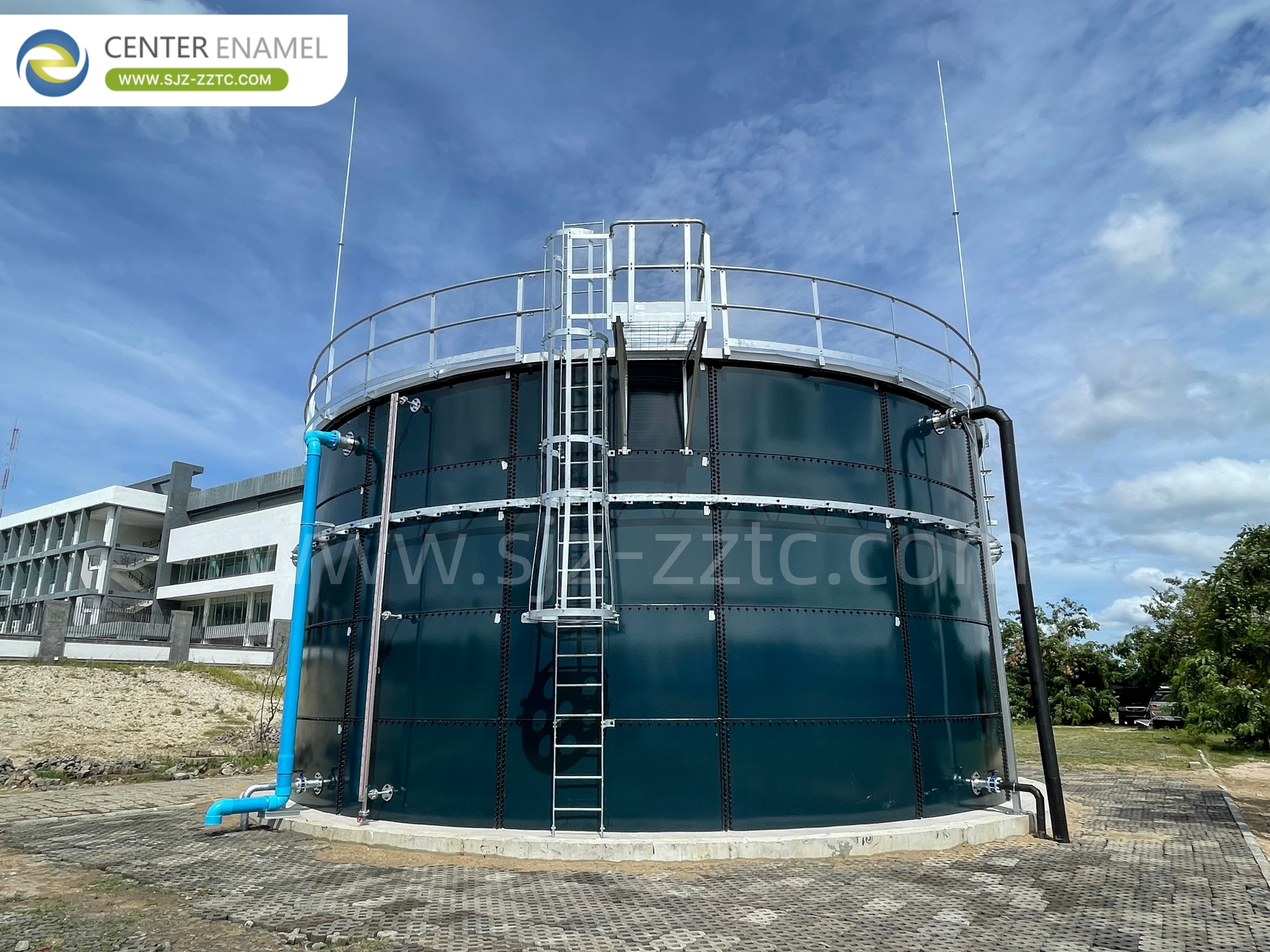
Leading Biogas Solution Provider for Chicken Manure into Biogas in Uzbekistan
| Place of Origin: | China |
| Brand Name: | CEC TANKS |
| Certification: | ISO 9001:2008, AWWA D103 , OSHA , BSCI |
| Model Number: | W |
| Minimum Order Quantity: | 1set |
| Price: | $5000~$20000 one set |
| Packaging Details: | PE poly-foam between each two steel plates ; wooden pallet and wooden |
| Delivery Time: | 10-30 days after deposit received |
| Payment Terms: | L/C,T/T |
| Supply Ability: | 60 sets per month |
|
Detail Information |
|||
| Place of Origin | China | Brand Name | CEC TANKS |
|---|---|---|---|
| Certification | ISO 9001:2008, AWWA D103 , OSHA , BSCI | Model Number | W |
| Tank Body Color: | Dark Green / Can Be Customized | Corrosion Integrity: | Excellent |
| Steel Plates Thickness: | 3mm To 12mm , Depends On The Tank Structure | Chemical Resistance: | Excellent |
| Size Of Panel: | 2.4M * 1.2M | Easy To Clean: | Smooth, Glossy, Inert, Anti-adhesion |
| Highlight: | chicken manure biogas solution,biogas project Uzbekistan,wastewater treatment biogas system |
||
Product Description
Uzbekistan's poultry sector has expanded rapidly over the past decade, driven by rising demand for affordable eggs and broiler meat and by government programmes that support modern layer and broiler complexes near Tashkent, Samarkand, and the Fergana Valley. The same growth that feeds cities also leaves mountains of chicken manure, much of it openly stockpiled near villages or sold cheaply as raw fertiliser. This guide explains how a turnkey chicken manure into biogas project—anchored by GFS tanks, a CSTR digester, and a double membrane roof—turns poultry waste into methane, electricity, heat, and organic soil amendment, while helping Uzbek farms meet tightening environmental and energy rules.
Uzbekistan now counts hundreds of large and mid-scale poultry complexes, with national laying and broiler numbers running into hundreds of millions of birds. Integrated producers in the Tashkent region, Andijan, Namangan, and Fergana run layer houses of 30,000 to 100,000 birds on a single site, and each house sheds several tonnes of fresh manure every day. In the narrow Fergana Valley, where farmland, villages, and poultry sheds sit close together, open drying pads and unlined manure piles generate strong ammonia odour, dust, and runoff that reaches irrigation canals. Farmers often sell the manure as a low-grade fertiliser to cotton, vegetable, and orchard plots, but in concentrated regions the supply far exceeds local demand. Rising natural-gas prices and tighter environmental inspections have made this ad-hoc disposal route increasingly risky for integrators.
Turning chicken manure into biogas converts a disposal liability into three practical benefits. First, anaerobic digestion stabilises the waste, cutting odour and pathogen loads so the farm no longer provokes neighbour complaints. Second, the captured methane displaces purchased natural gas or diesel used for brooder houses, incubators, and processing plant boilers. Third, the separated digestate—both fibrous solids and treated liquor—becomes a certified organic fertiliser that commands a better price than raw manure. The process chain begins at the poultry house: manure is collected, screened to remove feathers, litter, and grit, crushed, and pumped into a homogenisation tank where flow and temperature are equalised. The prepared slurry then feeds a heated anaerobic reactor, and the digested effluent moves to a buffer tank and solid-liquid separator before final storage or land application.
For Uzbekistan's high-throughput layer complexes, the Continuous Stirred-Tank Reactor (CSTR) is the established digestion technology. CSTR is an anaerobic treatment process in which organic feedstock and microbial culture are fully mixed inside a closed, insulated tank. The reactor is equipped with a mechanical stirring device—an agitator shaft, paddles, and a top-entry drive—that keeps the thick, fibrous poultry slurry homogeneous, prevents floating crust, and stops grit from settling at the bottom. By feeding semi-continuously at a controlled mesophilic temperature, the manure and the anaerobic community remain in a well-mixed fermentation state, which effectively breaks down the organic matter. The vessel also carries a dedicated biogas pipeline, a feed inlet, and a sludge discharge point, together with a positive and negative pressure protector that safeguards the tank against over-pressure or vacuum swings during gas withdrawal.
Raw biogas from the digester is saturated with water vapour and contains hydrogen sulfide, both of which damage downstream equipment. The gas therefore passes first through a dehydration unit to knock out free water, then through a desulfurisation unit to reduce sulfur compounds. A booster fan delivers the conditioned gas at a steady pressure through a flowmeter to the chosen end use. The four common utilisation routes are: biogas generation, where the methane drives a generator for on-site electricity; direct combustion in a boiler to supply heat for poultry houses and processing lines; a flare system, which safely burns off excess gas when production exceeds demand; and compressed natural gas upgrading, where the gas is purified to over 95% methane and compressed for pipeline, truck, or vehicle use.
Two products define the look and reliability of a modern Uzbek chicken manure into biogas plant. The first is the Glass-Fused-to-Steel (GFS) tank. Fired at 820 °C–930 °C, molten glass reacts with the steel plate surface to form an inert, inorganic bond that combines the strength and flexibility of steel with the outstanding corrosion resistance of glass. The double coating layer structure (2C2F) applies separate interior and exterior ground and surface coatings, giving robust protection against ammonia, acids, and moisture inside the digester. The second product is the double membrane roof, which serves as both the weather cover and the integrated gas holder. It directly reduces roof cost, and compared with a separate ground-mounted gas holder it significantly shrinks the plant footprint and saves foundation construction cost—a real advantage on the compact sites typical of Uzbek integrated farms.
Center Enamel matches tank material to each duty in the process train:
Glass Fused To Steel (GFS) tanks: flagship vessels for digesters, buffer tanks, and leachate storage, backed by a 2C2F dual-coating system and international certifications.
Galvanized Steel Tanks: receive a tough, wear-resistant, durable protective coating for general water collection and equalisation service.
Fusion Bonded Epoxy (FBE) tanks: developed with a global coatings partner for a bonded epoxy finish on moderately corrosive streams.
Stainless Steel Tanks: in AISI 304/316, reserved for high-purity water and the most corrosive process duties.
A turnkey project is more than a reactor, and Center Enamel supplies the supporting hardware that keeps the plant running:
Gas Holder stores conditioned biogas and smooths peaks between reactor output and engine or boiler demand.
Black Membrane covers slurry lagoons and polishing ponds, capturing fugitive methane on low-cost expansion stages.
Solid-liquid Separator splits digested effluent into fibrous organic fertiliser and a manageable liquid stream.
Torch System safely flares start-up or excess gas when downstream equipment is offline.
Lifting Pump transfers homogenised manure and digested sludge between tanks without clogging.
Dehydration and Desulfurization Tank cleans raw biogas before it reaches engines or upgrading units.
Screw Sludge Dewatering Machine further dewaters separated sludge for easier transport and land use.
Center Enamel acts as a single accountable biogas solution provider across the whole project lifecycle:
EPC service: one contract covers design, equipment supply, installation supervision, and commissioning.
Process Package: a matched pre-treatment, CSTR, biogas handling, and digestate treatment train sized to the farm's daily manure tonnage.
Equipment Supply: GFS tanks, double membrane roofs, gas holders, separators, pumps, and dewatering machinery delivered on one schedule.
Certified construction: built under ISO 9001, with CE/EN1090, NSF61, WRAS, and EN28765 references and designs aligned to AWWA D103, OSHA, EN28765, and EuroCode.
Global scale: a 150,000 m² R&D and production base, 250,000 sheets per year capacity, 500+ employees, and references in more than 100 countries.
Continental-climate know-how: insulation, heating, and coating selections tuned to Uzbekistan's hot summers and cold winters.
For Uzbekistan's growing poultry integrators, chicken manure has become both an environmental obligation and an energy opportunity. A well-engineered turnkey project built around a CSTR digester, GFS tank, and double membrane roof converts daily litter into electricity, process heat, and baggable organic fertiliser, while cutting odour and protecting irrigation canals. With an experienced biogas solution provider, even a mid-sized integrated complex can reduce its gas bill and meet the country's circular-economy goals.
Q1: How much biogas can be recovered from one tonne of chicken manure in a CSTR plant?
Typical yields are 40–80 m³ of biogas per tonne of fresh layered manure, depending on bedding content, reactor temperature, and hydraulic retention time. The gas usually contains 55–65% methane.
Q2: Can the digestate be applied directly to cotton or vegetable fields?
The fibrous separated fraction is commonly used as a soil conditioner after stabilisation. The liquid fraction should be tested for nitrogen, salts, and pathogens, and then applied at agronomic rates rather than broadcast raw.
Q3: Does a CSTR digester work in a cold continental climate?
Yes, provided the reactor is insulated and heated to a controlled mesophilic temperature. Biogas from the plant itself, supplemented by a start-up boiler, is usually enough to maintain digester temperature through the winter.