-
Glass Fused To Steel Tanks (896)
-
Stainless Steel Tanks (434)
-
Fusion Bonded Epoxy Tanks (652)
-
Galvanized Steel Tanks (321)
-
Aluminum Dome Roofs (1336)
-
Wastewater Storage Tanks (280)
-
Welded Steel Tanks (457)
-
Pressure Vessels (396)
-
Anaerobic Digester (202)
-
Industrial Water Tanks (349)
-
Glass Lined Steel Tanks (180)
-
Bolted Steel Tanks (389)
-
Sludge Storage Tank (115)
-
Biogas Storage Tank (173)
-
Leachate Storage Tanks (133)
-
Agricultural Water Storage Tanks (179)
-
Fire Water Tank (166)
-
Grain Storage Silos (146)
-
Biogas Projects (424)
-
Wastewater Treatment Projects (1702)
-
Double Membrane Roof (223)

|
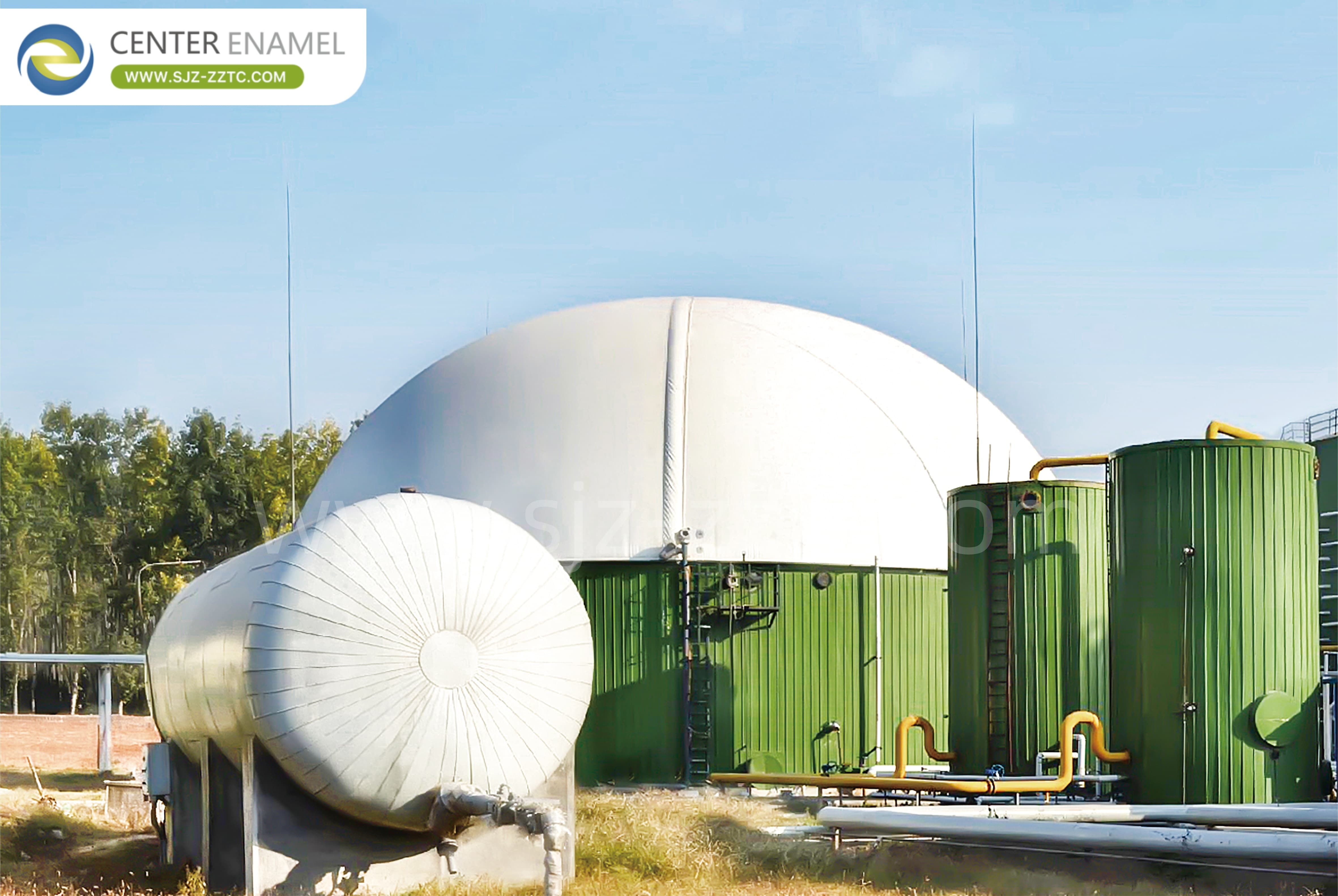
Turnkey Solution with CSTR Process for Chicken Manure into Biogas in Indonesia
| Place of Origin: | China |
| Brand Name: | CEC TANKS |
| Certification: | ISO 9001:2008, AWWA D103 , OSHA , BSCI |
| Model Number: | W |
| Minimum Order Quantity: | 1set |
| Price: | $5000~$20000 one set |
| Packaging Details: | PE poly-foam between each two steel plates ; wooden pallet and wooden |
| Delivery Time: | 10-30 days after deposit received |
| Payment Terms: | L/C,T/T |
| Supply Ability: | 60 sets per month |
|
Detail Information |
|||
| Place of Origin | China | Brand Name | CEC TANKS |
|---|---|---|---|
| Certification | ISO 9001:2008, AWWA D103 , OSHA , BSCI | Model Number | W |
| Tank Body Color: | Dark Green / Can Be Customized | Corrosion Integrity: | Excellent |
| Steel Plates Thickness: | 3mm To 12mm , Depends On The Tank Structure | Chemical Resistance: | Excellent |
| Size Of Panel: | 2.4M * 1.2M | Easy To Clean: | Smooth, Glossy, Inert, Anti-adhesion |
| Highlight: | CSTR biogas project Indonesia,chicken manure biogas turnkey solution,CSTR wastewater treatment project |
||
Product Description
Indonesia's rapidly expanding poultry sector generates enormous volumes of chicken manure every year, much of which is openly stockpiled or washed into rivers, triggering odour complaints, water contamination, and uncontrolled greenhouse gas emissions. This article explains how a turnkey chicken manure into biogas project—built around the proven CSTR process, GFS tanks, and double membrane roofs—helps Indonesian integrators and farm operators turn a liability into electricity, heat, and organic fertiliser. From pre-treatment to digestate management, Center Enamel delivers a complete anaerobic digestion package tailored to tropical farm conditions and tightened environmental expectations.
Indonesia is one of the largest poultry producers in Southeast Asia, with a national laying and broiler population that exceeds three billion birds per year. The industry is heavily concentrated on Java—including West Java, Central Java, and East Java—and has been spreading to Sumatra, Sulawesi, and Bali through nucleus-plasma partnership schemes. A single 50,000-bird laying house can generate several tonnes of manure each day, and across the country the cumulative poultry waste stream runs into tens of millions of tonnes annually. Most small and medium farms still dry manure on open fields, sell it cheaply to local traders, or wash it untreated into canals. The consequences are familiar: ammonia odour complaints from neighbouring villages, eutrophication of rivers and reservoirs, high biological oxygen demand in receiving water, and methane released without capture. As Indonesian environmental regulations tighten and customers demand zero-discharge operations, integrators can no longer treat manure as a disposable waste stream.
Converting chicken manure into biogas through anaerobic digestion solves several problems at once. First, it stabilises the organic fraction, dramatically reducing odour and pathogen levels so that the digestate no longer poses a public-health risk. Second, it captures methane that would otherwise vent to the atmosphere and converts it into useful energy. Third, the by-products—liquid and fibrous digestate—become nutrient-rich soil amendments that can return to palm oil, corn, rice, or vegetable plots, closing the nutrient loop. The typical project flow is straightforward: manure is collected from the poultry houses, pre-treated to remove grit and bedding, pumped into a homogenisation tank for mixing and flow equalisation, fed continuously into a heated anaerobic reactor, and then routed through solid-liquid separation. The separated liquor goes to a storage or polishing stage, while the biogas is dewatered, desulfurised, and delivered to a generator, boiler, flare, or upgrading unit.
The heart of most commercial chicken manure into biogas plants is the Continuous Stirred-Tank Reactor (CSTR). CSTR is an anaerobic treatment technology in which fermentation feedstock and microorganisms are fully mixed inside a closed, insulated tank. The reactor is equipped with a mechanical stirring device consisting of an agitator shaft, paddles, and a side-entry or top-entry mixer. By feeding semi-continuously at a controlled temperature—typically in the mesophilic or thermophilic range—the high-solids chicken manure and the anaerobic microbial community remain in a well-mixed state, which prevents stratification, avoids scum crust formation, and keeps the active biomass in contact with fresh substrate. A glass-fused-to-steel CSTR digester also carries a positive and negative pressure protector, a biogas pipeline, and a feed inlet and sludge discharge point designed for fibrous, nitrogen-rich poultry waste. The process effectively degrades the organic matter and produces a steady biogas stream composed mainly of methane and carbon dioxide.
Raw biogas leaving the reactor is hot and saturated with moisture, and it contains hydrogen sulfide that can corrode engines and boilers. The treatment train therefore starts with biogas dehydration to remove water droplets, followed by desulfurisation to lower sulfur content. A booster fan then pushes the conditioned gas through a flowmeter into the chosen end-use equipment. The four common utilisation pathways are: biogas generation, where the methane drives a generator to produce electricity; a boiler, where the gas is combusted directly for heat used in poultry house warming or processing plant steam; a flare system, which provides safe pressure relief when gas production exceeds on-site demand; and compressed natural gas upgrading, in which biogas is purified to over 95% methane and compressed for pipeline or vehicle use.
Two products define the above-ground look of a modern chicken manure into biogas plant. The first is the Glass-Fused-to-Steel (GFS) tank. After firing at 820 °C–930 °C, molten glass reacts with the steel plate surface to form an inert, inorganic bond that combines the strength and flexibility of steel with the outstanding corrosion resistance of glass. The double coating layer structure (2C2F) applies a distinct interior ground and surface coating and an exterior ground and surface coating, making GFS tanks well suited to the damp, acidic, and ammonia-rich environment inside an anaerobic digester. The second product is the double membrane roof, which serves as both the tank cover and the integrated gas holder. Under normal working conditions it is the preferred solution: it directly reduces roof cost, and compared with a separate ground-mounted gas holder it significantly reduces the floor area and saves foundation construction cost.
Beyond flagship GFS tanks, Center Enamel supplies three additional tank families so that every stream in the plant can be matched to the right material:
Galvanized steel tanks receive a tough, wear-resistant, and durable protective coating through the galvanizing process, offering dependable service for water collection and buffer duty.
Fusion Bonded Epoxy (FBE) tanks are developed with a global coatings partner, giving an innovative bonded epoxy finish for moderately corrosive liquor.
Stainless steel tanks, in AISI 304/316 grades, are reserved for the most stringent duties, including high-purity water and corrosive process liquids.
A turnkey plant is more than a reactor, and Center Enamel packages the supporting hardware needed to run the line reliably:
Gas Holder stores conditioned biogas and buffers demand fluctuation between the reactor and the generator or boiler.
Black Membrane covers slurry storage or polishing ponds and captures fugitive methane in low-cost expansion stages.
Solid-liquid Separator splits digested effluent into fibrous solids (usable as organic fertiliser) and a liquid stream for further treatment or land application.
Torch System continuously flares excess or start-up gas safely when downstream equipment is offline.
Lifting Pump transfers homogenised manure and digested sludge between tanks without clogging.
Dehydration and Desulfurization Tank treats raw biogas before it reaches engines or upgrading units.
Screw Sludge Dewatering Machine dewaters separated sludge to reduce transport cost and produce a stackable soil amendment.
Center Enamel is a one-stop solution provider for chicken manure into biogas projects, not merely a tank supplier. Customers engage us for:
EPC service: single-point responsibility from design and equipment supply through installation supervision and commissioning.
Process Package: a matched pre-treatment, CSTR, gas handling, and digestate treatment train sized to the farm's daily manure tonnage.
Equipment Supply: GFS tanks, double membrane roofs, gas holders, separators, pumps, and dewatering machinery delivered under one contract.
Proven certification basis: vessels built to CE/EN1090, ISO 9001, NSF61, WRAS, and EN28765 standards, with design references to AWWA D103, OSHA, EN28765, and EuroCode.
Global service footprint: installed references in more than 100 countries and a production capacity of 250,000 sheets per year, backed by a 150,000 m² R&D and production base and more than 500 employees.
Tropical know-how: designs and coatings selected for high-humidity, high-temperature Southeast Asian farm conditions.
For Indonesian poultry integrators and independent layer or broiler farms, chicken manure no longer has to be a costly environmental liability. A well-engineered turnkey project centred on a CSTR digester, GFS tank, and double membrane roof converts daily manure into dispatchable electricity, process heat, and baggable organic fertiliser while cutting odour and water pollution. With the right EPC partner, even a mid-sized 50,000-bird farm can reach energy self-sufficiency and meet tightening regulatory expectations.
Q1: How much biogas can one tonne of chicken manure produce?
Typical yields range from 40 to 80 cubic metres of biogas per tonne of fresh layered manure, depending on bedding content, feed ratio, reactor temperature, and hydraulic retention time. Biogas from chicken manure usually contains 55–65% methane.
Q2: Is the digestate from chicken manure safe to use as fertiliser?
When the CSTR reactor is operated at mesophilic or thermophilic temperature with adequate retention time, pathogens and weed seeds are significantly reduced. The separated fibrous fraction is commonly used as soil conditioner, while the liquid fraction should be tested for nitrogen and salts before controlled land application.
Q3: How large should a starter biogas plant be for a 50,000-bird layer house?
A typical 50,000-bird layer house generates several tonnes of manure daily; a pre-engineered plant in the 50–150 kW electrical output range is usually sufficient to cover farm electricity demand and house heating, with excess gas flared or exported.