-
Glass Fused To Steel Tanks (659)
-
Stainless Steel Tanks (434)
-
Fusion Bonded Epoxy Tanks (592)
-
Galvanized Steel Tanks (321)
-
Aluminum Dome Roofs (1336)
-
Wastewater Storage Tanks (237)
-
Welded Steel Tanks (457)
-
Pressure Vessels (295)
-
Anaerobic Digester (202)
-
Industrial Water Tanks (349)
-
Glass Lined Steel Tanks (180)
-
Bolted Steel Tanks (389)
-
Sludge Storage Tank (115)
-
Biogas Storage Tank (173)
-
Leachate Storage Tanks (133)
-
Agricultural Water Storage Tanks (179)
-
Fire Water Tank (166)
-
Grain Storage Silos (146)
-
Biogas Projects (424)
-
Wastewater Treatment Projects (1359)
-
Double Membrane Roof (223)


|
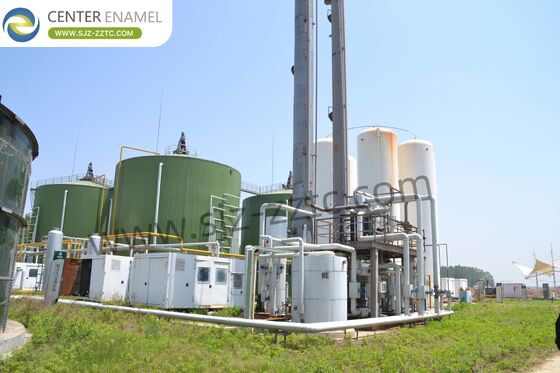
Cassava Processing Waste Treatment in Cambodia: Professional Biogas Project Contractor with GFS Tanks
| Place of Origin: | China |
| Brand Name: | CEC TANKS |
| Certification: | ISO 9001:2008, AWWA D103 , OSHA , BSCI |
| Model Number: | W |
| Minimum Order Quantity: | 1set |
| Price: | $5000~$20000 one set |
| Packaging Details: | PE poly-foam between each two steel plates ; wooden pallet and wooden |
| Delivery Time: | 10-30 days after deposit received |
| Payment Terms: | L/C,T/T |
| Supply Ability: | 60 sets per month |
|
Detail Information |
|||
| Place of Origin | China | Brand Name | CEC TANKS |
|---|---|---|---|
| Certification | ISO 9001:2008, AWWA D103 , OSHA , BSCI | Model Number | W |
| Tank Body Color: | Dark Green / Can Be Customized | Corrosion Integrity: | Excellent |
| Steel Plates Thickness: | 3mm To 12mm , Depends On The Tank Structure | Chemical Resistance: | Excellent |
| Size Of Panel: | 2.4M * 1.2M | Easy To Clean: | Smooth, Glossy, Inert, Anti-adhesion |
| Highlight: | Cassava waste biogas treatment Cambodia,Professional biogas project contractor,GFS tanks wastewater treatment |
||
Product Description
Cambodia has emerged as one of Southeast Asia’s top cassava producers and exporters, with planted areas expanding from 663,929 hectares in 2020 to over 774,000 hectares, and the domestic processing capacity growing rapidly with 16 factories now in operation. This agricultural success, however, generates significant volumes of organic waste—including high-strength wastewater from starch extraction. As a professional Biogas Project Contractor, Center Enamel delivers integrated solutions combining advanced CSTR Process technology, durable GFS Tanks, and complete auxiliary equipment to transform this environmental challenge into renewable energy. This article explores how Cambodia’s cassava industry can harness its waste resources through proven anaerobic digestion infrastructure.
Cassava processing waste originates from multiple stages of tapioca starch and flour production: washing water, peeling residues, grinding pulp, and starch extraction effluent. Cambodia’s cassava processing wastewater features high COD, high BOD, high suspended solids, and easy acidification—characteristics that make it a potent pollutant if discharged untreated. Under the country’s tropical monsoon climate with year-round high temperatures and humidity, uncontrolled waste rapidly decomposes, causing severe river pollution, water eutrophication, odor spread, and ecological damage to the Mekong river basin. The waste is rich in residual starch, carbohydrates, proteins, and mineral salts, with a highly biodegradable nature that makes it ideally suited for biological treatment and biogas generation.
Converting cassava processing waste into biogas occurs through a natural biological process called anaerobic digestion (AD), which operates under oxygen-free conditions. The organic matter is broken down by a consortium of microorganisms in four distinct stages: hydrolysis (complex carbohydrates are decomposed into simple sugars), acidogenesis (sugars convert to volatile fatty acids), acetogenesis (intermediates become acetic acid), and methanogenesis (methanogenic archaea produce biogas). The resulting biogas typically contains 55–70% methane, with the remainder being carbon dioxide and trace gases. This captured biogas can be used for factory power generation, boiler heating, and production energy supply, while the fermented residues become high-quality organic fertilizer, forming a closed-loop circular economy model.
The CSTR Process (Continuous Stirred-Tank Reactor) is the most suitable anaerobic treatment technology for high-solids cassava processing wastewater. This highly effective system ensures fermentation raw materials and microorganisms are fully mixed in a closed tank to produce biogas. The CSTR reactor is equipped with a mechanical stirring device that creates a homogeneous environment, preventing scum crusting and sediment accumulation—common operational challenges when treating high-suspended solids waste. By feeding continuously or semi-continuously at a constant temperature, the organic wastewater is maintained in a complete mixed fermentation state, allowing for stable biogas production and efficient degradation of organic matter. The CSTR Process can achieve high COD removal rates exceeding 90% when treating agro-industrial effluents, making it ideal for large-scale cassava processing operations.
For reliable and long-lasting biogas infrastructure, Center Enamel's GFS Tanks serve as the core of the anaerobic digestion system. These tanks are manufactured using a unique high-temperature firing process (820°C–930°C) that fuses glass to steel, creating an inert, inorganic bond that combines the strength and flexibility of steel with outstanding corrosion resistance. This makes them immune to the aggressive organic acids, ammonia, and hydrogen sulfide (H₂S) generated during the digestion process, with a pH resistance range of 1–14 and a service life exceeding 30 years. The Double Membrane Roof is the preferred solution for biogas collection under normal working conditions. It provides excellent airtightness for safe biogas capture and effective odor control, while its cost-optimized design reduces the need for a separate ground-mounted gas holder, minimizing the project footprint.
Beyond GFS Tanks and Double Membrane Roofs, Center Enamel provides a comprehensive portfolio of storage and roof options to meet specific project requirements:
- Aluminum Geodesic Dome Roof: Provides advanced corrosion resistance, expansive clear span capability, and efficient, cost-effective construction with minimal maintenance.
- Aluminum Alloy Trough Deck Roof: An economical option for applications like potable water, wastewater, and firewater storage, designed to keep out rain and wind with effective odor control.
- Glass-Fused-to-Steel Roof: Offers excellent airtightness, often utilized for pressurized structures and demanding applications requiring superior corrosion protection.
- Stainless Steel Roof: Delivers super anti-corrosion performance and a long service life, making it a viable solution for harsh environments.
- FRP Roof: A suitable option for situations where airtightness is not required, such as drinking water, agriculture, and firewater storage, with dome or flat profile options.
A fully operational biogas plant requires a range of auxiliary equipment to process raw waste, manage biogas, and handle the resulting digestate:
- Gas Holder: Provides dynamic, hermetic storage for biogas, buffering against fluctuations in production to ensure a stable supply to energy recovery equipment.
- Solid-Liquid Separator: Efficiently separates the solid and liquid fractions of digestate, facilitating the production of valuable organic fertilizer.
- Torch System: A safety device used to safely combust excess or surplus biogas, preventing methane release to the atmosphere.
- Lifting Pump: Transfers raw cassava wastewater and digestate between various stages of the treatment process.
- Dehydration and Desulfurization Tank: Treats raw biogas by removing moisture and corrosive hydrogen sulfide, preparing it for safe and efficient utilization.
- Screw Sludge Dewatering Machine: Dewaters the sludge produced during anaerobic digestion, reducing its volume for more economical disposal or agricultural use.
As a professional Biogas Project Contractor, Center Enamel distinguishes itself through comprehensive, integrated solutions tailored for the Cambodian market. Our key advantages include:
- Professional Process Customization: We configure targeted anaerobic processes (CSTR, UASB) according to the specific high-starch and easy-acidification characteristics of cassava waste, ensuring stable operation and maximum biogas yield.
- High-Performance GFS Tanks: Our premium GFS Tanks provide unmatched acid corrosion resistance (pH 1–14 tolerance), a long 30+ year service life, and fast bolted installation suitable for Cambodia’s hot, humid climate.
- Strict International Quality Standards: All tank plates pass rigorous high-voltage spark testing (over 1500V), complying with ISO, AWWA, CE/EN1090, and other global standards, ensuring no leakage and long-term durability.
- Strong R&D & Manufacturing Strength: With over 200 patented enamel formulas and Asia's largest GFS tank production base (150,000 m²), we ensure standardized prefabrication and reliable delivery.
- Rich Tropical Project Experience: With extensive experience in Southeast Asia's tropical environments, we understand the unique challenges and requirements of Cambodian projects.
- One-Stop EPC Service: We cover the entire project lifecycle—design, equipment manufacturing, on-site installation, commissioning, and full after-sales support—saving customers time and coordination costs.
By integrating advanced CSTR technology with premium GFS Tanks and a full suite of auxiliary equipment, Center Enamel provides a complete and sustainable waste-to-energy solution for Cambodia's expanding cassava processing sector. This approach not only eliminates severe environmental pollution caused by untreated waste but also creates new revenue streams through renewable energy and nutrient-rich fertilizer. As a trusted Biogas Project Contractor, Center Enamel is helping Cambodian industries build a more sustainable and economically viable future.