
-
Glass Fused To Steel Tanks (646)
-
Stainless Steel Tanks (434)
-
Fusion Bonded Epoxy Tanks (592)
-
Galvanized Steel Tanks (321)
-
Aluminum Dome Roofs (1336)
-
Wastewater Storage Tanks (237)
-
Welded Steel Tanks (457)
-
Pressure Vessels (295)
-
Anaerobic Digester (202)
-
Industrial Water Tanks (349)
-
Glass Lined Steel Tanks (180)
-
Bolted Steel Tanks (389)
-
Sludge Storage Tank (115)
-
Biogas Storage Tank (173)
-
Leachate Storage Tanks (133)
-
Agricultural Water Storage Tanks (179)
-
Fire Water Tank (166)
-
Grain Storage Silos (146)
-
Biogas Projects (424)
-
Wastewater Treatment Projects (1339)
-
Double Membrane Roof (223)

|
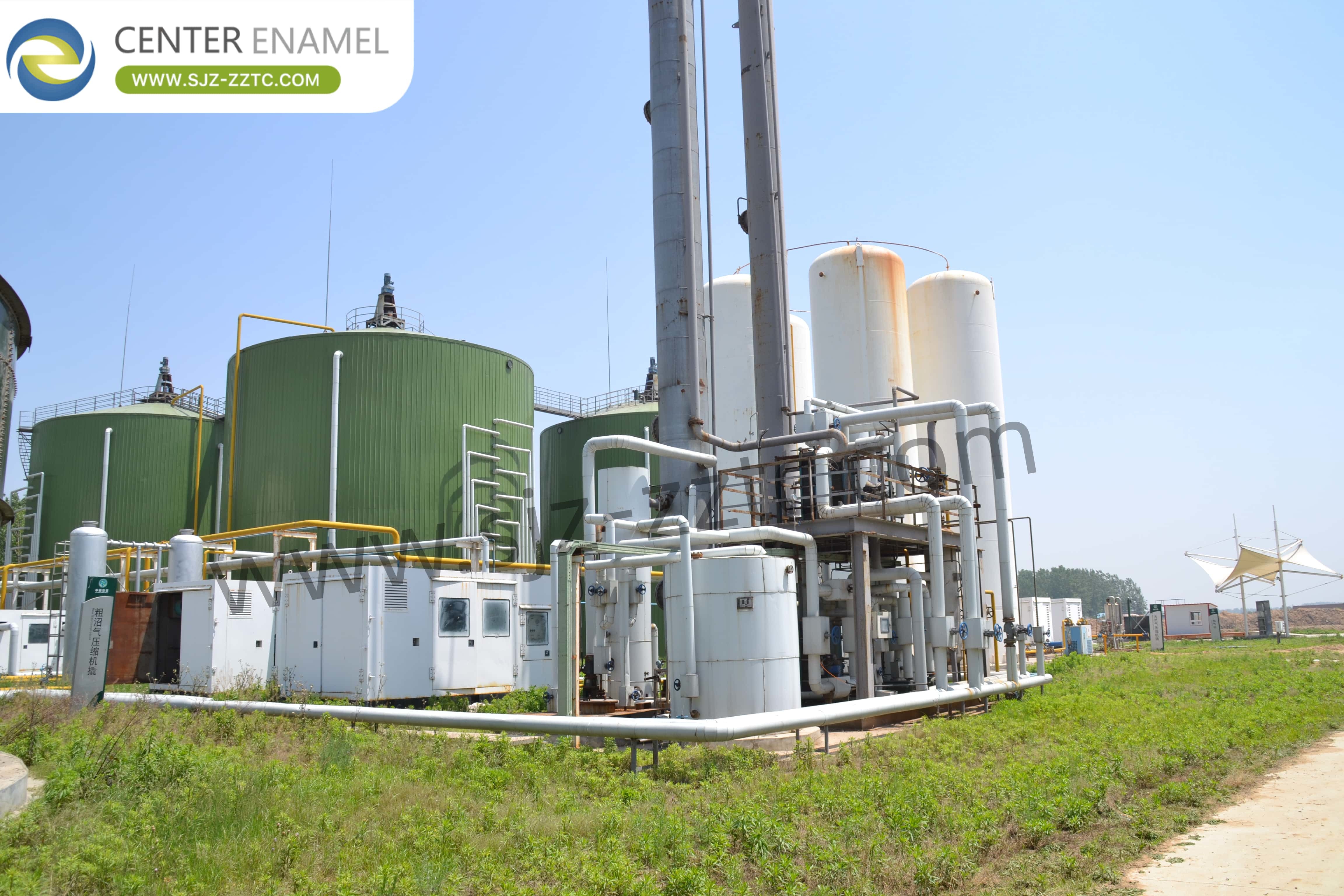
Advancing Garden Waste Treatment in Indonesia with GFS Tanks and Biogas Plant Design
| Place of Origin: | China |
| Brand Name: | CEC TANKS |
| Certification: | ISO 9001:2008, AWWA D103 , OSHA , BSCI |
| Model Number: | W |
| Minimum Order Quantity: | 1set |
| Price: | $5000~$20000 one set |
| Packaging Details: | PE poly-foam between each two steel plates ; wooden pallet and wooden |
| Delivery Time: | 10-30 days after deposit received |
| Payment Terms: | L/C,T/T |
| Supply Ability: | 60 sets per month |
|
Detail Information |
|||
| Place of Origin | China | Brand Name | CEC TANKS |
|---|---|---|---|
| Certification | ISO 9001:2008, AWWA D103 , OSHA , BSCI | Model Number | W |
| Tank Body Color: | Dark Green / Can Be Customized | Corrosion Integrity: | Excellent |
| Steel Plates Thickness: | 3mm To 12mm , Depends On The Tank Structure | Chemical Resistance: | Excellent |
| Size Of Panel: | 2.4M * 1.2M | Easy To Clean: | Smooth, Glossy, Inert, Anti-adhesion |
| Highlight: | GFS tanks for garden waste treatment,biogas plant design Indonesia,wastewater treatment projects with GFS tanks |
||
Product Description
Indonesia faces a growing challenge as garden waste makes up a significant portion of unmanaged waste. This article explores how advanced anaerobic digestion technology, featuring robust GFS Tanks and comprehensive Biogas Plant Design, provides a sustainable pathway for converting green waste into renewable energy. The piece outlines the potential, the technology, and the infrastructure required for successful projects across Indonesia.
Indonesia, with its vast tropical landscapes and growing urban centers, generates substantial quantities of garden waste. Recent data indicates that garden waste constitutes 13% of unmanaged waste in Indonesia, equivalent to approximately 4.2 million tons in 2022. With a legal mandate for extensive green spaces, this waste stream is likely to continue increasing.
Traditional disposal methods have relied heavily on open dumping and landfilling. Improper waste management causes severe environmental impacts, including groundwater contamination, odor problems, and the release of greenhouse gases. Studies confirm that converting organic content of municipal solid waste into biogas offers a viable alternative energy source while addressing waste management challenges. As landfills reach capacity and environmental regulations tighten, there is growing urgency to adopt sustainable waste treatment solutions.
The conversion of garden waste into biogas through anaerobic digestion presents a transformative solution for Indonesia's waste management landscape. This biological process breaks down organic matter in a sealed, oxygen-free environment, producing a methane-rich biogas suitable for electricity generation, heating, or upgraded to vehicle fuel.
Garden waste contains biodegradable organic components such as cellulose, hemicellulose, and lignin. Under controlled anaerobic conditions, microorganisms decompose these substances through four stages: hydrolysis, acidogenesis, acetogenesis, and methanogenesis. The resulting biogas contains approximately 60-70% methane, with the remainder primarily carbon dioxide. Research indicates that fruit and vegetable waste—abundant in Indonesian markets—has high moisture content and is rich in easily degradable organic matter, making it ideal feedstock for anaerobic digestion. Additionally, the nutrient-rich digestate can be processed into high-quality organic fertilizer, creating a closed-loop circular economy.
The Continuous Stirred-Tank Reactor (CSTR) serves as the fundamental processing unit for efficient garden waste-to-biogas conversion in Indonesia. This anaerobic treatment technology is specifically designed to handle high-suspended solids and the diverse organic loads typical of tropical garden waste.
The CSTR system incorporates mechanical stirring devices that continuously agitate the reactor contents, ensuring thorough mixing of fermentation materials and microorganisms. This constant agitation prevents solids from settling and scum layers from forming, maximizing contact between microbes and substrate. By operating at mesophilic temperatures (35-38°C) with continuous or semi-continuous feeding, the CSTR creates a stable environment for anaerobic microorganisms. Research confirms that CSTR technology effectively handles high organic loading rates, delivering stable performance even when feedstock characteristics fluctuate. This robust design ensures reliable, long-term performance, making it ideal for Indonesia's varying waste composition.
For secure, long-term biogas storage and digestion infrastructure, Glass-Fused-to-Steel (GFS) Tanks combined with double membrane roofs provide superior solutions. GFS tanks feature a glass coating fused to steel at temperatures exceeding 800°C, creating a hard, inert, and exceptionally smooth surface that delivers outstanding corrosion resistance against the acidic, chemically aggressive digester environment. This inorganic bond combines the strength and flexibility of steel with the corrosion resistance of glass, eliminating the need for costly annual anti-corrosive treatments.
The Double Membrane Roof serves as an integrated gas holder, offering significant cost optimization by eliminating the need for separate ground-mounted gas holders. This space-efficient design reduces the overall plant footprint and saves foundation construction costs. The outer membrane withstands Indonesia's tropical climate, while the inner membrane maintains constant gas pressure for stable delivery to downstream equipment. The airtight design ensures effective biogas collection and odor control—critical for waste processing facilities near Indonesian communities.
A comprehensive Biogas Plant Design incorporates various tank and cover options to meet specific requirements:
Cover Solutions:
- Aluminum Geodesic Dome Roof offers advanced corrosion resistance and expansive clear span capability with minimal maintenance
- Glass-Fused-to-Steel Roof provides air-tightness for pressurized structures with cone-shaped design
- Aluminum Alloy Trough Deck Roof serves as an economical option for applications without air-tightness
- Stainless Steel Roof offers exceptional anti-corrosion performance for harsh environments
- FRP Roof provides practical solutions for non-air-tight applications
Storage Options:
- Galvanized Steel Tanks with tough, wear-resistant protective coatings
- Fusion Bonded Epoxy Tanks featuring advanced coating technology developed in partnership with AkzoNobel
- Stainless Steel Tanks for high-purity or harsh-environment applications
A fully functional garden waste biogas facility requires a suite of supporting equipment:
- Gas Holder for collecting and storing produced biogas
- Dehydration and Desulfurization Tank for removing moisture and corrosive hydrogen sulfide
- Torch System as a crucial safety device for flaring excess or emergency gas
- Solid-liquid Separator for separating digestate into solid and liquid fractions
- Screw Sludge Dewatering Machine for further reducing moisture content
- Lifting Pump for moving feedstock and digestate through the system
- Black Membrane for storing process liquids like digestate
Center Enamel provides comprehensive Biogas Plant Design services for garden waste-to-biogas projects in Indonesia, offering several key advantages:
- Turnkey Project Management covering the entire lifecycle from feasibility studies to commissioning
- High-Quality Manufacturing with substantial R&D and production capabilities as a leading GFS tank manufacturer
- Global Expertise with successful projects in over 100 countries, bringing international best practices to Indonesia
- Fully Integrated Equipment Suite ensuring seamless integration and operational reliability
- International Standards Compliance with AWWA D103, OSHA, and EN ISO 28765
- Proven Certifications including ISO 9001, CE/EN1090, and NSF61
- Tailored Solutions customized to align with local waste characteristics and regional environmental parameters
For Indonesia, transforming garden waste into biogas presents a powerful opportunity to address waste management challenges while generating renewable energy. By leveraging proven anaerobic digestion technology, particularly the CSTR process, and employing high-quality infrastructure like GFS Tanks and the Double Membrane Roof, Indonesia can advance its sustainable development goals. With comprehensive Biogas Plant Design solutions, projects can be developed efficiently, contributing to a greener, more circular economy across the archipelago.
1. How much garden waste does Indonesia generate annually?
Garden waste makes up 13% of unmanaged waste in Indonesia, equivalent to approximately 4.2 million tons in 2022, and is likely to increase due to legal mandates for green spaces.
2. What makes garden waste suitable for biogas production?
Garden waste contains biodegradable organic components such as cellulose and lignin that anaerobic microorganisms can break down to produce methane-rich biogas.
3. What are the environmental benefits of biogas from garden waste?
Converting garden waste to biogas reduces landfill methane emissions, generates renewable energy, and produces biofertilizer that supports low-carbon development in Indonesia.


