
-
Glass Fused To Steel Tanks (646)
-
Stainless Steel Tanks (434)
-
Fusion Bonded Epoxy Tanks (592)
-
Galvanized Steel Tanks (321)
-
Aluminum Dome Roofs (1336)
-
Wastewater Storage Tanks (237)
-
Welded Steel Tanks (457)
-
Pressure Vessels (295)
-
Anaerobic Digester (202)
-
Industrial Water Tanks (349)
-
Glass Lined Steel Tanks (180)
-
Bolted Steel Tanks (389)
-
Sludge Storage Tank (115)
-
Biogas Storage Tank (173)
-
Leachate Storage Tanks (133)
-
Agricultural Water Storage Tanks (179)
-
Fire Water Tank (166)
-
Grain Storage Silos (146)
-
Biogas Projects (424)
-
Wastewater Treatment Projects (1339)
-
Double Membrane Roof (223)

|
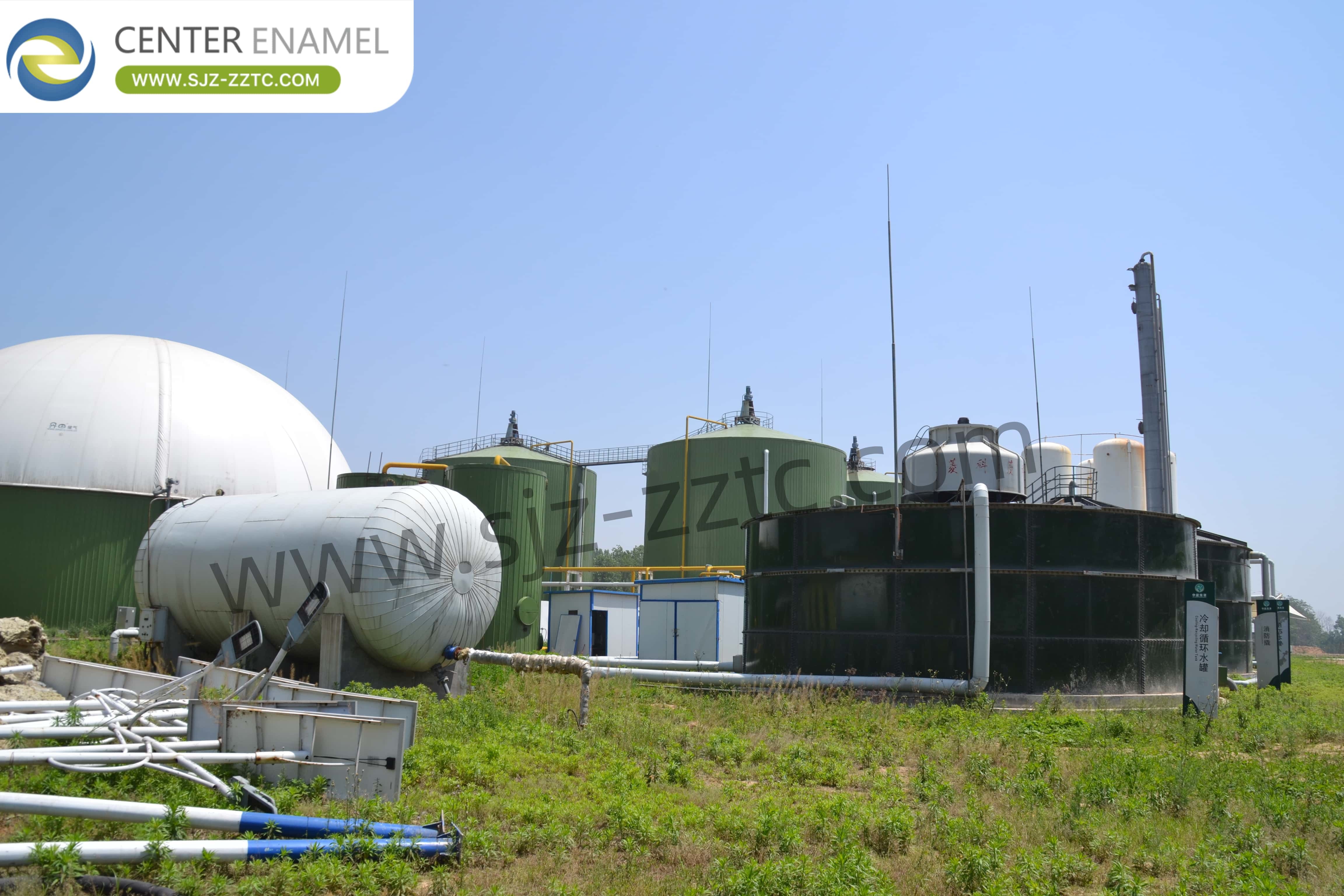
Myanmar Kitchen Waste to Biogas: Sustainable CBG Plant EPC Solutions with GFS Tanks
| Place of Origin: | China |
| Brand Name: | CEC TANKS |
| Certification: | ISO 9001:2008, AWWA D103 , OSHA , BSCI |
| Model Number: | W |
| Minimum Order Quantity: | 1set |
| Price: | $5000~$20000 one set |
| Packaging Details: | PE poly-foam between each two steel plates ; wooden pallet and wooden |
| Delivery Time: | 10-30 days after deposit received |
| Payment Terms: | L/C,T/T |
| Supply Ability: | 60 sets per month |
|
Detail Information |
|||
| Place of Origin | China | Brand Name | CEC TANKS |
|---|---|---|---|
| Certification | ISO 9001:2008, AWWA D103 , OSHA , BSCI | Model Number | W |
| Tank Body Color: | Dark Green / Can Be Customized | Corrosion Integrity: | Excellent |
| Steel Plates Thickness: | 3mm To 12mm , Depends On The Tank Structure | Chemical Resistance: | Excellent |
| Size Of Panel: | 2.4M * 1.2M | Easy To Clean: | Smooth, Glossy, Inert, Anti-adhesion |
| Highlight: | Myanmar kitchen waste biogas plant,Sustainable CBG plant EPC solutions,GFS tanks wastewater treatment projects |
||
Product Description
Myanmar faces mounting challenges from rapidly increasing organic waste generation driven by urbanization and population growth. This article explores how advanced anaerobic digestion technology, durable Glass-Fused-to-Steel (GFS) tanks, and professional CBG Plant EPC Solutions offer a sustainable pathway for Myanmar to convert its kitchen waste into clean renewable Compressed Biogas (CBG), reduce landfill pressure, and contribute to national energy security.
Kitchen waste, also known as food waste, represents the largest organic fraction of municipal solid waste in Myanmar. Its sources are extensive and highly concentrated across the country's urban centers, particularly in Yangon, Mandalay, and Naypyidaw. Household kitchen waste includes daily leftovers, rice and vegetable residues, fruit peels, eggshells, and other organic remnants from family meals. Commercial kitchen waste is generated in large volumes by urban restaurants, street food stalls, hotels, school and enterprise canteens, fresh markets, and food processing facilities.
Myanmar generates substantial volumes of organic waste daily, with kitchen waste accounting for a significant portion of the total municipal solid waste. The tropical monsoon climate means local kitchen waste features high organic content, high moisture content (up to 80%-95%), and rapid decay speed. The waste is rich in organic matter, protein, cellulose, starch, and fats, containing valuable nitrogen, phosphorus, potassium, and various trace elements. However, it also harbors pathogenic bacteria and microorganisms, making proper treatment essential for public health protection. These characteristics make kitchen waste an ideal substrate for biogas production when properly managed through professional CBG Plant EPC Solutions.
The conversion of kitchen waste into renewable biogas relies on mature anaerobic digestion technology, which decomposes organic matter in a closed oxygen-free environment. This biological process unfolds through four distinct stages:
Hydrolysis: Large-molecule organic substances such as proteins, carbohydrates, and fats are broken down by extracellular enzymes into soluble monomers like amino acids and simple sugars.
Acidogenesis: Acid-forming bacteria convert these soluble monomers into volatile fatty acids, alcohols, and lactic acid.
Acetogenesis: Acetogenic microorganisms further transform the intermediates into acetic acid, carbon dioxide, and hydrogen gas.
Methanogenesis: In the final stage, methanogenic archaea consume the accumulated acetic acid and hydrogen to generate biogas, a renewable fuel composed primarily of 55%-70% methane (CH4) and carbon dioxide (CO2).
After purification, desulfurization, and dehydration, high-purity biogas can be upgraded to Compressed Biogas (CBG) for vehicle fuel, used for power generation, cooking, or heating. The residual digestate can be processed into nutrient-rich organic fertilizer, achieving high-value resource utilization of kitchen waste.
The Continuous Stirred Tank Reactor (CSTR) is the premier anaerobic treatment technology for processing high-solids substrates like kitchen waste. This process keeps fermentation raw materials and microorganisms in a completely mixed, homogeneous state through continuous mechanical agitation.
The CSTR process offers several key advantages for kitchen waste treatment in Myanmar. Its operational simplicity and tolerance to high suspended solids make it ideal for feedstocks with high COD and high solids content. The continuous mixing is crucial for preventing surface crusting and solid stratification—common challenges when processing organic waste with high moisture content and complex compositions. By maintaining a constant temperature (typically mesophilic at approximately 35°C) and neutral pH, the CSTR system creates stable conditions for methanogenic bacteria to thrive and maximize biogas production. The CSTR reactor is equipped with a mechanical stirring device that ensures a completely homogeneous environment, preventing surface crusting and solid stratification.
For a successful Kitchen Waste Biogas Project in Myanmar, the choice of digestion and gas storage infrastructure is critical. Glass-Fused-to-Steel (GFS) tanks are the preferred bolted tank solution for anaerobic digesters, offering exceptional corrosion resistance essential for acidic digester environments. The enamel coating is fused to steel at temperatures exceeding 800°C, creating a hard, inert, and exceptionally smooth surface that prevents biofilm buildup, reduces cleaning requirements, and ensures consistent performance over decades of service. GFS tanks offer a pH resistance range of 1-14, making them immune to the organic acids typically found in kitchen waste.
When used as anaerobic digesters, GFS tanks are best paired with a Double Membrane Roof. This gas-tight roof system is specifically designed for biogas applications, providing significant advantages. First, it offers excellent space efficiency by eliminating the need for a separate ground-mounted gas holder—the biogas is stored directly within the double membrane chamber on top of the GFS Tank. Second, the integrated design reduces the overall plant footprint, saves foundation construction costs, and simplifies site layout. The outer membrane is weather-resistant, protecting against Myanmar's tropical monsoon rains and intense sun, while the inner membrane maintains constant gas pressure for stable delivery to downstream equipment. Modern double membrane systems achieve near-perfect methane containment exceeding 99.9%.
Center Enamel provides diverse storage and cover options to meet varying project requirements across Myanmar:
- Glass-Fused-to-Steel (GFS) Roof: Designed with air-tight properties ideal for anaerobic digestion tanks, this roof provides a highly air-tight structure crucial for biogas containment. The cone-shaped roof can be customized with external or internal beams.
- Aluminum Geodesic Dome Roof: Offering advanced corrosion resistance, expansive clear-span capability with no internal columns, efficient and cost-effective construction, and minimal maintenance costs.
- Galvanized Steel Tanks: Using a galvanizing process, these tanks receive a tough, wear-resistant, and durable protective coating, offering superior corrosion resistance.
- Fusion Bonded Epoxy (FBE) Tanks: Developed in partnership with AkzoNobel, these tanks feature innovative FBE coating technology for enhanced protection.
- Stainless Steel Tanks: High-quality AISI 304/316 stainless steel tanks designed to meet stringent requirements, including storage of high-purity liquids in harsh environments.
- FRP Roof: Suitable for applications without air-tightness requirements, including drinking water, agriculture, and wastewater storage.
A fully functional CBG Plant requires a suite of supporting equipment beyond the main digester:
- Gas Holder: Stores the produced biogas to balance supply with fluctuating demand from generators, boilers, or other utilization equipment.
- Dual-shaft Crusher: Pre-treats incoming raw kitchen waste by crushing it to reduce particle size and improve digestion efficiency.
- Multifunction Crushing and Sorting Machine: Processes raw waste by removing large and heavy foreign objects that cannot be crushed, as well as light materials such as plastics.
- Mixed Crushing Pulping Tank: Creates a homogeneous slurry by mixing and crushing the prepared feedstock with water and other additives.
- Submersible Mixer: Provides continuous mixing within the hydrolysis tank, regulating tank, and anaerobic fermentation tank to ensure a homogeneous environment and prevent solids settling.
- Lifting Pump: Transfers wastewater and slurry from collection tanks to the CSTR and recirculates digestate for mixing, heating, or solids suspension.
- Solid-liquid Separator: Separates the digested effluent into solid organic fertilizer and liquid fertilizer, both of which have agricultural value for Myanmar farms.
- Dehydration and Desulfurization Tank: Removes corrosive hydrogen sulfide and moisture from raw biogas before it enters generators, boilers, or other utilization equipment, protecting them from damage.
Center Enamel provides comprehensive, stable, and customized anaerobic solutions for kitchen waste-to-CBG projects as a professional global EPC contractor. Their vertically integrated expertise combines advanced process engineering, precision equipment manufacturing, and proven installation practices. Key advantages include:
- Specialized Expertise Across Multiple Anaerobic Processes: Center Enamel provides engineering expertise across four primary anaerobic solutions—CSTR, UASB, USR, and IC—allowing them to select the optimal technology for specific feedstock characteristics and local conditions.
- In-House Manufacturing of Critical Equipment: With a massive production capacity and ISO-certified manufacturing facilities, Center Enamel produces high-performance GFS tanks and other critical equipment, ensuring quality control and reliable supply for projects in Myanmar.
- Efficient Installation Capability: The modular bolted design of GFS tanks eliminates the need for on-site welding, heavy concrete pouring, or specialized construction equipment. A trained local crew can complete erection quickly under technical supervision, significantly reducing labor costs and project timelines.
- End-to-End Service: From initial feasibility studies and process design to equipment supply, installation, and operational optimization, Center Enamel provides turnkey solutions that help municipalities and enterprises achieve environmental compliance and generate sustainable revenue.
- Global Track Record: With thousands of successful installations worldwide across more than 100 countries, Center Enamel brings proven technology and experience to support Myanmar's sustainable development goals.
Myanmar stands at a pivotal point in its sustainable development journey. The nation's rapidly growing kitchen waste volume presents both a significant environmental challenge and a substantial renewable energy opportunity. By investing in a Kitchen Waste Biogas Project utilizing mature CSTR anaerobic technology, durable GFS Tanks, and double membrane roof systems, Myanmar can effectively address its waste management challenges while generating clean, renewable Compressed Biogas (CBG). This approach not only reduces landfill burden and mitigates greenhouse gas emissions but also produces nutrient-rich digestate for agricultural use, supporting Myanmar's food security. With experienced CBG Plant EPC Solutions providers offering comprehensive turnkey services, the pathway from kitchen waste to biogas is now a proven, scalable solution ready for implementation across the country.


