-
Glass Fused To Steel Tanks (646)
-
Stainless Steel Tanks (434)
-
Fusion Bonded Epoxy Tanks (592)
-
Galvanized Steel Tanks (321)
-
Aluminum Dome Roofs (1336)
-
Wastewater Storage Tanks (237)
-
Welded Steel Tanks (457)
-
Pressure Vessels (295)
-
Anaerobic Digester (202)
-
Industrial Water Tanks (349)
-
Glass Lined Steel Tanks (180)
-
Bolted Steel Tanks (389)
-
Sludge Storage Tank (115)
-
Biogas Storage Tank (173)
-
Leachate Storage Tanks (133)
-
Agricultural Water Storage Tanks (179)
-
Fire Water Tank (166)
-
Grain Storage Silos (146)
-
Biogas Projects (424)
-
Wastewater Treatment Projects (1339)
-
Double Membrane Roof (223)

|
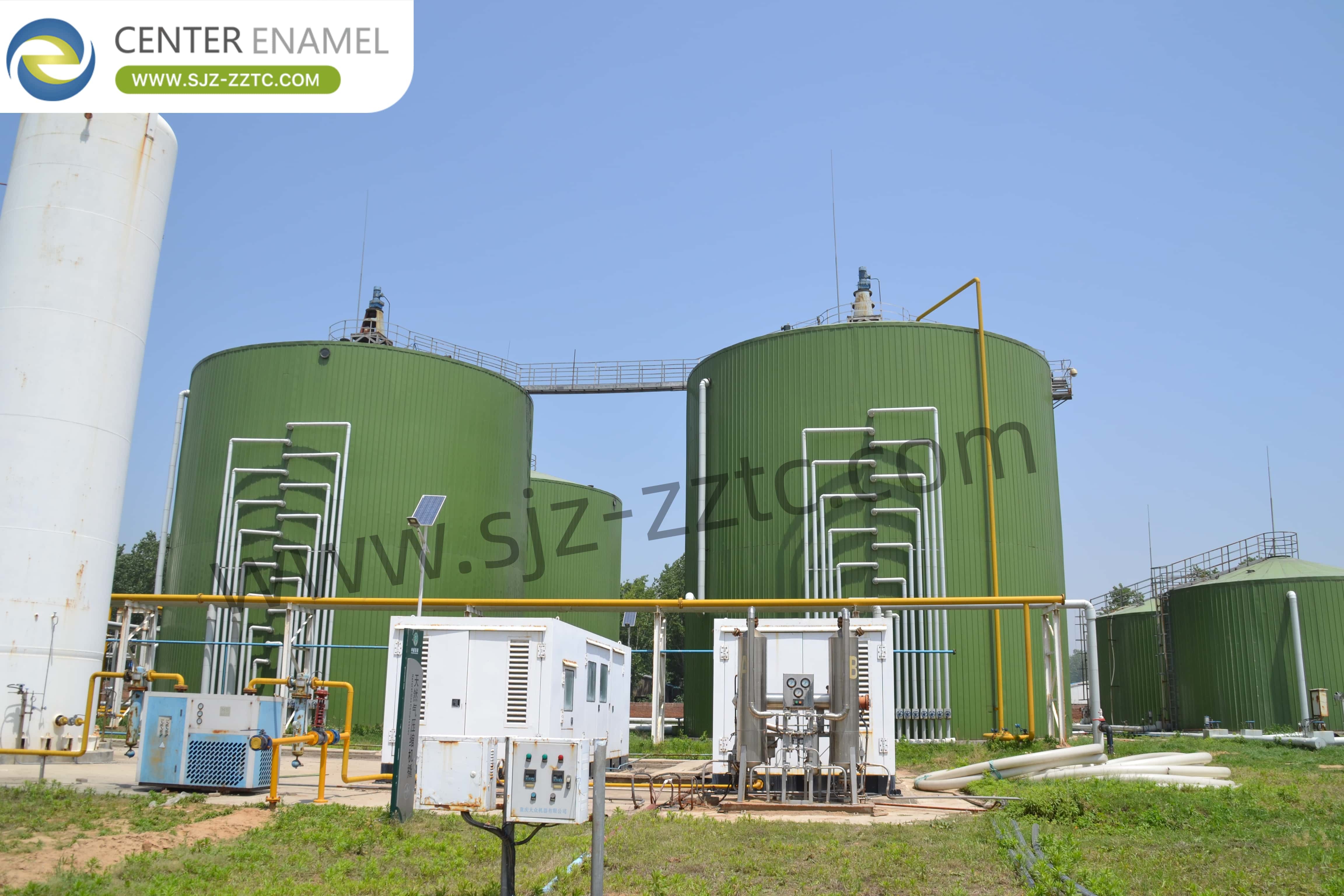
Advancing Garden Waste Treatment in Australia with GFS Tanks and EPC Solutions
| Place of Origin: | China |
| Brand Name: | CEC TANKS |
| Certification: | ISO 9001:2008, AWWA D103 , OSHA , BSCI |
| Model Number: | W |
| Minimum Order Quantity: | 1set |
| Price: | $5000~$20000 one set |
| Packaging Details: | PE poly-foam between each two steel plates ; wooden pallet and wooden |
| Delivery Time: | 10-30 days after deposit received |
| Payment Terms: | L/C,T/T |
| Supply Ability: | 60 sets per month |
|
Detail Information |
|||
| Place of Origin | China | Brand Name | CEC TANKS |
|---|---|---|---|
| Certification | ISO 9001:2008, AWWA D103 , OSHA , BSCI | Model Number | W |
| Tank Body Color: | Dark Green / Can Be Customized | Corrosion Integrity: | Excellent |
| Steel Plates Thickness: | 3mm To 12mm , Depends On The Tank Structure | Chemical Resistance: | Excellent |
| Size Of Panel: | 2.4M * 1.2M | Easy To Clean: | Smooth, Glossy, Inert, Anti-adhesion |
| Highlight: | GFS tanks for garden waste,EPC wastewater treatment solutions,Australia garden waste treatment projects |
||
Product Description
Australia is seeking innovative and sustainable methods to manage its significant garden waste stream. This article explores the technical solutions available, focusing on the conversion of green waste into a valuable energy source. It details the critical role of the Continuous Stirred-Tank Reactor (CSTR), the superior performance of Glass-Fused-to-Steel (GFS) tanks, and the comprehensive nature of CBG Plant EPC Solutions. The article is structured to guide the reader through the process, from identifying the problem to implementing a full-scale solution.
Australia generates millions of tonnes of organic waste each year, with garden waste being a major component of household kerbside collections. Traditional garden waste treatment in Australia has largely relied on open windrow composting and landfilling. While municipal composting is widespread, it has limitations. Open-air composting can release odours and greenhouse gases like methane and nitrous oxide, and the final product can vary in quality.
Landfilling green waste is the least desirable option. As the organic matter breaks down, it generates a significant amount of methane, a powerful greenhouse gas that contributes to climate change. As Australia strives to meet its emissions reduction targets, finding alternatives to landfilling organic waste has become a priority. The process of anaerobic digestion addresses these concerns by capturing the biogas produced, preventing its release, and using it as a renewable energy source.
The conversion of garden waste into biogas offers a high-value, circular economy solution for Australia. The process involves breaking down the organic matter in a sealed, oxygen-free environment, a method known as anaerobic digestion. This produces two valuable outputs: biogas and a nutrient-rich residue.
The biogas can be utilised as a renewable energy source to generate electricity, provide heat for industrial processes, or be upgraded to Compressed Biogas (CBG) for use as a vehicle fuel or renewable natural gas. The digestate, the solid/liquid residue, is a potent biofertiliser that can improve soil structure and fertility, providing a sustainable alternative to imported, fossil-fuel-derived synthetic fertilisers. This approach addresses both waste management and the need for clean energy and sustainable agriculture.
The engine that drives the conversion of garden waste to biogas is the Continuous Stirred-Tank Reactor (CSTR). This is a core processing unit that ensures optimal conditions for anaerobic microorganisms to thrive and break down organic matter. In a CSTR, the fermentation raw materials (garden waste) and the microorganisms are continuously mixed via a mechanical stirring device, maintaining a uniform environment in the sealed tank.
By operating at a constant temperature and feeding the system continuously or semi-continuously, the CSTR efficiently processes high-suspended solids and high-concentration organic matter, such as shredded garden waste. This constant agitation prevents the formation of scum and sedimentation, maximizing contact between the microbes and the substrate, leading to a higher biogas yield and consistent operational stability.
At the core of a successful garden waste-to-biogas plant is the infrastructure. Glass-Fused-to-Steel (GFS) tanks are the premium solution for anaerobic digestion reactors. These tanks are manufactured by firing a glass coating onto steel at over 820°C, creating a strong, inert, and inorganic bond that provides exceptional corrosion resistance. This robust construction is essential for withstanding the aggressive acids and gases produced during the anaerobic digestion process.
For optimal biogas collection, the Double Membrane Roof is the preferred solution. This roof system offers significant advantages over traditional structures, including cost optimization by reducing the overall roof cost and improved space efficiency. Its integrated design eliminates the need for a separate, ground-mounted gas holder, saving valuable land and reducing foundation costs. Furthermore, its air-tightness ensures efficient biogas collection and prevents fugitive odour emissions.
In addition to the Double Membrane Roof, various other cover solutions are available to suit different applications:
- Aluminum Geodesic Dome Roof:Offers expansive clear span capability, advanced corrosion resistance, and minimal maintenance costs, making it a popular choice for many storage applications.
- Glass-Fused-to-Steel Roof:Provides air-tightness for pressurized structures with a cone-shaped design supported by beams, a viable solution for demanding applications.
- Aluminum Alloy Trough Deck Roof:An economical option for less demanding applications like potable water, wastewater, and firewater storage, providing rain and wind protection without air-tightness.
- Stainless Steel Roof:Delivers superior anti-corrosion performance and long service life in harsh environments, providing air-tightness for odor control.
- FRP Roof:A versatile dome or flat-shaped roof suitable for applications not requiring air-tightness, such as drinking water or agriculture storage.
For storage, beyond the flagship GFS tanks, other options include:
- Galvanized Steel Tanks:Provide a tough, wear-resistant coating.
- Fusion Bonded Epoxy Tanks:Feature an advanced coating developed with AkzoNobel, a global leader in paints and coatings.
- Stainless Steel Tanks:A high-quality option for storing high-purity water or for use in extremely harsh environments.
A fully operational biogas facility requires more than just a reactor. Key supporting equipment for a successful CBG Plant EPC Solution includes:
- Gas Holder:For storing the biogas produced, ensuring a constant and reliable supply.
- Dehydration and Desulfurization Tank:Essential for removing moisture and corrosive hydrogen sulfide from the raw biogas.
- Torch System:A crucial safety device for flaring excess or emergency biogas.
- Solid-liquid Separator:Separates the digestate into solid and liquid fractions, simplifying its management and use as fertiliser.
- Screw Sludge Dewatering Machine:Dewaters the solid fraction further, reducing volume and making it easier to transport.
- Lifting Pump:For moving incoming waste and processed materials around the facility.
- Black Membrane:Used for the storage of process liquids like digestate.
Center Enamel provides comprehensive CBG Plant EPC Solutions that encompass the entire project scope, acting as a single point of responsibility for clients. This integrated approach offers numerous advantages:
- Full EPC Services:They provide complete Engineering, Procurement, and Construction management, from feasibility studies and design to installation and commissioning.
- Superior Product Quality:As the largest manufacturer of GFS tanks in Asia, they combine advanced manufacturing with rigorous quality control, with certifications including CE/EN1090, ISO9001, and NSF61.
- Global Reach & Expertise:With a history spanning over 36 years and projects in more than 100 countries, they bring a wealth of international experience to the Australian market.
- Complete Equipment Package:They supply all necessary components for a biogas plant, ensuring perfect integration and operational reliability, from tanks to process equipment.
- Tailored Design:All projects are designed to meet international standards, such as AWWA D103, EN ISO 28765, and EuroCode, and are customized to the specific needs of the Australian climate and feedstock.
In conclusion, Australia has a powerful opportunity to transform its garden waste problem into a sustainable energy solution. Utilizing the reliable CSTR Process, the durable and corrosion-resistant GFS Tanks, and the efficient Double Membrane Roof, a modern biogas plant can generate clean energy and biofertiliser while diverting waste from landfills. With the comprehensive CBG Plant EPC Solutions offered by Center Enamel, Australian communities and industries can confidently implement this proven technology, contributing to a greener, more circular economy.