-
Glass Fused To Steel Tanks (646)
-
Stainless Steel Tanks (434)
-
Fusion Bonded Epoxy Tanks (592)
-
Galvanized Steel Tanks (321)
-
Aluminum Dome Roofs (1336)
-
Wastewater Storage Tanks (237)
-
Welded Steel Tanks (457)
-
Pressure Vessels (295)
-
Anaerobic Digester (202)
-
Industrial Water Tanks (349)
-
Glass Lined Steel Tanks (180)
-
Bolted Steel Tanks (389)
-
Sludge Storage Tank (115)
-
Biogas Storage Tank (173)
-
Leachate Storage Tanks (133)
-
Agricultural Water Storage Tanks (179)
-
Fire Water Tank (166)
-
Grain Storage Silos (146)
-
Biogas Projects (424)
-
Wastewater Treatment Projects (1339)
-
Double Membrane Roof (223)

|
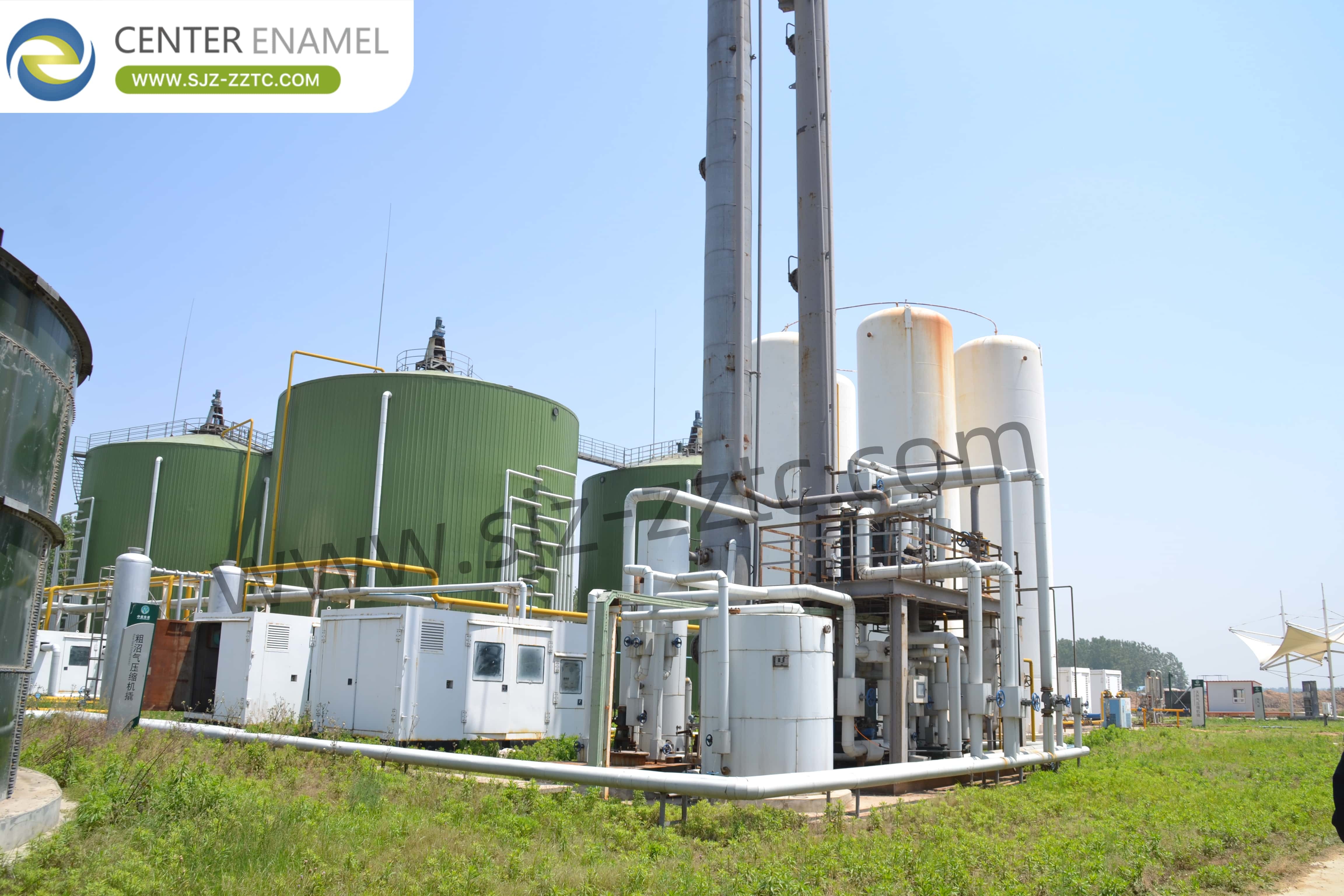
Biogas Solution Provider with GFS Tanks for Vietnam Livestock Wastewater Treatment
| Place of Origin: | China |
| Brand Name: | CEC TANKS |
| Certification: | ISO 9001:2008, AWWA D103 , OSHA , BSCI |
| Model Number: | W |
| Minimum Order Quantity: | 1set |
| Price: | $5000~$20000 one set |
| Packaging Details: | PE poly-foam between each two steel plates ; wooden pallet and wooden |
| Delivery Time: | 10-30 days after deposit received |
| Payment Terms: | L/C,T/T |
| Supply Ability: | 60 sets per month |
|
Detail Information |
|||
| Place of Origin | China | Brand Name | CEC TANKS |
|---|---|---|---|
| Certification | ISO 9001:2008, AWWA D103 , OSHA , BSCI | Model Number | W |
| Tank Body Color: | Dark Green / Can Be Customized | Corrosion Integrity: | Excellent |
| Steel Plates Thickness: | 3mm To 12mm , Depends On The Tank Structure | Chemical Resistance: | Excellent |
| Size Of Panel: | 2.4M * 1.2M | Easy To Clean: | Smooth, Glossy, Inert, Anti-adhesion |
| Highlight: | Biogas solution for livestock wastewater,GFS tanks for wastewater treatment,Vietnam biogas wastewater treatment project |
||
Product Description
Biogas Solution Provider with GFS Tanks for Vietnam Livestock Wastewater Treatment
Vietnam's rapidly modernizing livestock and meat processing industries generate massive volumes of organic wastewater daily, presenting significant environmental challenges. This article examines how advanced anaerobic technologies, durable GFS Tanks, and professional Biogas Solution Providers are helping Vietnamese farms and processing facilities achieve environmental compliance while recovering valuable renewable energy.
As one of Southeast Asia's fastest-growing agricultural economies, Vietnam faces considerable environmental hurdles in managing livestock waste. Traditional open lagoon and land application methods are proving unsustainable under the country's tropical monsoon climate, where high temperatures accelerate decomposition and seasonal rains cause rapid runoff into major river systems. With stricter environmental regulations and national renewable energy targets, livestock operators are turning to advanced Biogas Solutions that combine robust GFS Tanks with proven anaerobic technologies to transform waste into clean energy assets.
Sources and Hazards of Livestock Wastewater
Livestock wastewater in Vietnam originates from commercial dairy operations, intensive pig farms, large-scale poultry facilities, and concentrated cattle feedlots. These operations generate thousands of tons of liquid slurry, solid manure, and barn wash-water daily. The effluent is characterized by high suspended solids, organic pollutants, grease, ammonia nitrogen, protein residues, and pathogenic microorganisms.
Vietnam's tropical high-temperature and humid monsoon climate accelerates decomposition of untreated wastewater. Direct discharge causes severe eutrophication of rivers and water systems, damaging aquatic ecosystems vital to the Mekong Delta and Red River Delta regions. Soil and groundwater contamination follows, threatening drinking water sources and agricultural productivity. Air pollution from hydrogen sulfide and ammonia emissions affects rural communities, while disease transmission risks pose serious public health threats.
Comprehensive Treatment Process
Modern Vietnamese livestock wastewater treatment follows a systematic process designed for maximum pollutant removal and resource recovery. Screens remove larger debris including placenta and plastics before wastewater enters collection tanks for consolidation. Solid-liquid separators extract suspended solids, reducing downstream loads and preventing pump blockages.
Primary reaction stages use coagulants and flocculants to convert fine suspended solids into settleable particles, initiating phosphorus removal. Regulating tanks equipped with aeration systems homogenize water quality and quantity before biological treatment. The two-stage A/O biochemical process follows: first-stage anoxic treatment breaks down long-chain organic molecules into easily biodegradable compounds, followed by aerobic decomposition into CO2 and water, removing COD, BOD5, NH3-N, TN, and TP while supporting biological denitrification.
UASB Process and Anaerobic Technologies
The UASB (Upflow Anaerobic Sludge Blanket) process serves as a core technology for Vietnamese livestock wastewater treatment. Wastewater flows upward through a dense anaerobic granular sludge blanket, efficiently degrading organic pollutants with simple structure, easy maintenance, and low operating costs.
For high-solids wastewater typical of pig and dairy operations, the CSTR (Completely Stirred Tank Reactor) provides superior performance. Mechanical stirring ensures thorough mixing in a closed, temperature-controlled environment, preventing crust formation and ensuring stable biogas output. Other available technologies include USR (Upflow Solids Reactor) for small operations in rural areas, and IC (Internal Circulation) for super-large industrial farms seeking maximum energy recovery.
GFS Tanks for Vietnam's Demanding Conditions
Vietnam's tropical climate with high humidity, intense UV radiation, and coastal salt spray demands exceptional tank durability. Glass-Fused-to-Steel (GFS) tanks meet these challenges through advanced material technology. Fired at temperatures exceeding 820°C-930°C, molten glass forms an inert, inorganic bond with steel, creating a non-porous barrier immune to organic acids and hydrogen sulfide.
GFS tanks deliver outstanding corrosion resistance against aggressive wastewater environments, with smooth glass surfaces preventing biofilm buildup. Bolted assembly enables rapid installation across Vietnam's diverse geography from the Mekong Delta to the highlands. With seismic resistance, UV stability, and service life exceeding 30 years with minimal maintenance, GFS tanks provide long-term reliability essential for Vietnamese farm operations.
Comprehensive Storage Tank and Roof Solutions
Center Enamel offers diverse storage options meeting Vietnam's varied project requirements:
Glass-Fused-to-Steel Tanks provide superior corrosion resistance with double coating layer construction and 30+ year service life.
Galvanized Steel Tanks deliver wear-resistant protective coatings through the galvanizing process.
Fusion Bonded Epoxy Tanks utilize innovative FBE coating technology developed with AkzoNobel for specialized applications.
Stainless Steel Tanks (AISI 304/316) meet the most stringent requirements for pharmaceutical and harsh environment applications.
For roof systems, options include: Aluminum Geodesic Dome Roofs with advanced corrosion resistance and minimal maintenance; Single and Double Membrane Roofs offering superior air-tightness for AD applications with integrated gas storage, eliminating the need for separate ground-mounted gas holders; Glass-Fused-to-Steel Roofs providing pressurized structure solutions; Stainless Steel Roofs delivering super anti-corrosion performance; and FRP Roofs suitable for non-air-tight applications.
Supporting Equipment for Complete Systems
A complete Vietnamese biogas project requires comprehensive supporting systems:
Gas Holders store produced biogas, balancing supply with fluctuating demand from generators or boilers.
Solid-Liquid Separators split digestate into solid organic fertilizer and liquid fertilizer, both valuable for Vietnamese agriculture.
Emergency Torch Systems safely combust excess biogas during maintenance or surplus periods.
Lifting Pumps ensure steady wastewater flow from collection to treatment systems.
Dehydration and Desulfurization Tanks remove corrosive hydrogen sulfide and moisture from raw biogas before utilization, protecting downstream equipment.
Submersible Mixers maintain uniform conditions in storage tanks while preventing solids settling.
Screw Sludge Dewatering Machines reduce waste sludge volume, minimizing disposal costs and preparing material for agricultural application.
Center Enamel: One-Stop Biogas Solution Provider
Center Enamel serves as a comprehensive Biogas Solution Provider with extensive Vietnam experience. Key advantages include:
Complete Project Capability: Full-suite services covering engineering design, equipment manufacturing, project construction, and commissioning. All components are factory-prefabricated and inspected for guaranteed quality.
Advanced Process Technology: Integration of CSTR, UASB, USR, and IC processes customized for Vietnam's tropical monsoon climate, wastewater characteristics, and different operation scales. Expert engineering teams calculate precise organic loading rates and hydraulic retention times for maximum efficiency.
Customized Solutions: Solutions perfectly adapted to Vietnam's specific conditions, with CSTR ideal for large-scale plants with high-solid wastewater, UASB suited for liquid wastewater, and IC for maximum energy recovery.
Superior Manufacturing Standards: 150,000m² R&D and production center with annual capacity of 300,000 tank sheets. Products certified to ISO9001, NSF61, AWWA D103, EN28765, and EuroCode standards.
Professional Installation Teams: Certified construction teams receive regular practical training on GFS tank installation and international construction standards. Bolted assembly avoids welding humidity risks, crucial for Vietnam's high-humidity environment.
Regulatory Compliance: Products meet Vietnamese environmental regulations supporting the nation's circular economy development, energy conservation, and renewable energy utilization goals.
Proven Regional Experience: Successful project implementations across Southeast Asia, with specific expertise in POME treatment and livestock waste management suitable for Vietnamese conditions.
Conclusion
Vietnam's commitment to sustainable agriculture and renewable energy creates significant opportunities for advanced livestock wastewater treatment. The combination of UASB and CSTR technologies, durable GFS Tanks, comprehensive supporting equipment, and professional Biogas Solution Provider services provides a proven pathway to environmental compliance and energy independence. By partnering with experienced providers, Vietnamese farms and processing facilities can transform wastewater challenges into opportunities for sustainable growth, contributing to the nation's renewable energy targets while protecting vital water resources.
FAQs: Livestock Wastewater Treatment in Vietnam
What are the specific challenges of treating livestock wastewater in Vietnam's tropical climate?
High temperatures accelerate organic decomposition, intensifying odors and pathogenic activity. Seasonal monsoon rainfall causes significant flow fluctuations that challenge treatment systems. GFS tanks with superior corrosion resistance address these challenges through robust material technology and UV resistance.
How does biogas recovery benefit Vietnamese livestock farms?
Generated biogas can power generators for electricity, heat boilers for on-farm use, or be upgraded to biomethane. This provides energy independence, reduces operational costs, and supports Vietnam's circular economy strategy. Excess biogas is safely combusted through torch systems.
What is the difference between UASB and CSTR processes for livestock wastewater?
UASB is optimized for liquid-phase wastewater with soluble organics, using hydraulic upflow to maintain sludge suspension without mechanical mixing, achieving low energy consumption. CSTR uses mechanical agitation to handle high-solids feedstocks, preventing crust formation and ensuring uniform contact between microorganisms and waste.