-
Glass Fused To Steel Tanks (646)
-
Stainless Steel Tanks (434)
-
Fusion Bonded Epoxy Tanks (592)
-
Galvanized Steel Tanks (321)
-
Aluminum Dome Roofs (1336)
-
Wastewater Storage Tanks (237)
-
Welded Steel Tanks (457)
-
Pressure Vessels (295)
-
Anaerobic Digester (202)
-
Industrial Water Tanks (349)
-
Glass Lined Steel Tanks (180)
-
Bolted Steel Tanks (389)
-
Sludge Storage Tank (115)
-
Biogas Storage Tank (173)
-
Leachate Storage Tanks (133)
-
Agricultural Water Storage Tanks (179)
-
Fire Water Tank (166)
-
Grain Storage Silos (146)
-
Biogas Projects (424)
-
Wastewater Treatment Projects (1339)
-
Double Membrane Roof (223)

|
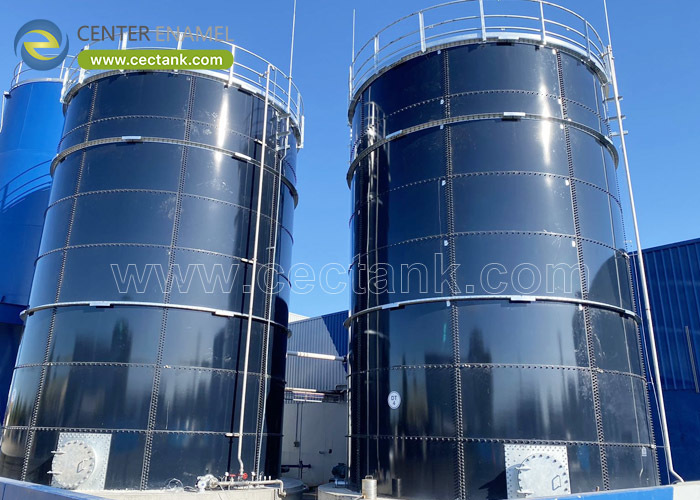
Steel Grain Silos Bolted Steel Silo Solutions for Grain Storage
| Place of Origin: | China |
| Brand Name: | CEC TANKS |
| Certification: | ISO 9001:2008, AWWA D103 , OSHA , BSCI |
| Model Number: | W20160705006 |
| Minimum Order Quantity: | 1set |
| Price: | $5000~$20000 one set |
| Packaging Details: | PE poly-foam between each two steel plates ; wooden pallet and wooden box |
| Delivery Time: | 0-60 days after deposit received |
| Payment Terms: | L/C,T/T |
| Supply Ability: | 60 sets per month |
|
Detail Information |
|||
| Place of Origin | China | Brand Name | CEC TANKS |
|---|---|---|---|
| Certification | ISO 9001:2008, AWWA D103 , OSHA , BSCI | Model Number | W20160705006 |
| Coating Thickness: | 0.25mm~0.40mm , Two Layer Of Coating Internal And External | Tank Material: | Glass Fused To Steel |
| Steel Grade: | ART 310 | Roof Available: | Glass Fused Steel Roof , Membrane Roof, Aluminum Roof , GRP Roof |
| Highlight: | Steel grain silos for storage,Bolted steel silo solutions,Glass fused steel grain tanks |
||
Product Description
Steel Grain Silos Bolted Steel Silo Solutions for Grain Storage
Steel grain silos protect the world's staple harvests — wheat, corn, rice, soybeans, barley — from the moment they leave the field until they reach the mill, the feed line, or the export vessel. In humid, tropical, and high-temperature climates, that protection window is narrow: a leaking roof, a condensing wall, or an un-aerated grain mass turns stored value into insect and fungal losses within weeks. Traditional storage options underperform: concrete silos crack and sweat, bag storage breathes contamination, and uncoated steel rusts from inside out where condensation gathers.
Bolted steel grain silos from Shijiazhuang Zhengzhong Technology Co., Ltd (Center Enamel) combine factory-manufactured steel precision with sealed, aeratable storage. Since 2008 the company — certified to ISO 9001, EN 1090, and ISO 45001 — has supplied grain storage structures to projects in more than 100 countries, from farm-scale units to commercial terminal cells.
1. What Are Steel Grain Silos and Why Steel?
Steel grain silos are vertical storage vessels formed from cold-rolled, coated steel panels. Steel wins because it is engineered in a factory: precise dimensions, repeatable coating, and rapid bolted erection.
· Factory precision: panels are cut, formed, punched, and coated under ISO 9001 and EN 1090 control, so wall thickness, hole patterns, and coating integrity are identical on every silo — the basis of predictable structural performance and clean sealing.
· Two storage geometries: flat-bottom silos maximize capacity for long-term reserve storage; hopper-bottom silos self-empty by gravity for fast turnover and first-in/first-out inventory control.
· Corrosion protection: coated steel shells (galvanized or enameling-protected) resist condensation corrosion on the shell interior and aggressive outdoor exposure on the exterior — protecting both structure and grain.
· Commodity-matched design: silo capacity and discharge geometry follow commodity density and angle of repose — wheat, corn, rice, soybeans, and barley each set different loads that Center Enamel engineers per project.
2. How Do Steel Silos Protect Grain Quality?
Grain preservation is environmental control. Steel silos deliver it through a sealed envelope, engineered aeration, and condition monitoring.
· Sealed envelope: gasketed bolted seams, engineered roof systems, and sealed access openings exclude rain, humidity, birds, and rodents — the contamination paths of bag and open storage.
· Aeration engineering: perforated floor or duct aeration with fan control moves ambient air through the grain mass, equalizing temperature and moisture and breaking insect life cycles without chemicals.
· Temperature monitoring: sensor cables track grain temperature in zones, detecting hot spots — the first signature of moisture ingress or insect activity — before visible spoilage develops.
· Condition-ready features: access doors, sampling hatches, and level indicators let operators inspect and manage the commodity without opening the envelope to the weather.
3. Sizing, Siting, and Scaling Your Steel Silo Complex
The right silo decision balances stored commodity, turnover, site conditions, and growth plans — with wind and seismic engineering verified for the destination.
· Flat-bottom vs hopper-bottom: choose flat-bottom for seasonal reserve and large single-commodity volumes; choose hopper-bottom where daily throughput, blending, or multiple commodities demand rapid complete discharge.
· Site engineering: foundation design, wind load, and seismic category are resolved per location; silos from small farm cells to multi-thousand-tonne commercial units are FEA-verified.
· Modular expansion: bolted construction lets operations add silo cells as volumes grow — flexibility concrete complexes cannot offer.
· Complete handling interfaces: inlet conveyors, distribution, discharge gates, and safety cages integrate at engineered positions, so the silo complex works as one system.
|
Evaluation Criterion |
Center Enamel Bolted Steel Silos |
Concrete Silos |
Bag / Platform Storage |
|
Moisture and pest protection |
High — sealed bolted envelope, engineered roof |
Moderate — cracking and condensation risk |
Poor — exposed to weather, rodents, insects |
|
Erection speed |
Fast — factory panels, bolted assembly |
Very slow — months of casting |
Minimal structure, ongoing losses |
|
Corrosion resistance |
High — coated shells resist condensation |
N/A — material cracks instead |
N/A |
|
Temperature and aeration control |
High — aeration plus zone monitoring |
Moderate — condensation harms grain |
None |
|
Scalability and economics |
High — add cells, preserved grain value |
None |
Worst — post-harvest losses erode value |
Engineering Assurance
Every Center Enamel steel grain silo is engineered for its commodity and site — wind, seismic, and discharge loads verified by calculation — and manufactured under ISO 9001 and EN 1090 certified systems, with export documentation refined across deliveries to more than 100 countries.
A steel silo is only as good as its seal and its airflow. Factory-manufactured panels make both repeatable — and repeatable protection is what preserves grain value through the storage season.
Frequently Asked Questions (FAQ)
What are steel grain silos used for?
Steel grain silos store cereal grains — wheat, corn, rice, soybeans, and barley — between harvest and use or sale, protecting them from moisture, pests, and temperature swings. Flat-bottom silos suit long-term reserve; hopper-bottom silos suit fast turnover handling.
Why choose bolted steel silos over concrete?
Bolted steel erects in weeks with small crews, is factory-manufactured to repeatable EN 1090 quality, resists condensation corrosion with coated shells, and can be expanded or relocated. Concrete silos take months, crack, sweat, and cannot be moved.
How do silos prevent grain spoilage?
A sealed envelope excludes moisture and pests, aeration systems equalize temperature and moisture through the grain mass, and temperature sensors detect hot spots early. Together they arrest the insects, fungi, and moisture migration that destroy grain value.
Can steel silos be customized?
Yes — capacities from farm scale to commercial terminals, flat or hopper bottoms, aeration and monitoring packages, and full handling interfaces are configured per project with site-specific wind and seismic engineering.
·