
-
Glass Fused To Steel Tanks (646)
-
Stainless Steel Tanks (434)
-
Fusion Bonded Epoxy Tanks (592)
-
Galvanized Steel Tanks (321)
-
Aluminum Dome Roofs (1336)
-
Wastewater Storage Tanks (237)
-
Welded Steel Tanks (457)
-
Pressure Vessels (295)
-
Anaerobic Digester (202)
-
Industrial Water Tanks (349)
-
Glass Lined Steel Tanks (180)
-
Bolted Steel Tanks (389)
-
Sludge Storage Tank (115)
-
Biogas Storage Tank (173)
-
Leachate Storage Tanks (133)
-
Agricultural Water Storage Tanks (179)
-
Fire Water Tank (166)
-
Grain Storage Silos (146)
-
Biogas Projects (424)
-
Wastewater Treatment Projects (1339)
-
Double Membrane Roof (223)
|
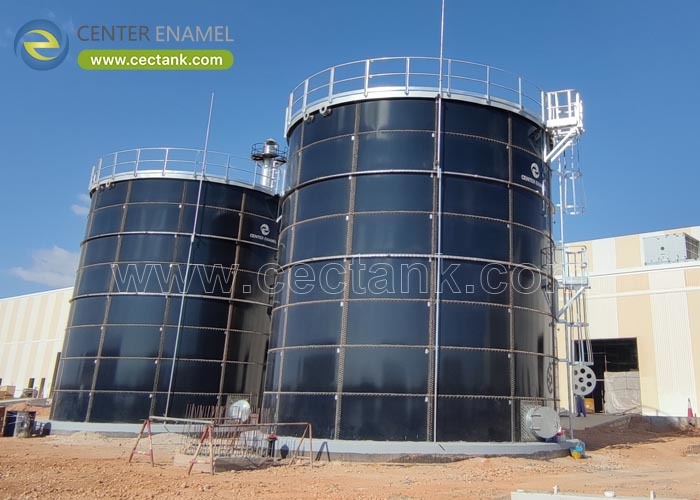
Resistant GLS Tank Supplier Sourcing Glass-Lined Steel Tanks from Center Enamel
| Place of Origin: | China |
| Brand Name: | CEC TANKS |
| Certification: | ISO 9001:2008, AWWA D103 , OSHA , BSCI |
| Model Number: | W |
| Minimum Order Quantity: | 1set |
| Price: | $5000~$20000 one set |
| Packaging Details: | PE poly-foam between each two steel plates ; wooden pallet and wooden |
| Delivery Time: | 10-30 days after deposit received |
| Payment Terms: | L/C,T/T |
| Supply Ability: | 60 sets per month |
|
Detail Information |
|||
Product Description
Resistant GLS Tank Supplier Sourcing Glass-Lined Steel Tanks from Center Enamel
Glass-lined steel (GLS) tanks — also known as glass-fused-to-steel tanks — are the workhorse of corrosion-resistant storage, trusted in wastewater, biogas, drinking water, and industrial service for one reason: the glass surface cannot be out-corrosioned by ordinary chemistry. But a GLS tank is only as good as the enameling line that made it. Sourcing from a supplier that outsources its coating, or from a workshop without laboratory control, means buying the technology without the engineering — and discovering the difference years later, when a coating defect surfaces.
Shijiazhuang Zhengzhong Technology Co., Ltd (Center Enamel) is a resistant GLS tank supplier that owns the entire process: steel forming, enameling at 820-930 degrees Celsius, 100% high-voltage holiday spark testing, and bolted assembly engineering. With nearly 200 enameling patents, ISO 28765 certified manufacturing, and deliveries to more than 100 countries since 2008, Center Enamel is the first GFS tank manufacturer in China and the most experienced bolted tank maker in Asia.
1. What Is a Glass-Lined Steel (GLS) Tank?
A glass-lined steel tank is a steel storage vessel whose interior surface is permanently fused with a layer of glass — making the surface chemically inert and immune to coating failure.
- The fusion process: glass is fired onto steel at 820-930 degrees Celsius, where the molten glass reacts with the steel surface to form a permanent metallurgical bond.
- Two materials, one surface: the bond combines steel's strength and flexibility with glass's corrosion resistance — a surface that cannot peel, blister, or be scratched off.
- The alias: GLS (glass-lined steel) and GFS (glass-fused-to-steel) describe the same technology; both refer to the fired glass-on-steel coating.
- Why 'resistant': the inert glass surface resists acids, alkalis, chlorides, hydrogen sulfide, and abrasion — the full chemistry of wastewater, biogas, and industrial service.
2. How Do You Evaluate a Resistant GLS Tank Supplier?
Because the technology is only as good as the coating line, supplier evaluation should verify manufacturing ownership, testing evidence, and track record — not just read a brochure.
- Own the enameling line: a real GLS manufacturer fires glass in-house under laboratory control. Ask whether the coating is applied in the supplier's factory — outsourcing it splits quality responsibility.
- Demand test evidence: 100% high-voltage holiday spark testing on every panel, coating thickness records, and ISO 28765 (vitreous enamel) certification make quality auditable rather than claimed.
- Check engineering depth: FEA structural verification, AWWA D103-09 design capability, and installation drawings indicate an engineering company, not a panel trader.
- Verify track record: ask for installations in your industry and export documentation. Center Enamel has delivered to 100+ countries, including demanding municipal and industrial projects.
3. Which Applications Demand Resistant GLS Tanks?
GLS tanks are specified wherever a coating failure is unacceptable — the industries where the contents would destroy anything less resistant.
- Wastewater and sludge: H2S vapor-space attack, chlorides, and abrasive solids — the environment where glass surfaces outlast every paint system.
- Biogas and anaerobic digestion: digester slurry at 35-55 degrees Celsius plus corrosive biogas; the glass surface survives the full digestion cycle.
- Drinking water: NSF/ANSI 61 and WRAS certified glass meets potable standards with an inert, non-leaching surface.
- Industrial process and liquid storage: acids, alkalis, and aggressive chemicals that would strip epoxy and pit stainless.
| Evaluation Criterion | Center Enamel (Factory Manufacturer) | Trading / Outsourced Supplier | Regional Workshop Fabrication |
|---|---|---|---|
| Coating ownership | Yes — in-house enameling at 820-930°C, 200+ patents | No — coating outsourced, batch variance | No — limited or field coating |
| Test evidence | 100% spark test per panel, ISO 28765 certified | Varies by source | Limited documentation |
| Engineering depth | FEA verification, AWWA D103-09 design, drawings | Catalog sales only | Basic fabrication |
| Track record | 100+ countries since 2008, municipal & industrial | Varies | Domestic only typically |
| Support & warranty | In-house engineering, installation supervision | Limited after-sale support | Site-only support |
Engineering Assurance
Every Center Enamel GLS tank is designed with FEA structural verification, enamelled in-house at 820-930 degrees Celsius, 100% high-voltage holiday spark tested, and certified to ISO 28765, NSF/ANSI 61, WRAS, and ISO 9001 — with export documentation refined across deliveries to 100+ countries.
A GLS tank is bought on the strength of its enameling line. When the supplier fires the glass in its own factory with laboratory control, the buyer gets a surface that is tested, documented, and backed by the patents behind it.
Frequently Asked Questions (FAQ)
What is a glass-lined steel (GLS) tank?
A GLS tank — also called glass-fused-to-steel (GFS) — is a steel tank whose interior surface is fused with glass at 820-930 degrees Celsius. The bond combines steel's strength with glass's corrosion resistance, creating a surface that cannot peel or blister.
How do I choose a resistant GLS tank supplier?
Verify that the supplier owns its enameling line, provides test evidence (100% holiday spark testing, ISO 28765 certification), has engineering depth (FEA, AWWA D103-09), and has a verifiable track record in your industry.
Which applications need GLS tanks?
Wastewater and sludge, biogas and anaerobic digestion, drinking water, and industrial process storage — any duty where coatings fail and the contents would destroy lesser surfaces.
Can GLS tanks be customized?
Yes — capacity, geometry, roof type, accessories (manholes, flanges, ladders, platforms), and process interfaces are engineered per application, with FEA verification for local wind, seismic, and load conditions.
Key Takeaways
- GLS (glass-lined steel) and GFS name the same technology: glass fused to steel at 820-930°C for an inert, unpeelable surface.
- A GLS tank is only as good as the enameling line — verify in-house coating, spark-test records, and ISO 28765 certification.
- Evaluate suppliers on ownership, evidence, engineering depth, and track record, not brochure claims.
- Center Enamel supplies resistant GLS tanks to 100+ countries with 200+ enameling patents behind the process.



