-
Glass Fused To Steel Tanks (646)
-
Stainless Steel Tanks (434)
-
Fusion Bonded Epoxy Tanks (592)
-
Galvanized Steel Tanks (321)
-
Aluminum Dome Roofs (1336)
-
Wastewater Storage Tanks (237)
-
Welded Steel Tanks (457)
-
Pressure Vessels (295)
-
Anaerobic Digester (202)
-
Industrial Water Tanks (349)
-
Glass Lined Steel Tanks (180)
-
Bolted Steel Tanks (389)
-
Sludge Storage Tank (115)
-
Biogas Storage Tank (173)
-
Leachate Storage Tanks (133)
-
Agricultural Water Storage Tanks (179)
-
Fire Water Tank (166)
-
Grain Storage Silos (146)
-
Biogas Projects (424)
-
Wastewater Treatment Projects (1339)
-
Double Membrane Roof (223)

|
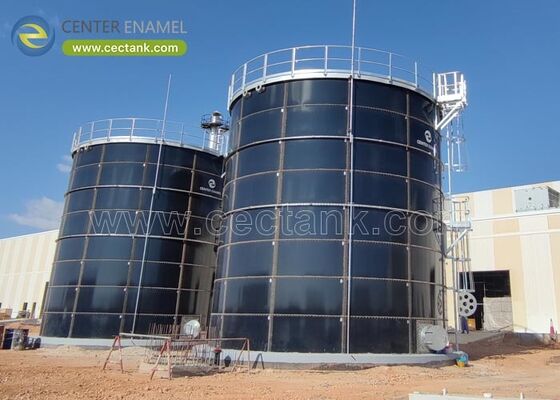
Water Storage Tank for Drinking Water Supply NSF 61 Certified Bolted Tanks
| Place of Origin: | China |
| Brand Name: | CEC TANKS |
| Certification: | ISO 9001:2008, AWWA D103 , OSHA , BSCI |
| Model Number: | W20161124010 |
| Minimum Order Quantity: | 1set |
| Price: | $5000~$20000 one set |
| Packaging Details: | PE poly-foam between each two steel plates ; wooden pallet and wooden box |
| Delivery Time: | 0-60 days after deposit received |
| Payment Terms: | L/C,T/T |
| Supply Ability: | 60 sets per month |
|
Detail Information |
|||
Product Description
Water Storage Tank for Drinking Water Supply NSF 61 Certified Bolted Tanks
Drinking water is the most regulated liquid a tank will ever hold. Regulators, public health agencies, and consumers expect the water that leaves a storage tank to be exactly as clean as the water that entered it — which means the tank surface must not leach, corrode, harbor biofilm, or shed coating into the supply. A tank that fails this test fails its permit, and in many markets it fails before it is ever commissioned.
Bolted water storage tanks for drinking water supply from Shijiazhuang Zhengzhong Technology Co., Ltd (Center Enamel) are certified to NSF/ANSI 61 and WRAS, engineered to AWWA D103-09, and built with a glass surface fused to steel at 820-930 degrees Celsius that is chemically inert — it cannot leach or dissolve into the water. With more than 100 countries of delivery since 2008, Center Enamel is the first GFS tank manufacturer in China and the most experienced bolted tank maker in Asia.
1. Why Is NSF/ANSI 61 Certification Critical for Drinking Water Tanks?
NSF/ANSI 61 is the standard that proves a tank will not contaminate the water it holds — and in regulated markets it is the difference between an approvable system and a rejected one.
- Leaching protection: NSF/ANSI 61 tests the materials that contact drinking water for contaminant leaching. A certified surface is proven to release nothing harmful into the supply.
- Regulatory approvability: municipal water utilities, engineering firms, and health authorities require NSF/ANSI 61 certification for potable contact; without it, the tank cannot be approved.
- Public health assurance: certification is independent, third-party evidence that the tank surface — coating, gaskets, and fittings — meets water-safety requirements.
- Export relevance: WRAS (UK) and other regional potable approvals extend the same assurance to additional markets, simplifying international drinking water projects.
2. How Do Bolted GFS Tanks Meet Potable Water Standards?
GFS tanks meet potable standards by design: the glass surface is inert by chemistry, the structure is code-engineered, and every panel is tested before it ships.
- Inert glass surface: glass fused to steel at 820-930 degrees Celsius forms a non-porous, chemically inert surface that does not dissolve, peel, or support bacterial growth — the properties NSF/ANSI 61 certification verifies.
- No sacrificial coating: unlike painted or epoxy tanks whose linings can blister and shed, the GFS surface is the material itself — there is no lining to fail, flake, or leach over time.
- Structural compliance: shells are engineered to AWWA D103-09 with FEA verification, so the tank meets the structural code while the surface meets the water-safety code.
- Factory testing evidence: every panel is 100% high-voltage holiday spark tested under ISO 9001 control, and certification documents ship with the tank — evidence, not claims.
3. What Sizes and Configurations Serve Drinking Water Supply?
Drinking water tanks range from community-scale reservoirs to factory process buffers, and bolted construction scales across all of them.
- Community and municipal supply: reservoirs sized for 12-48 hours of average demand smooth pump schedules and peak flows, from 50 m3 village tanks to multi-thousand-cubic-meter municipal reservoirs.
- Distribution buffers: tanks placed through the network maintain pressure and balance demand, with NSF 61 certified surfaces throughout the system.
- Process and food-grade duty: the same certified surface serves food and beverage facilities where process water must meet potable standards.
- Emergency and redundancy: parallel tanks or modular additions keep supply continuous during maintenance, with bolted construction that expands without demolition.
| Evaluation Criterion | NSF 61 Bolted GFS Tank (Center Enamel) | Concrete Reservoir | Coated Welded Steel Tank |
| Potable water safety | High — NSF/ANSI 61 & WRAS certified inert glass | Moderate — cracking, algae, and liner aging risks | Poor — coating failure and leaching over time |
| Leaching & biofilm | None — non-porous inert glass | Risks with cracks and aging liners | Risk at coating defects |
| Construction velocity | Fast — factory panels, bolted in weeks | Very slow — months of construction | Slow — site welding and coating |
| Lifecycle maintenance | Minimal — 30-50 years, no recoating | High — crack repair and re-lining | High — recoating every 5-10 years |
| Standards compliance | AWWA D103-09, NSF 61, WRAS, ISO 28765 | Local codes, liner-dependent | Field coating, limited certification |
Engineering Assurance
Every Center Enamel drinking water storage tank is FEA-verified to AWWA D103-09, certified to NSF/ANSI 61 and WRAS, manufactured under ISO 9001 and ISO 45001 systems, and 100% high-voltage holiday spark tested — with certification documentation delivered with the tank.
Drinking water does not compromise, so the tank cannot either. An inert glass surface plus third-party NSF/ANSI 61 certification is how we guarantee the water leaves the tank as clean as it entered.
Frequently Asked Questions (FAQ)
Is a bolted GFS tank safe for drinking water?
Yes. The glass surface is certified to NSF/ANSI 61 and WRAS for potable contact, and being chemically inert it cannot leach, peel, or harbor biofilm — so water safety is a property of the material, not a coating that can fail.
What does NSF/ANSI 61 certification actually prove?
It proves through independent third-party testing that materials contacting drinking water do not leach harmful contaminants. Regulators and utilities require it for potable tank approval in most markets.
What sizes of drinking water tanks are available?
From 50 m3 community tanks to multi-thousand-cubic-meter municipal reservoirs, plus distribution buffers and food-grade process tanks. Bolted construction scales across the range and expands later without demolition.
Can drinking water tanks be customized?
Yes — capacity, diameter-to-height ratio, roof type, accessories (flanges, manholes, vents, ladders, platforms), and multi-tank layouts are engineered per project, site, and local potable-water code.
Key Takeaways
- NSF/ANSI 61 certification is the gate for drinking water tanks in regulated markets — it proves no leaching from contacting materials.
- The GFS glass surface is inert by chemistry: no sacrificial coating to fail, flake, or shed into the water.
- Bolted GFS scales from 50 m3 community tanks to municipal reservoirs, expandable without demolition.
- Certification documents ship with every tank — evidence, not claims, backed by 100% spark testing.