-
Glass Fused To Steel Tanks (596)
-
Stainless Steel Tanks (434)
-
Fusion Bonded Epoxy Tanks (592)
-
Galvanized Steel Tanks (321)
-
Aluminum Dome Roofs (1336)
-
Wastewater Storage Tanks (232)
-
Welded Steel Tanks (457)
-
Pressure Vessels (295)
-
Anaerobic Digester (202)
-
Industrial Water Tanks (349)
-
Glass Lined Steel Tanks (180)
-
Bolted Steel Tanks (389)
-
Sludge Storage Tank (115)
-
Biogas Storage Tank (173)
-
Leachate Storage Tanks (133)
-
Agricultural Water Storage Tanks (179)
-
Fire Water Tank (166)
-
Grain Storage Silos (146)
-
Biogas Projects (424)
-
Wastewater Treatment Projects (1098)
-
Double Membrane Roof (223)

|
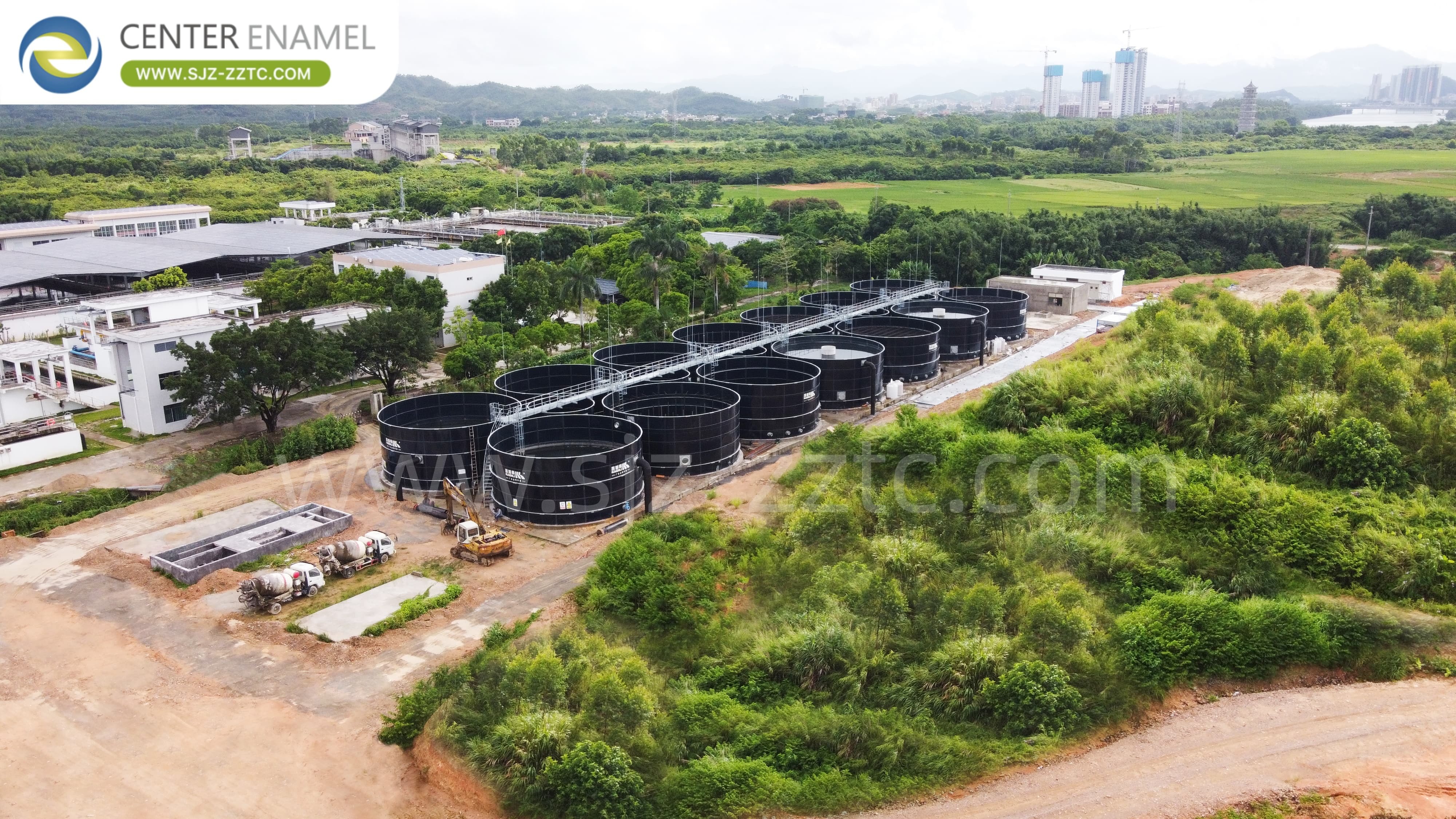
Fruit and Vegetable Waste Treatment in Democratic Republic of the Congo: Biogas Project Contractor with GFS Tanks
| Place of Origin: | China |
| Brand Name: | CEC TANKS |
| Certification: | ISO 9001:2008, AWWA D103 , OSHA , BSCI |
| Model Number: | W |
| Minimum Order Quantity: | 1set |
| Price: | $5000~$20000 one set |
| Packaging Details: | PE poly-foam between each two steel plates ; wooden pallet and wooden |
| Delivery Time: | 10-30 days after deposit received |
| Payment Terms: | L/C,T/T |
| Supply Ability: | 60 sets per month |
|
Detail Information |
|||
| Place of Origin | China | Brand Name | CEC TANKS |
|---|---|---|---|
| Certification | ISO 9001:2008, AWWA D103 , OSHA , BSCI | Model Number | W |
| Tank Body Color: | Dark Green / Can Be Customized | Corrosion Integrity: | Excellent |
| Steel Plates Thickness: | 3mm To 12mm , Depends On The Tank Structure | Chemical Resistance: | Excellent |
| Size Of Panel: | 2.4M * 1.2M | Easy To Clean: | Smooth, Glossy, Inert, Anti-adhesion |
| Highlight: | biogas project contractor GFS tanks,fruit vegetable waste treatment Congo,wastewater treatment project biogas contractor |
||
Product Description
Fruit and Vegetable Waste Treatment in Democratic Republic of the Congo: Biogas Project Contractor with GFS Tanks
Sustainable waste management is a vital pillar for advancing regional bio-energy infrastructure and environmental protection. This article examines innovative technological approaches for converting organic processing by-products into clean energy. Center Enamel provides world-class engineering solutions tailored to industrial and agricultural demands. Explore how integrated containment systems drive efficiency and ecological compliance.
Sources and Treatment Challenges of Fruit and Vegetable Waste
Organic refuse generated from vegetable farming, fruit packing facilities, and municipal markets across the Democratic Republic of the Congo presents unique handling complexities due to its high moisture content and rapid decay rate. In tropical climates, these materials decompose swiftly, creating severe odor nuisances, vector attractions, and high-strength wastewater that pollutes local ecosystems. Traditional disposal methods often fail to capture the inherent energy value of this biomass. Effective management requires specialized anaerobic processing units capable of stabilizing high organic loads while mitigating environmental risks associated with acidic leachate and uncontrolled greenhouse gas emissions.
Comprehensive Process Flow of Fruit and Vegetable Waste Treatment
Modern biological treatment facilities utilize a streamlined process flow to transform raw produce refuse into valuable resources. The workflow begins with mechanical bar screening to separate oversized contaminants from the liquid-solid organic stream. Next, the collected material enters a homogenization tank where mixing ensures a uniform biochemical composition. The prepared slurry is then fed into an advanced anaerobic digester to produce biogas and digestate. Subsequent solid-liquid separation divides the digestate into nutrient-rich solid fertilizer and liquid fractions, ensuring minimal waste generation and maximum nutrient recycling back into regional agricultural sectors.
Center Enamel Custom Engineering Solutions for Fruit and Vegetable Waste Projects
Center Enamel delivers customized engineering designs that optimize plant performance, safety, and operational longevity for organic waste management facilities. Our technical specialists evaluate specific feedstock characteristics, regional climatic factors, and capacity requirements to formulate precise process packages. By integrating advanced automation, efficient mixing technology, and durable containment structures, we ensure seamless facility integration. Our turnkey contractor approach minimizes construction timelines and guarantees that every installation meets rigorous international quality benchmarks for long-term operational success.
Leading CSTR Process for Biogas Projects
The Continuous Stirred-Tank Reactor (CSTR) serves as the primary biological treatment unit, utilizing anaerobic microorganisms to convert complex organic matter into renewable biogas. Operating within a sealed, temperature-controlled environment, the CSTR utilizes a powerful mechanical stirring system to maintain complete suspension of solids and microbes. This continuous feeding mechanism prevents dead zones and crust formation, significantly enhancing biological reaction rates and gas production efficiency. The robust reactor design ensures stable operation, high volatile solid destruction, and reliable energy output for industrial power generation or thermal applications.
Premium GFS Tanks for Biogas Projects
Glass-Fused-to-Steel (GFS) tanks provide unmatched performance in liquid and gas storage applications across the bio-energy sector. By fusing specialized glass coatings onto high-strength structural steel at elevated temperatures, these tanks achieve an inert, corrosion-proof surface that withstands aggressive chemical environments. GFS tanks eliminate the need for extensive field welding, allowing rapid assembly by local crews and straightforward future expansion. Their superior durability and low maintenance requirements make them the preferred choice for anaerobic digestion, equalization, and buffering applications worldwide.
Overview of Center Enamel Diversified Storage Tanks and Roof Cover Solutions
Galvanized Steel Tanks: Tough, wear-resistant zinc-coated structures offering exceptional durability and corrosion resistance.
Fusion Bonded Epoxy Tanks: Innovative coating solutions engineered in collaboration with AkzoNobel to protect against chemical degradation.
Stainless Steel Tanks: Premium AISI 304/316 vessels built for high-purity water storage and aggressive industrial conditions.
Aluminum Geodesic Dome Roofs: Self-supporting clear-span dome structures designed for efficient weather shielding and low maintenance.
Glass-Fused-to-Steel Roofs: Airtight cone roofs equipped with internal or external beams for demanding containment environments.
Single and Double Membrane Roofs: Flexible gas-holder covers that combine biological containment with reliable biogas storage.
Aluminum Alloy Trough Deck Roofs: Lightweight, cost-effective covers tailored for non-airtight liquid containment vessels.
Stainless Steel Roofs: Highly corrosion-resistant tank covers suited for harsh atmospheric conditions.
FRP Roofs: Versatile fiberglass-reinforced plastic covers available in dome or flat profiles for non-pressurized applications.
Comprehensive Equipment for Projects
Gas Holder: Dedicated double-membrane structures ensuring reliable gas buffer capacity and stable pressure regulation.
Black Membrane: Flexible geomembrane liners designed for secure wastewater stabilization ponds and leachate containment.
Solid-Liquid Separator: High-efficiency mechanical units that separate fibrous digestate to produce manageable organic fertilizer.
Torch System: Safety flare towers engineered to burn excess biogas cleanly and prevent overpressure hazards.
Lifting Pump: Heavy-duty submersible pumps designed for reliable transport of high-solids slurries and wastewater.
Dehydration and Desulfurization Tank: Industrial purification systems that strip water vapor and hydrogen sulfide from biogas streams.
Screw Sludge Dewatering Machine: Advanced continuous dewatering systems that reduce moisture in residual biological sludge.
Premier One-Stop Supplier for Fruit and Vegetable Waste Treatment Solutions
Single-Source Accountability: Manages all project phases from engineering design and fabrication to on-site assembly and technical support.
Proven Manufacturing Strength: Backed by an expansive production base with cutting-edge manufacturing equipment and rigorous quality inspections.
International Certification: Fully compliant with globally recognized standards such as ISO 9001, ISO 14001, and AWWA D103.
Optimized Capital Expenditure: Delivers cost-effective modular systems that minimize civil construction expenses and shorten project payback periods.
Conclusion
Implementing advanced biological treatment systems is crucial for turning agricultural refuse into a sustainable energy asset. Center Enamel combines industry-leading GFS tank manufacturing, innovative process engineering, and complete contractor services to deliver exceptional project outcomes. By turning environmental challenges into green energy and organic fertilizer, we help communities achieve long-term sustainability. Partner with us to build state-of-the-art bio-energy infrastructure across the region.
Frequently Asked Questions
How do GFS tanks handle high humidity and heavy rainfall environments like the DRC?
The dual-layer glass-fused-to-steel coating provides total impermeability against moisture penetration, preventing structural rusting and exterior paint degradation despite continuous exposure to tropical rain and humidity.
What function do submersible lifting pumps serve in organic waste processing lines?
Submersible lifting pumps are engineered with heavy-duty impellers to reliably transfer dense fruit and vegetable slurries and raw wastewater between processing stages without clogging or mechanical failure.
Why are aluminum geodesic dome roofs ideal for covering large homogenization tanks?
Aluminum geodesic domes offer exceptional clear-span capabilities without internal columns, providing lightweight, self-supporting weather protection that resists corrosion and accommodates efficient vapor collection.