-
Glass Fused To Steel Tanks (596)
-
Stainless Steel Tanks (434)
-
Fusion Bonded Epoxy Tanks (592)
-
Galvanized Steel Tanks (321)
-
Aluminum Dome Roofs (1336)
-
Wastewater Storage Tanks (232)
-
Welded Steel Tanks (457)
-
Pressure Vessels (295)
-
Anaerobic Digester (202)
-
Industrial Water Tanks (349)
-
Glass Lined Steel Tanks (180)
-
Bolted Steel Tanks (389)
-
Sludge Storage Tank (115)
-
Biogas Storage Tank (173)
-
Leachate Storage Tanks (133)
-
Agricultural Water Storage Tanks (179)
-
Fire Water Tank (166)
-
Grain Storage Silos (146)
-
Biogas Projects (424)
-
Wastewater Treatment Projects (1108)
-
Double Membrane Roof (223)

|
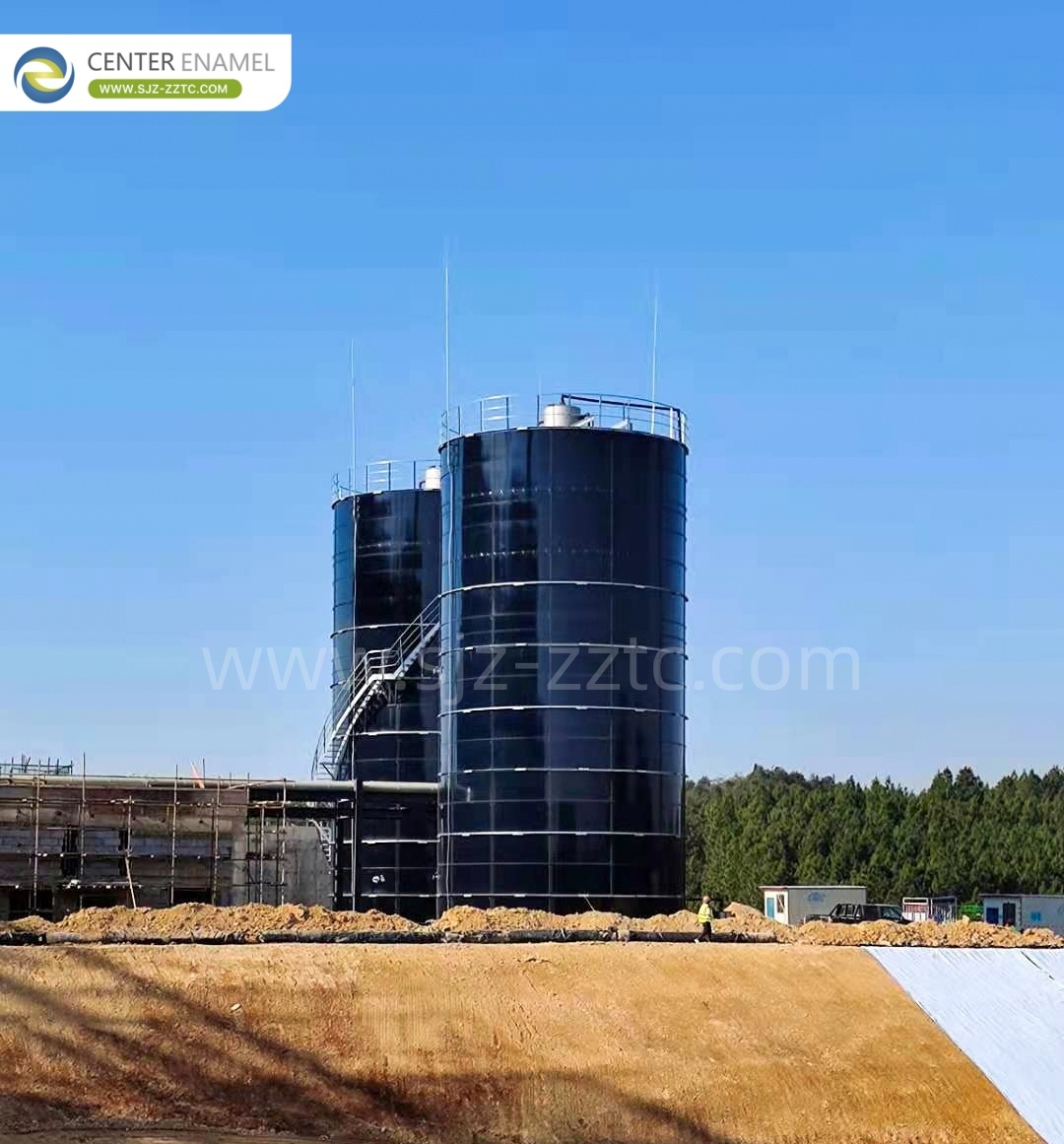
Dry Straw Valorization in Indonesia: Biogas Solution Provider with GFS Tanks
| Place of Origin: | China |
| Brand Name: | CEC TANKS |
| Certification: | ISO 9001:2008, AWWA D103 , OSHA , BSCI |
| Model Number: | W |
| Minimum Order Quantity: | 1set |
| Price: | $5000~$20000 one set |
| Packaging Details: | PE poly-foam between each two steel plates ; wooden pallet and wooden |
| Delivery Time: | 10-30 days after deposit received |
| Payment Terms: | L/C,T/T |
| Supply Ability: | 60 sets per month |
|
Detail Information |
|||
| Place of Origin | China | Brand Name | CEC TANKS |
|---|---|---|---|
| Certification | ISO 9001:2008, AWWA D103 , OSHA , BSCI | Model Number | W |
| Tank Body Color: | Dark Green / Can Be Customized | Corrosion Integrity: | Excellent |
| Steel Plates Thickness: | 3mm To 12mm , Depends On The Tank Structure | Chemical Resistance: | Excellent |
| Size Of Panel: | 2.4M * 1.2M | Easy To Clean: | Smooth, Glossy, Inert, Anti-adhesion |
| Highlight: | biogas solution provider Indonesia,dry straw valorization GFS tanks,wastewater treatment biogas project |
||
Product Description
This article provides a comprehensive overview of transforming agricultural residues into clean bio-energy in Indonesia. It explores the operational mechanisms of dry straw anaerobic digestion using advanced containment systems. Furthermore, it highlights professional engineering approaches and robust infrastructure deployments tailored for sustainable regional development.
Dry straw represents a massive, underutilized agricultural byproduct generated across Indonesia's extensive farming regions, particularly from rice and crop harvesting. Traditional disposal methods typically involve open-field burning or soil incorporation, both of which pose severe environmental hazards, contribute to air pollution, and waste valuable organic carbon. Open burning releases substantial greenhouse gases and particulate matter, prompting stringent regulatory measures and an urgent demand for sustainable alternatives. Transforming these cellulosic residues into valuable resources offers a dual benefit of mitigating agricultural waste management challenges while generating renewable energy. By adopting advanced biological treatment methods, local agricultural sectors can transition from traditional waste disposal to a circular bio-economy model that enhances rural energy security and reduces carbon footprints.
Converting dry straw into biogas requires overcoming the recalcitrant lignocellulosic matrix through effective pretreatment and anaerobic digestion processes. Initially, mechanical and biological pretreatment methods break down the complex lignin and cellulose structures, making the organic matter accessible to hydrolytic and acidogenic bacteria. Once prepared, the straw is mixed with liquid slurries to achieve optimal total solids concentration before entering the reactor vessel. Inside the anaerobic digestion environment, a multi-stage biochemical cascade takes place, where acid-forming bacteria convert simple sugars into volatile fatty acids. Subsequently, methanogenic archaea consume these intermediates to produce high-quality biogas composed primarily of methane and carbon dioxide. This biological pathway efficiently stabilizes organic solids, reduces pathogen loads, and yields nutrient-rich digestate suitable for agricultural soil enhancement, closing the loop on nutrient cycles.
Executing successful dry straw anaerobic digestion projects in Indonesia demands meticulous engineering, customized process design, and deep technical expertise. Center Enamel delivers comprehensive engineering services tailored to the unique climatic and operational conditions of Southeast Asia, ensuring optimal reactor sizing and process stability. Our engineering team conducts thorough feedstock characterization to determine precise organic loading rates, hydraulic retention times, and mixing requirements. By integrating advanced process packages with robust structural designs, we guarantee high biogas yields and long-term operational reliability for industrial clients. From initial feasibility studies and detailed civil engineering blueprints to equipment integration and commissioning support, our solutions are engineered to maximize return on investment while strictly adhering to international environmental and safety standards.
The Continuous Stirred-Tank Reactor represents the core processing technology utilized for treating high-solids agricultural slurries derived from dry straw. This specialized anaerobic reactor maintains a uniform internal environment through continuous mechanical agitation, ensuring intimate contact between microorganisms and solid substrates. Equipped with heavy-duty internal stirring shafts, specialized paddles, and shell-breaking devices, the CSTR system effectively prevents scum formation and material stratification. Operating under stable mesophilic or thermophilic conditions, the reactor facilitates high organic loading rates and maximizes biochemical methane potential. The continuous feeding and discharging mechanism ensures steady-state operation, making it the ideal technological choice for handling fibrous agricultural feedstocks without clogging or mechanical failure.
Glass-Fused-to-Steel tanks provide the ultimate structural foundation for modern anaerobic digestion and biogas storage applications worldwide. Manufactured by fusing specialized glass enamel onto premium steel plates at extreme temperatures, GFS tanks combine the high tensile strength of steel with exceptional chemical corrosion resistance. The dual-layer coating structure on both interior and exterior faces ensures superior protection against aggressive organic acids and corrosive sulfur compounds generated during digestion. These modular tanks offer rapid site installation, expansive capacity scalability, and minimal long-term maintenance requirements compared to traditional concrete or welded steel structures. Backed by rigorous international quality certifications, GFS tanks deliver unmatched durability and airtightness essential for safe, high-pressure biogas containment.
Center Enamel provides an extensive portfolio of modular storage tanks and specialized roof solutions designed to meet diverse industrial containment requirements. Galvanized steel tanks offer cost-effective, robust corrosion protection through advanced zinc coating processes suitable for various utility applications. Fusion Bonded Epoxy tanks, developed in partnership with global coating leaders, deliver smooth, durable barrier protection against chemical attack. Stainless steel tanks constructed from high-grade austenitic alloys fulfill stringent requirements for high-purity liquid storage in aggressive environments. For roof solutions, Aluminum Geodesic Dome roofs provide expansive clear-span capability and advanced weather resistance without internal supports. Single and double membrane roofs offer superior gas-holding capacity and airtightness for anaerobic digestion plants, while FRP and stainless steel roofs cater to specialized municipal and industrial needs.
An efficient biogas facility relies on a synchronized suite of high-performance auxiliary equipment to ensure seamless plant operation and material flow. Integrated double membrane gas holders provide reliable onsite gas storage and pressure regulation for continuous energy utilization. Heavy-duty submersible lifting pumps and progressive cavity pumps facilitate smooth transfer of high-solids slurries and digestate throughout the facility. Dehydration and desulfurization tanks effectively remove moisture and hydrogen sulfide from raw biogas, protecting downstream cogeneration equipment from corrosion. Advanced solid-liquid separators and screw sludge dewatering machines efficiently separate digestate solids from liquids, optimizing waste handling. Additionally, high-efficiency flare systems ensure safe emergency gas disposal, while robust positive and negative pressure protectors safeguard tank structural integrity.
Center Enamel operates as a premier one-stop solution provider, delivering fully integrated turnkey packages for dry straw biogas projects. Our core service scope encompasses comprehensive EPC contracting, proprietary process package design, and specialized equipment manufacturing under one roof. We manage every phase of project execution, from preliminary site evaluation and engineering design to equipment procurement, modular assembly, and operator training. Our manufacturing base utilizes advanced production lines to deliver precision-engineered components that comply with global design standards. By streamlining project coordination and eliminating multi-vendor interfaces, we ensure cost efficiency, compressed delivery schedules, and guaranteed operational excellence for every client.
Harnessing agricultural residues through advanced anaerobic digestion transforms environmental liabilities into valuable renewable energy assets. Center Enamel combines cutting-edge containment technology with expert engineering to empower sustainable bio-energy development across developing agricultural markets.
What pretreatment methods are recommended before feeding dry straw into a CSTR reactor?
Effective feedstock preparation typically involves mechanical shredding to reduce particle size, combined with thermal or biological hydrolysis to disrupt crystalline cellulose structures and enhance microbial accessibility.
How do GFS tanks maintain structural integrity under high gas pressure and corrosive environments?
GFS tanks utilize a fused glass-steel composite matrix that resists hydrogen sulfide and organic acid corrosion, while bolted structural designs withstand positive and negative internal pressure differentials safely.
Can dual membrane roofs be installed directly on top of anaerobic digestion tanks? Yes, integrated double membrane roofs serve as both the protective tank cover and an efficient gas holder, optimizing spatial footprint and reducing overall capital expenditures for gas storage infrastructure.