-
Glass Fused To Steel Tanks (596)
-
Stainless Steel Tanks (434)
-
Fusion Bonded Epoxy Tanks (592)
-
Galvanized Steel Tanks (321)
-
Aluminum Dome Roofs (1336)
-
Wastewater Storage Tanks (232)
-
Welded Steel Tanks (457)
-
Pressure Vessels (295)
-
Anaerobic Digester (202)
-
Industrial Water Tanks (349)
-
Glass Lined Steel Tanks (180)
-
Bolted Steel Tanks (389)
-
Sludge Storage Tank (115)
-
Biogas Storage Tank (173)
-
Leachate Storage Tanks (133)
-
Agricultural Water Storage Tanks (179)
-
Fire Water Tank (166)
-
Grain Storage Silos (146)
-
Biogas Projects (424)
-
Wastewater Treatment Projects (1108)
-
Double Membrane Roof (223)

|
Dry Straw Treatment in Nigeria with Biogas Solutions and GFS Tanks
| Place of Origin: | China |
| Brand Name: | CEC TANKS |
| Certification: | ISO 9001:2008, AWWA D103 , OSHA , BSCI |
| Model Number: | W |
| Minimum Order Quantity: | 1set |
| Price: | $5000~$20000 one set |
| Packaging Details: | PE poly-foam between each two steel plates ; wooden pallet and wooden |
| Delivery Time: | 10-30 days after deposit received |
| Payment Terms: | L/C,T/T |
| Supply Ability: | 60 sets per month |
|
Detail Information |
|||
| Place of Origin | China | Brand Name | CEC TANKS |
|---|---|---|---|
| Certification | ISO 9001:2008, AWWA D103 , OSHA , BSCI | Model Number | W |
| Tank Body Color: | Dark Green / Can Be Customized | Corrosion Integrity: | Excellent |
| Steel Plates Thickness: | 3mm To 12mm , Depends On The Tank Structure | Chemical Resistance: | Excellent |
| Size Of Panel: | 2.4M * 1.2M | Easy To Clean: | Smooth, Glossy, Inert, Anti-adhesion |
| Highlight: | dry straw treatment biogas solutions,wastewater treatment GFS tanks,biogas solutions wastewater treatment |
||
Product Description
This article examines advanced bio-energy conversion initiatives designed to process agricultural residues across Nigeria. It highlights innovative anaerobic digestion technologies and resilient storage infrastructure required for agricultural waste valorization. Furthermore, it outlines professional engineering frameworks aimed at accelerating national renewable energy expansion.
Agricultural Residue Source and Management
Nigeria possesses an extensive agricultural sector that generates tremendous volumes of lignocellulosic residues, particularly rice and cereal crop straw following seasonal harvests. Sustainable management of these fibrous agricultural byproducts is critical to prevent environmental degradation and inefficient open-field disposal practices. Conventional methods of burning crop residues in open fields release substantial greenhouse gases and particulate matter, creating severe environmental challenges. Transforming these abundant agricultural residues into high-value biogas provides an eco-friendly waste management solution that simultaneously generates clean renewable energy. Implementing closed-loop biological digestion systems enables regional farming operations to lower their carbon emissions and advance circular bio-economy goals.
Dry Straw Conversion to Biogas
The conversion of dry straw into biogas relies on complex microbial consortia functioning within controlled anaerobic digestion environments. Because lignin tightly encapsulates cellulose and hemicellulose fibers, effective hydrolysis requires initial mechanical shredding and targeted microbial pretreatment to solubilize complex polymers. During the subsequent acidogenesis phase, specialized bacteria transform hydrolyzed monomers into volatile fatty acids, alcohols, and carbon dioxide. Acetogenic microbes then convert these intermediate compounds into acetic acid, hydrogen, and carbon dioxide, acting as direct precursors for methanogenesis. Methanogenic archaea finalize the biochemical cascade by synthesizing high-purity methane gas, producing a stable, nutrient-rich digestate suitable for agricultural soil amendment.
Professional Design for Biogas Projects
Executing successful agricultural biogas initiatives in Nigeria requires rigorous engineering design tailored to local tropical climates and operational requirements. Center Enamel delivers comprehensive engineering services that encompass preliminary site assessments, mass balance calculations, and reactor hydraulic optimization. Our multidisciplinary engineering team evaluates local feedstock characteristics, seasonal variations, and energy output goals to design highly efficient anaerobic digestion systems. By integrating advanced process packages with robust structural containment, we ensure stable biological performance and maximum methane yields. Our turnkey engineering approach guarantees seamless project execution from conceptual design through detailed construction blueprints and final operational commissioning.
CSTR Process
Continuous Stirred-Tank Reactor technology serves as the core processing unit for treating high-solids agricultural slurries derived from macerated dry straw. The CSTR system utilizes a robust internal mechanical agitation mechanism, featuring heavy-duty agitator shafts, precision-engineered paddles, and shell-breaking devices. This active stirring prevents scum formation and heavy sediment accumulation, ensuring continuous contact between microorganisms and solid organic substrates. Operating under stable mesophilic conditions, the reactor facilitates high organic loading rates and maximizes biochemical methane potential. The continuous feeding and extraction configuration optimizes volumetric productivity and prevents system acidification during high-load agricultural waste digestion.
GFS Tanks
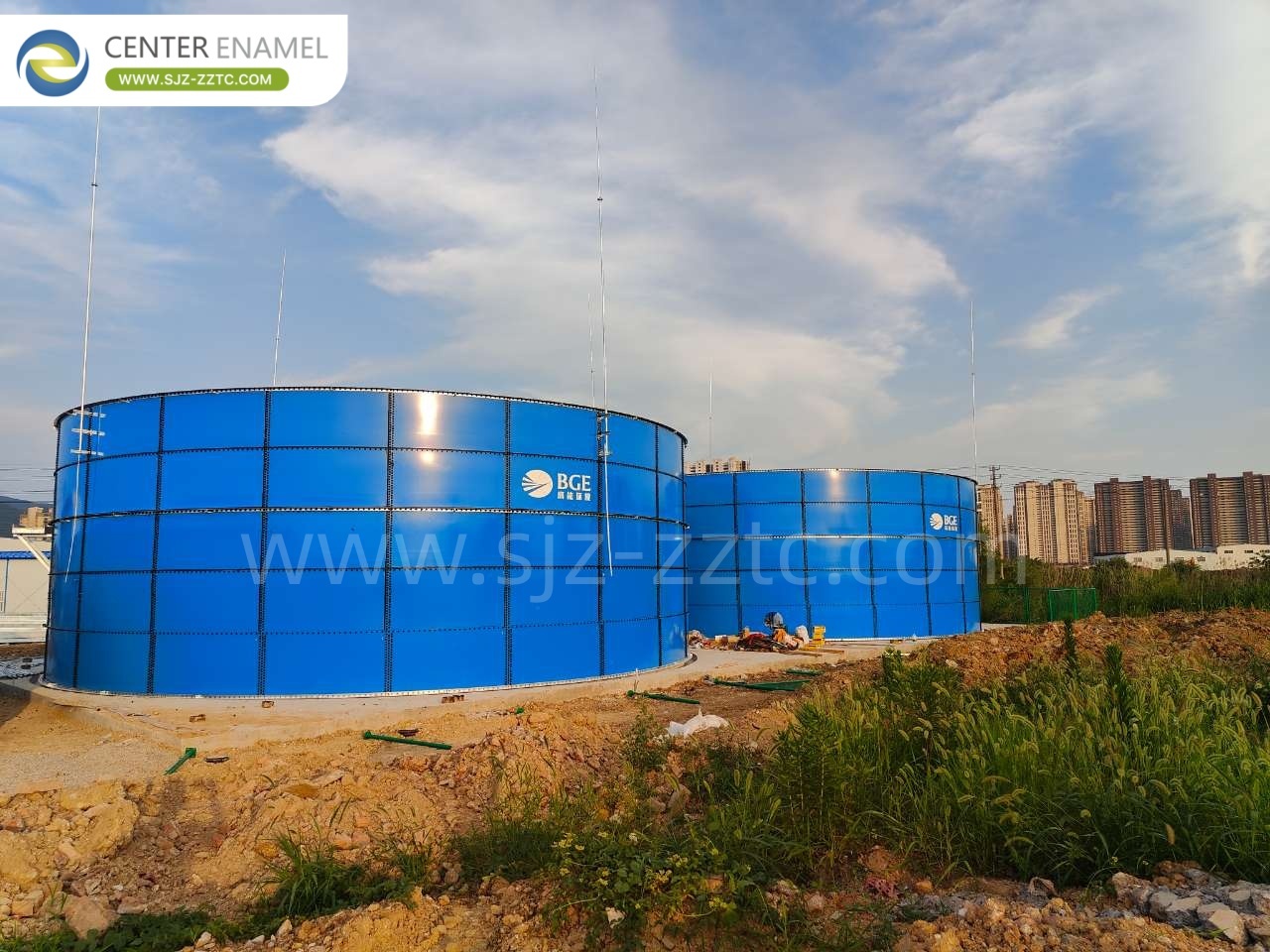
Glass-Fused-to-Steel tanks provide exceptional structural durability and superior chemical resistance for modern anaerobic digestion and biogas storage infrastructure. Created by fusing inorganic glass frit to high-strength steel plates at extreme temperatures, GFS tanks achieve an unbreakable molecular bond that withstands corrosive environments. The specialized double-layer coating applied to both interior and exterior surfaces effectively protects against hydrogen sulfide and organic acid attack. These modular containment structures offer rapid on-site erection, seismic resilience, and straightforward capacity expansion without requiring extensive welding. Compliant with stringent international design codes, GFS tanks ensure absolute airtightness and long-term reliability for high-capacity biogas plants.
Alternative Storage Tanks and Roof Solutions
- Galvanized Steel Tanks:
- Provide economical and wear-resistant containment backed by robust zinc coatings for general water and utility service.
- Fusion Bonded Epoxy Tanks:
- Utilize advanced coating technologies to deliver superior chemical resistance against aggressive industrial liquids.
- Stainless Steel Tanks:
- Fabricated from premium austenitic grades to meet rigorous hygienic and corrosive containment standards.
- Aluminum Geodesic Dome Roofs:
- Offer expansive clear spans with minimal maintenance and excellent weather resistance.
- Double Membrane Roofs:
- Provide flexible gas storage integration and maintain stable internal pressure across varying consumption cycles.
Auxiliary Equipment Overview
- Double Membrane Gas Holders:
- Deliver dependable gas storage capacity and maintain stable operating pressure.
- Submersible Macerating Pumps:
- Ensure trouble-free transfer of fibrous slurries and viscous digestate without clogging.
- Desulfurization Systems:
- Efficiently strip moisture and hydrogen sulfide from raw biogas to safeguard downstream equipment.
- Screw Sludge Dewatering Units:
- Optimize digestate handling, solid-liquid separation, and nutrient management.
- Emergency Flare Systems:
- Guarantee absolute operational safety by safely managing excess biogas volumes.
One-Stop Solution Provider
- Feasibility Consulting:
- Comprehensive initial assessments and feedstock energy potential evaluations.
- Detailed Engineering:
- Proprietary process package design and mass balance optimization.
- Component Manufacturing:
- High-precision fabrication under strict quality management systems.
- Site Commissioning:
- Expert on-site installation supervision and technical operator training.
Conclusion
Transforming agricultural dry straw into clean renewable energy through advanced anaerobic digestion drives sustainable agricultural development in Nigeria. Center Enamel remains committed to delivering world-class containment solutions and technical expertise for global bio-energy success.
Frequently Asked Questions
- What specific mechanical pretreatment methods enhance the breakdown of dense rice straw fibers in Nigerian digesters?
- Heavy-duty shredders and industrial cutters reduce particle size and fracture the rigid outer cuticle, exposing cellulose surfaces to rapid enzymatic attack.
- How do bolted modular tank construction methods benefit large-scale bio-energy projects across remote regions of Nigeria?
- Modular panels are easily transported in standard shipping containers and assembled rapidly on-site without heavy welding equipment, minimizing logistical hurdles.
- What operational parameters are vital for preventing system failure due to volatile fatty acid accumulation in CSTR units?
- Maintaining stable pH levels between 6.8 and 7.8 and closely monitoring organic loading rates ensure balanced methanogenic bacterial activity.