-
Glass Fused To Steel Tanks (596)
-
Stainless Steel Tanks (434)
-
Fusion Bonded Epoxy Tanks (592)
-
Galvanized Steel Tanks (321)
-
Aluminum Dome Roofs (1336)
-
Wastewater Storage Tanks (232)
-
Welded Steel Tanks (457)
-
Pressure Vessels (295)
-
Anaerobic Digester (202)
-
Industrial Water Tanks (349)
-
Glass Lined Steel Tanks (180)
-
Bolted Steel Tanks (389)
-
Sludge Storage Tank (115)
-
Biogas Storage Tank (173)
-
Leachate Storage Tanks (133)
-
Agricultural Water Storage Tanks (179)
-
Fire Water Tank (166)
-
Grain Storage Silos (146)
-
Biogas Projects (424)
-
Wastewater Treatment Projects (1098)
-
Double Membrane Roof (223)

|
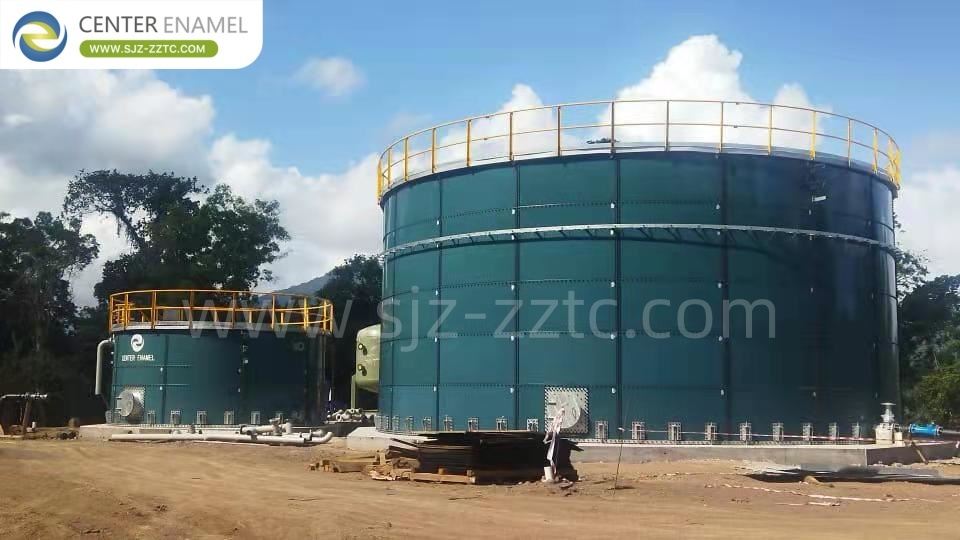
Biogas Project Contractor with GFS Tanks for Fruit and Vegetable Waste in Saudi Arabia
| Place of Origin: | China |
| Brand Name: | CEC TANKS |
| Certification: | ISO 9001:2008, AWWA D103 , OSHA , BSCI |
| Model Number: | W |
| Minimum Order Quantity: | 1set |
| Price: | $5000~$20000 one set |
| Packaging Details: | PE poly-foam between each two steel plates ; wooden pallet and wooden |
| Delivery Time: | 10-30 days after deposit received |
| Payment Terms: | L/C,T/T |
| Supply Ability: | 60 sets per month |
|
Detail Information |
|||
| Place of Origin | China | Brand Name | CEC TANKS |
|---|---|---|---|
| Certification | ISO 9001:2008, AWWA D103 , OSHA , BSCI | Model Number | W |
| Tank Body Color: | Dark Green / Can Be Customized | Corrosion Integrity: | Excellent |
| Steel Plates Thickness: | 3mm To 12mm , Depends On The Tank Structure | Chemical Resistance: | Excellent |
| Size Of Panel: | 2.4M * 1.2M | Easy To Clean: | Smooth, Glossy, Inert, Anti-adhesion |
| Highlight: | Biogas project contractor GFS tanks,Fruit vegetable waste biogas contractor,Saudi Arabia wastewater treatment projects |
||
Product Description
Effective management of agricultural and food processing by-products is critical for sustainable development in the Middle East. This comprehensive guide explores advanced anaerobic digestion techniques for organic residues. Center Enamel delivers state-of-the-art technological systems for regional processing facilities. Discover how modern engineering transforms environmental challenges into renewable energy assets.
Fruit and vegetable waste originates primarily from agricultural harvesting, wholesale markets, food processing plants, and municipal distribution centers across Saudi Arabia. This organic refuse is characterized by a high moisture content, rapid biodegradability, and significant seasonal fluctuations in volume. When discarded improperly, it undergoes rapid fermentation, releasing foul odors, greenhouse gases, and leachate that threaten local water tables. Managing these discarded materials poses severe operational difficulties due to their acidic nature and high biological oxygen demand, which can disrupt conventional municipal waste treatment systems if not handled through specialized biological containment methods.
The systematic processing of organic produce refuse requires an integrated workflow designed to maximize resource recovery while minimizing environmental impact. Initially, raw materials undergo mechanical screening to remove large impurities, plastics, and inert debris. The sorted organic fraction is then transferred to a homogenization tank where consistency and pH levels are balanced. Following pre-treatment, the slurry is pumped into an anaerobic reactor for biogas production, generating renewable methane and nutrient-rich digestate. Finally, solid-liquid separation and secondary polishing stages divide the digestate into high-grade organic fertilizer and liquid nutrients suitable for agricultural land application, achieving a fully closed-loop circular economy.
Center Enamel provides bespoke engineering, procurement, and construction contractor solutions tailored to the unique regulatory and climatic demands of regional organic waste management initiatives. Our engineering team conducts thorough feasibility studies, raw material characterization, and process simulation to design highly efficient treatment plants. By integrating modular containment structures, advanced mixing mechanisms, and automated monitoring systems, we ensure optimal biological reactions and long-term structural durability. Each project is engineered to withstand local environmental conditions, guaranteeing high operational uptime and maximizing economic returns for facility operators investing in sustainable bio-energy infrastructure.
The Continuous Stirred-Tank Reactor (CSTR) functions as the core biological heart of the anaerobic digestion system, converting complex organic matter into high-purity biogas. Inside the sealed reactor vessel, specialized anaerobic microorganisms break down suspended solids under strictly controlled temperature conditions. The system features a robust mechanical agitation mechanism that ensures constant contact between microbes and feedstock, preventing thermal stratification and surface crusting. This continuous or semi-continuous feeding regime optimizes gas yield, accelerates volatile fatty acid conversion, and stabilizes the digestion process, thereby delivering exceptional organic loading capacity and reliable energy generation for industrial applications.
Glass-Fused-to-Steel (GFS) technology represents the gold standard in industrial liquid and gas containment, combining the mechanical strength of steel with the superior corrosion resistance of glass. Manufactured by fusing specialized glass enamel onto high-grade steel plates at extreme temperatures, these panels form an inert, impenetrable barrier against harsh chemical environments. GFS tanks offer rapid on-site installation, zero field welding requirements, and an exceptionally long service life without the need for periodic repainting. Their modular design allows for effortless capacity expansion, making them the ideal choice for primary digesters, homogenization vessels, and buffer tanks in large-scale bio-energy facilities.
- Galvanized Steel Tanks: Utilizes a durable galvanizing process to provide wear-resistant, long-lasting protective coatings with excellent corrosion resistance.
- Fusion Bonded Epoxy Tanks: Developed in partnership with AkzoNobel, featuring advanced FBE coating technology for exceptional surface protection.
- Stainless Steel Tanks: Constructed from high-quality AISI 304/316 grades to handle extreme environments and high-purity applications.
- Aluminum Geodesic Dome Roofs: Offers advanced corrosion resistance, expansive clear span capability, and low maintenance costs.
- Glass-Fused-to-Steel Roofs: Provides optimal air-tightness and structural strength for pressurized digester structures and odor control.
- Double Membrane Roofs: Serves as a cost-effective, space-efficient solution for integrated anaerobic digestion gas storage.
- Aluminum Alloy Trough Deck Roofs: Designed for economical rainwater and wind protection without requiring absolute air-tightness.
- Stainless Steel Roofs: Delivers superior anti-resistance and durability for harsh corrosive environments.
- FRP Roofs: Ideal for non-airtight applications such as drinking water or general wastewater storage.
- Gas Holder: High-capacity double membrane structures designed for stable, safe, and efficient clean fuel storage.
- Black Membrane: Heavy-duty flexible liners used for effective lagoon containment and ecological protection.
- Solid-Liquid Separator: Advanced mechanical dewatering machinery that efficiently splits digestate into solid and liquid fractions.
- Torch System: Robust flaring equipment utilized for safe excess biogas management and pressure relief.
- Lifting Pump: Submersible fluid transfer pumps engineered to handle heavy slurries and wastewater streams seamlessly.
- Dehydration and Desulfurization Tank: Specialized purification vessels that eliminate moisture and hydrogen sulfide from raw biogas.
- Screw Sludge Dewatering Machine: High-performance equipment designed to optimize sludge concentration and solid residue disposal.
- Turnkey Project Contractor Services: Delivers end-to-end project execution from initial conceptual design and equipment manufacturing to civil construction and commissioning.
- Extensive Global Expertise: Backed by decades of international project experience spanning municipal wastewater, industrial effluent, and agricultural waste valorization.
- Certified Quality Standards: Adheres strictly to premier global design codes and quality benchmarks including AWWA D103, ISO 9001, NSF/ANSI 61, and EN28765.
- Customized Process Packages: Formulates tailored engineering solutions that match the precise feedstock characteristics and operational goals of every facility.
Transitioning toward sustainable bio-energy generation is essential for addressing modern environmental and agricultural challenges. Center Enamel combines cutting-edge engineering expertise, premium GFS tank technology, and comprehensive contractor services to deliver reliable organic waste processing plants. By converting troublesome refuse into valuable green energy and organic fertilizer, our projects empower communities to achieve long-term ecological and economic resilience. Partner with us to build a cleaner, greener future for generations to come.
GFS tanks feature exterior coatings that resist intense solar ultraviolet radiation and thermal expansion stress, while the interior glass-fused surface maintains chemical stability without degrading under high ambient temperatures.
Screw sludge dewatering machines utilize a multi-plate screw design to continuously filter and press high-moisture organic sludge, minimizing energy consumption while producing dry, easily manageable cake residue.
Working with a single-source contractor like Center Enamel streamlines communication, eliminates interface gaps between equipment suppliers and civil builders, and ensures rigorous quality control throughout project execution.