-
Glass Fused To Steel Tanks (596)
-
Stainless Steel Tanks (434)
-
Fusion Bonded Epoxy Tanks (592)
-
Galvanized Steel Tanks (321)
-
Aluminum Dome Roofs (1336)
-
Wastewater Storage Tanks (232)
-
Welded Steel Tanks (457)
-
Pressure Vessels (295)
-
Anaerobic Digester (201)
-
Industrial Water Tanks (349)
-
Glass Lined Steel Tanks (180)
-
Bolted Steel Tanks (389)
-
Sludge Storage Tank (115)
-
Biogas Storage Tank (173)
-
Leachate Storage Tanks (133)
-
Agricultural Water Storage Tanks (179)
-
Fire Water Tank (166)
-
Grain Storage Silos (146)
-
Biogas Projects (425)
-
Wastewater Treatment Projects (1028)
-
Double Membrane Roof (223)


|
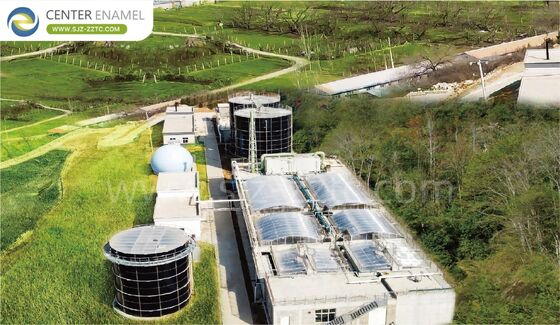
Leading Farm Wastewater Treatment in South Africa: Anaerobic Solutions with GFS Tanks and USR Process
| Place of Origin: | China |
| Brand Name: | CEC TANKS |
| Certification: | ISO 9001:2008, AWWA D103 , OSHA , BSCI |
| Model Number: | W |
| Minimum Order Quantity: | 1set |
| Price: | $5000~$20000 one set |
| Packaging Details: | PE poly-foam between each two steel plates ; wooden pallet and wooden |
| Delivery Time: | 10-30 days after deposit received |
| Payment Terms: | L/C,T/T |
| Supply Ability: | 60 sets per month |
|
Detail Information |
|||
| Place of Origin | China | Brand Name | CEC TANKS |
|---|---|---|---|
| Certification | ISO 9001:2008, AWWA D103 , OSHA , BSCI | Model Number | W |
| Tank Body Color: | Dark Green / Can Be Customized | Corrosion Integrity: | Excellent |
| Steel Plates Thickness: | 3mm To 12mm , Depends On The Tank Structure | Chemical Resistance: | Excellent |
| Size Of Panel: | 2.4M * 1.2M | Easy To Clean: | Smooth, Glossy, Inert, Anti-adhesion |
| Highlight: | farm wastewater treatment GFS tanks,anaerobic wastewater treatment USR process,South Africa wastewater treatment solutions |
||
Product Description
This article explores how agricultural operations in South Africa can leverage advanced Center Enamel anaerobic solutions to transform farm wastewater into renewable energy. By integrating durable GFS tanks and the efficient CSTR process, farms can achieve environmental compliance and energy independence.
Agricultural facilities in South Africa generate substantial volumes of wastewater from livestock and poultry, characterized by high organic loads, suspended solids, and potent pollutants. When managed inadequately, this effluent poses significant risks to the local ecosystem, including the contamination of water bodies and soil degradation. Furthermore, untreated waste releases methane, contributing to greenhouse gas emissions. The primary challenge for South African farms lies in effectively stabilizing this high-concentration waste to meet environmental regulations while addressing odor issues and operational safety. Traditional treatment methods are often insufficient to handle these complex waste streams, necessitating the adoption of advanced, integrated engineering solutions that can neutralize environmental threats while simultaneously recovering valuable nutrients and energy, thereby ensuring the long-term sustainability and productivity of agricultural enterprises across the country.
The transformation of farm wastewater into biogas is a sophisticated biological process known as anaerobic digestion. In a controlled, oxygen-free environment, specialized microorganisms break down complex organic matter found in livestock and poultry waste. This fermentation process produces biogas, a renewable mixture predominantly composed of methane and carbon dioxide. By adopting this technology, farmers in South Africa can effectively reduce the organic load of their waste, mitigate environmental pollution, and generate a stable source of renewable energy that can be utilized for electricity, heating, or further refinement into fuel, all while producing a nutrient-rich byproduct suitable for use as an organic fertilizer.
Center Enamel offers professional, end-to-end biogas design solutions specifically tailored to the demanding requirements of agricultural wastewater projects. Our engineering team leverages deep industry expertise to create customized process packages that maximize biogas yield and ensure stable, long-term performance. We understand the unique challenges of the South Africa agricultural sector and work closely with our partners to design systems that optimize resource utilization and operational efficiency. By providing precise process engineering, site-specific infrastructure design, and expert equipment integration, we ensure that every biogas facility we support is built to meet the highest standards of reliability and productivity.
The Upflow Solid Reactor (USR) is an innovative anaerobic digestion technology specifically optimized for the treatment of high-solid agricultural waste. Unlike conventional digesters, the USR system is designed to handle feedstock with high concentrations of suspended solids by promoting an upward flow pattern. This movement facilitates the effective contact between organic materials and granular anaerobic sludge, which maximizes the degradation efficiency of complex organic substances. By maintaining an optimal thermal and biological environment, the USR process achieves rapid conversion rates and significantly enhances methane production. This technology is particularly valuable in South Africa for operations seeking to maximize energy extraction from thick manures and slurries, ensuring a high-quality digestate and efficient reactor operation.
For anaerobic digestion, Center Enamel’s Glass-Fused-to-Steel (GFS) tanks offer unmatched performance. These tanks are constructed by firing molten glass onto high-strength steel plates at extreme temperatures, creating an inorganic bond that provides exceptional corrosion resistance and durability compared to traditional coatings. When paired with a Double Membrane Roof, the system becomes an ideal solution for biogas projects. The membrane roof provides the airtight seal necessary for gas collection and storage, while simultaneously offering significant cost and space advantages by eliminating the need for separate, ground-mounted gas storage structures.
- Galvanized Steel Tanks: These provide a cost-effective, durable, and corrosion-resistant option, ideal for general agricultural water storage.
- Fusion Bonded Epoxy Tanks: Featuring advanced coating technology developed with global leaders, these tanks offer robust protection for demanding liquid storage environments.
- Stainless Steel Tanks: Utilizing AISI 304/316 materials, these tanks are designed for high-purity applications and extreme environmental conditions.
- Aluminum Geodesic Dome Roofs: Excellent for corrosion resistance and clear-span applications where large, unobstructed space is required.
- GFS Roofs: These provide superior air-tightness and are optimized for pressurized structures and odor control.
- Stainless Steel Roofs: Ideal for harsh environments where long-term durability and resistance to chemical corrosion are critical.
- FRP Roofs: Versatile options that can be produced in dome or flat shapes, suitable for non-airtight storage needs like fire water or agricultural water.
A complete biogas system relies on a series of integrated components to ensure efficient processing and safety:
- Pre-treatment: Mechanical Bar Screens and Homogenization Tanks are used to remove debris and regulate influent quality.
- Gas Handling: Biogas Dehydration units and Desulfurization Tanks purify the gas, while Booster Fans ensure optimal pressure for downstream usage.
- Post-treatment: Solid-liquid Separators and Screw Sludge Dewatering machines efficiently process digestate.
- Safety and Energy: Torch Systems are utilized for pressure relief, while biogas generators, boilers, and CNG systems convert the purified gas into useful energy.
Center Enamel is a comprehensive, one-stop solution provider for biogas projects, offering an integrated range of services:
- EPC Services: We provide full-service engineering, procurement, and construction to deliver high-quality, turnkey projects.
- Process Packages: We design bespoke process configurations that are optimized for specific types of agricultural waste.
- Equipment Supply: We are a leading manufacturer of core components, including our flagship GFS tanks, separation equipment, and gas handling systems.
- Global Expertise: With a proven track record of successful projects in over 100 countries, we possess the technical capabilities and project management experience to handle complex, large-scale industrial and agricultural energy initiatives with professionalism.
The transition toward sustainable energy in South Africa is significantly bolstered by the efficient conversion of farm wastewater into biogas. By utilizing high-performance GFS tanks, the CSTR process, and professional EPC support from Center Enamel, agricultural facilities can achieve environmental compliance while turning waste into a valuable energy asset. Center Enamel remains dedicated to providing robust, reliable solutions that empower the agricultural sector to embrace greener, more circular operational models, ensuring that biogas projects provide consistent, long-term environmental and economic benefits for our clients across the region.
-
How do GFS tanks handle the thermal stress of fluctuating ambient temperatures in South Africa?
GFS tanks feature high-strength steel with a flexible glass-to-steel bond that accommodates thermal expansion and contraction, ensuring the coating remains intact and crack-free despite significant daily temperature variations.
-
Can Center Enamel’s biogas solutions be integrated into small-to-medium-sized farm operations?
Yes, our modular design approach allows us to scale biogas systems to the specific capacity of small-to-medium-sized farms, providing professional-grade efficiency and technology at a size appropriate for their waste output.
-
What is the benefit of the desulfurization process in farm-based biogas systems?
The desulfurization process removes hydrogen sulfide from the raw biogas, which prevents the corrosion of internal engine components and pipelines, significantly extending the lifespan of generators and other gas-utilization equipment.