-
Glass Fused To Steel Tanks (596)
-
Stainless Steel Tanks (434)
-
Fusion Bonded Epoxy Tanks (592)
-
Galvanized Steel Tanks (321)
-
Aluminum Dome Roofs (1336)
-
Wastewater Storage Tanks (232)
-
Welded Steel Tanks (457)
-
Pressure Vessels (295)
-
Anaerobic Digester (201)
-
Industrial Water Tanks (349)
-
Glass Lined Steel Tanks (180)
-
Bolted Steel Tanks (389)
-
Sludge Storage Tank (115)
-
Biogas Storage Tank (173)
-
Leachate Storage Tanks (133)
-
Agricultural Water Storage Tanks (179)
-
Fire Water Tank (166)
-
Grain Storage Silos (146)
-
Biogas Projects (425)
-
Wastewater Treatment Projects (1028)
-
Double Membrane Roof (223)


|
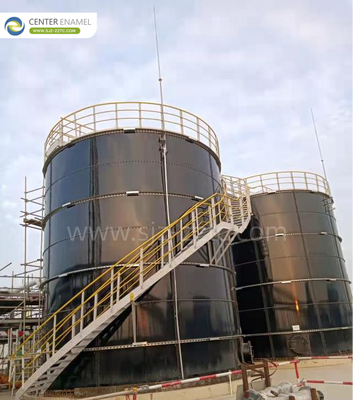
Efficient Farm Wastewater Treatment in Turkey: Biogas Technology with GFS Tanks and CSTR Process
| Place of Origin: | China |
| Brand Name: | CEC TANKS |
| Certification: | ISO 9001:2008, AWWA D103 , OSHA , BSCI |
| Model Number: | W |
| Minimum Order Quantity: | 1set |
| Price: | $5000~$20000 one set |
| Packaging Details: | PE poly-foam between each two steel plates ; wooden pallet and wooden |
| Delivery Time: | 10-30 days after deposit received |
| Payment Terms: | L/C,T/T |
| Supply Ability: | 60 sets per month |
|
Detail Information |
|||
| Place of Origin | China | Brand Name | CEC TANKS |
|---|---|---|---|
| Certification | ISO 9001:2008, AWWA D103 , OSHA , BSCI | Model Number | W |
| Tank Body Color: | Dark Green / Can Be Customized | Corrosion Integrity: | Excellent |
| Steel Plates Thickness: | 3mm To 12mm , Depends On The Tank Structure | Chemical Resistance: | Excellent |
| Size Of Panel: | 2.4M * 1.2M | Easy To Clean: | Smooth, Glossy, Inert, Anti-adhesion |
| Highlight: | farm wastewater treatment biogas technology,GFS tanks wastewater treatment system,CSTR process wastewater treatment Turkey |
||
Product Description
This article provides an overview of how agricultural sectors in Turkey can utilize advanced biogas technology to convert farm wastewater into renewable energy, focusing on the integration of Glass-Fused-to-Steel (GFS) tanks and the Continuous Stirred-Tank Reactor (CSTR) process to achieve sustainable waste management and energy recovery.
Agricultural operations in Turkey generate significant quantities of livestock and poultry wastewater characterized by high organic concentrations, suspended solids, and nitrogen levels. When managed improperly, this effluent poses severe risks to local water bodies and soil health, leading to eutrophication and the spread of pathogens. Furthermore, the decomposition of this waste releases greenhouse gases like methane into the atmosphere. The primary challenge lies in effectively stabilizing this high-strength wastewater while adhering to increasingly stringent environmental regulations. Traditional treatment methods often fail to handle the volume and consistency of farm waste, making it essential to implement advanced technological solutions that not only neutralize environmental threats but also reduce the carbon footprint of intensive farming operations while effectively managing odor control in densely populated rural areas.
The process of converting farm wastewater into biogas is a controlled biological degradation of organic matter occurring in an anaerobic (oxygen-free) environment. During this process, anaerobic bacteria break down complex organic components—such as carbohydrates, proteins, and fats—into simpler substances. The culmination of this fermentation cycle results in the production of biogas, a clean, renewable energy source consisting largely of methane (CH4) and carbon dioxide (CO2). This sustainable conversion not only addresses environmental waste management by reducing chemical oxygen demand (COD) but also provides farms with a valuable energy stream. The resulting residue, or digestate, is further stabilized and can be utilized as a nutrient-rich organic fertilizer, promoting a circular economy within the agricultural ecosystem of Turkey.
Center Enamel delivers professional design solutions for biogas projects, prioritizing high-efficiency and reliability. We recognize that every farm has unique waste characteristics; therefore, our design philosophy centers on customized engineering. Our team integrates advanced process technology with robust infrastructure to ensure that each facility operates at peak capacity. We support our partners in Turkey by providing tailored process packages that account for climate variables, waste flow rates, and specific output requirements. From the initial conceptual layout to detailed engineering drawings, our professional solutions are designed to minimize footprint, ensure long-term structural integrity, and maximize biogas yields. By bridging the gap between raw organic waste and refined energy, we help agricultural enterprises achieve operational excellence through proven, science-based project designs.
The Continuous Stirred-Tank Reactor (CSTR) process is a premier technology for anaerobic digestion, particularly suited for substrates with high solids content. In a CSTR system, organic feedstock is fed into a sealed, temperature-controlled reactor where a mechanical agitator ensures the complete and continuous mixing of waste and microorganisms. This uniform distribution prevents the formation of dead zones and floating layers, facilitating consistent microbial activity and efficient degradation. The CSTR process effectively optimizes the retention time of the waste, resulting in higher methane output and a more stabilized, pathogen-reduced digestate, making it an essential component for high-performance biogas plants.
Center Enamel’s Glass-Fused-to-Steel (GFS) tanks represent the cutting edge of industrial storage technology. These tanks are constructed by firing molten glass onto steel plates at extreme temperatures, creating an inorganic, inert bond that provides superior resistance to chemical corrosion and mechanical stress compared to traditional epoxy or painted tanks. When paired with a Double Membrane Roof, the GFS tank becomes a complete biogas solution. The membrane roof provides the necessary airtight environment for gas collection and storage, while its flexible, modular design offers significant advantages in terms of cost-effectiveness, pressure regulation, and spatial efficiency, allowing for streamlined site integration.
Center Enamel offers a comprehensive range of storage and roofing solutions designed to suit various agricultural and industrial requirements:
Storage Tanks:
- Galvanized Steel Tanks: Featuring a specialized zinc coating, these tanks offer robust protection against environmental corrosion in outdoor settings.
- Fusion Bonded Epoxy Tanks: Utilizing advanced coatings developed with global leaders, these tanks provide exceptional resistance to acidic and alkaline environments.
- Stainless Steel Tanks: Constructed from AISI 304/316, these are ideal for high-purity or highly corrosive liquids, ensuring maximum service life.
Cover Solutions:
- Aluminum Geodesic Dome Roofs: Ideal for large-span applications, these roofs provide high strength-to-weight ratios and superior corrosion resistance.
- Glass-Fused-to-Steel Roofs: These provide complete airtightness, making them suitable for pressurized systems requiring stringent odor control.
- Stainless Steel Roofs: Designed for durability, these roofs are suitable for challenging environments where long-term performance is the priority.
- FRP (Fiber Reinforced Plastic) Roofs: A versatile, lightweight option suitable for water storage where air-tightness is not a primary requirement.
Successful biogas plant operation requires a suite of specialized, high-quality equipment to maintain process stability and gas quality:
- Pre-treatment: Mechanical Bar Screens and Homogenization Tanks are essential for removing large debris and stabilizing feedstock concentrations.
- Gas Handling: Biogas Dehydration units and Desulfurization Tanks remove moisture and corrosive hydrogen sulfide from the raw biogas.
- Post-treatment: Solid-liquid Separators and Screw Sludge Dewatering machines efficiently separate digestate into solid fertilizer and liquid discharge.
- Energy Utilization: Torch Systems are included for emergency pressure release, while high-efficiency biogas generators and boilers convert the purified gas into electricity or heat for farm use.
Center Enamel stands as a premier one-stop solution provider for global biogas projects, delivering seamless project integration. We offer comprehensive services including:
- EPC Service: We manage engineering, procurement, and construction, ensuring that every project is delivered on time and according to technical specifications.
- Process Package: We provide sophisticated process modeling to ensure the highest anaerobic digestion efficiency based on client-specific feedstock.
- Equipment Supply: We manufacture and supply core equipment, including our world-class GFS tanks, separation systems, and purification units, guaranteeing compatibility and quality.
- Technical Support: Our expert team provides ongoing guidance and maintenance support, drawing on vast experience from thousands of global project installations, ensuring sustainable operations.
The adoption of biogas technology in Turkey is a transformative step toward agricultural modernization and environmental stewardship. By integrating Center Enamel’s GFS tanks, CSTR process technology, and comprehensive project support, farms can successfully convert problematic wastewater into a valuable energy asset. This approach not only ensures compliance with environmental standards but also fosters economic growth through energy self-sufficiency and improved farm management practices. Center Enamel remains dedicated to partnering with the agricultural sector to build a more sustainable future, providing the reliable, high-performance equipment and expertise required to turn waste into a truly renewable energy resource.
How does the corrosion resistance of GFS tanks compare to traditional stainless steel tanks in biogas applications?
GFS tanks use a specialized glass-to-steel bond that is exceptionally resistant to acidic components found in biogas, often matching or exceeding the long-term performance of stainless steel in anaerobic environments while remaining significantly more cost-effective.
Can the CSTR process be retrofitted into existing farm wastewater lagoons?
While CSTR reactors are designed as purpose-built, enclosed units for high-efficiency mixing and gas collection, our team can assist in integrating our technology alongside existing infrastructure to transition a farm from basic pond-based storage to a sophisticated, high-yield biogas system.
What is the impact of seasonal temperature fluctuations in Turkey on the CSTR process?
Center Enamel’s biogas systems are designed with thermal management considerations, ensuring that the fermentation process within the CSTR remains stable at an optimal temperature, regardless of external climate variations, to maintain constant biogas production throughout the year.