-
Glass Fused To Steel Tanks (596)
-
Stainless Steel Tanks (434)
-
Fusion Bonded Epoxy Tanks (592)
-
Galvanized Steel Tanks (321)
-
Aluminum Dome Roofs (1336)
-
Wastewater Storage Tanks (232)
-
Welded Steel Tanks (457)
-
Pressure Vessels (295)
-
Anaerobic Digester (201)
-
Industrial Water Tanks (349)
-
Glass Lined Steel Tanks (180)
-
Bolted Steel Tanks (389)
-
Sludge Storage Tank (115)
-
Biogas Storage Tank (173)
-
Leachate Storage Tanks (133)
-
Agricultural Water Storage Tanks (179)
-
Fire Water Tank (166)
-
Grain Storage Silos (146)
-
Biogas Projects (425)
-
Wastewater Treatment Projects (1028)
-
Double Membrane Roof (223)


|
Sustainable Farm Wastewater Treatment in Nigeria: EPC Contractor Solutions with GFS Tanks and CSTR Process
| Place of Origin: | China |
| Brand Name: | CEC TANKS |
| Certification: | ISO 9001:2008, AWWA D103 , OSHA , BSCI |
| Model Number: | W |
| Minimum Order Quantity: | 1set |
| Price: | $5000~$20000 one set |
| Packaging Details: | PE poly-foam between each two steel plates ; wooden pallet and wooden |
| Delivery Time: | 10-30 days after deposit received |
| Payment Terms: | L/C,T/T |
| Supply Ability: | 60 sets per month |
|
Detail Information |
|||
| Place of Origin | China | Brand Name | CEC TANKS |
|---|---|---|---|
| Certification | ISO 9001:2008, AWWA D103 , OSHA , BSCI | Model Number | W |
| Tank Body Color: | Dark Green / Can Be Customized | Corrosion Integrity: | Excellent |
| Steel Plates Thickness: | 3mm To 12mm , Depends On The Tank Structure | Chemical Resistance: | Excellent |
| Size Of Panel: | 2.4M * 1.2M | Easy To Clean: | Smooth, Glossy, Inert, Anti-adhesion |
| Highlight: | Sustainable wastewater treatment Nigeria,EPC contractor GFS tanks,CSTR process wastewater treatment |
||
Product Description
This article provides an in-depth analysis of how agricultural operations in Nigeria can implement advanced waste-to-energy systems. By leveraging Center Enamel’s expertise as an international EPC contractor, we explore how GFS tanks and the CSTR process provide a robust, scalable solution for farm wastewater management, turning environmental challenges into renewable energy assets.
Agricultural facilities in Nigeria frequently struggle with the environmental burden posed by livestock and poultry manure. This high-strength wastewater is characterized by elevated levels of organic matter, nitrogen, phosphorus, and suspended solids. If discharged directly into the environment, this effluent leads to critical issues such as the contamination of local water sources, soil nutrient imbalance, and the uncontrolled release of methane, a potent greenhouse gas. Furthermore, the management of this waste is compounded by odor emissions and the need to comply with evolving national environmental regulations. Facilities often lack the technical infrastructure to stabilize this waste, resulting in operational inefficiencies. Effective management requires a systematic approach to capture organic pollutants and convert them into stable products, thereby mitigating environmental risks while simultaneously enhancing the economic viability of the agricultural sector in Nigeria.
The transformation of farm wastewater into biogas is a sophisticated biological process known as anaerobic digestion. In a specialized, oxygen-free environment, microorganisms decompose complex organic components within the manure—such as carbohydrates, proteins, and lipids—into simpler, volatile fatty acids and eventually into biogas. This resulting mixture, primarily composed of methane ($CH_4$) and carbon dioxide ($CO_2$), serves as a potent renewable energy carrier. By implementing this technology, farmers in Nigeria can effectively reduce the chemical oxygen demand (COD) and total solids of their effluent. This process not only mitigates environmental pollution but also produces a stable, nutrient-rich byproduct known as digestate, which serves as a high-quality organic fertilizer, fostering a circular agricultural model that saves on external input costs while generating clean energy.
Center Enamel provides professional, high-performance biogas design solutions tailored to the diverse needs of the Nigeria agricultural landscape. Our engineering philosophy is rooted in precision and long-term reliability. We conduct thorough analyses of feedstock composition, local climate conditions, and energy demand to develop bespoke process packages that maximize biogas yield and operational uptime. Our design team integrates advanced process engineering with structural innovation, ensuring that every facility is capable of handling the unique challenges associated with high-solids agricultural wastewater. By focusing on site-specific optimization and regulatory compliance, we provide our partners with robust, scalable biogas systems that deliver consistent, predictable performance. Our commitment to design excellence ensures that clients receive not just equipment, but an integrated, future-proof solution for sustainable farm energy management.
The Upflow Solid Reactor (USR) process is an innovative anaerobic digestion technology specifically optimized for the treatment of high-solid agricultural waste. Unlike conventional digesters, the USR system is designed to handle feedstock with high concentrations of suspended solids by promoting an upward flow pattern. This movement facilitates the effective contact between organic materials and granular anaerobic sludge, which maximizes the degradation efficiency of complex organic substances. By maintaining an optimal thermal and biological environment, the USR process achieves rapid conversion rates and significantly enhances methane production. This technology is particularly valuable in Nigeria for operations seeking to maximize energy extraction from thick manures and slurries, ensuring a high-quality digestate and efficient reactor operation.
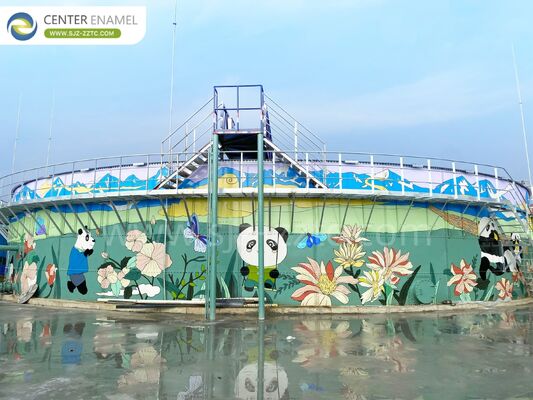
For biogas storage and processing, Center Enamel’s Glass-Fused-to-Steel (GFS) tanks offer unparalleled structural and chemical performance. These tanks are created by fusing molten glass onto high-strength steel plates, forming an inorganic bond that provides superior resistance to corrosion, abrasion, and harsh environmental conditions compared to traditional coatings. When integrated with a Double Membrane Roof, the system becomes the gold standard for biogas projects. The membrane roof provides a highly effective, airtight seal for gas storage and collection, while its flexible, pressure-regulated design offers a cost-effective, space-saving alternative to ground-mounted gas holders, ensuring safe and reliable operation for long-term biogas projects.
Center Enamel offers a comprehensive portfolio of storage and cover systems designed to meet diverse agricultural requirements:
- Glass-Fused-to-Steel (GFS) Tanks: Featuring a unique glass-to-steel bond, these are highly resistant to chemical corrosion, making them the premier choice for biogas digesters.
- Fusion Bonded Epoxy (FBE) Tanks: Utilizing advanced coating technology, these offer robust protection against abrasive and corrosive liquids.
- Stainless Steel Tanks: Constructed from AISI 304/316, these tanks provide high durability and are suitable for specialized, high-purity, or highly corrosive storage needs.
- Galvanized Steel Tanks: These provide a cost-effective, versatile option for general agricultural water and liquid storage.
- Aluminum Geodesic Dome Roofs: Ideal for covering large-diameter tanks, offering high strength, durability, and corrosion resistance.
- Glass-Fused-to-Steel Roofs: Designed for superior air-tightness, these are essential for biogas systems where pressure control and odor containment are critical.
- FRP Roofs: A lightweight, durable, and corrosion-resistant option suitable for various water storage applications.
A successful biogas plant is built upon a foundation of integrated, high-performance equipment to ensure process stability:
- Pre-treatment Systems: Mechanical Bar Screens and Homogenization Tanks remove coarse debris and normalize the influent waste stream for optimal digestion.
- Gas Handling and Purification: Biogas Dehydration units and Desulfurization Tanks remove water vapor and hydrogen sulfide, ensuring the purity of the biogas for downstream use.
- Post-treatment and Dewatering: Solid-liquid Separators and Screw Sludge Dewatering machines transform digestate into manageable solid fertilizer and liquid effluent.
- Safety and Energy Conversion: Flame arrestors and torch systems are utilized for safe pressure relief, while high-efficiency biogas generators and boilers convert the purified gas into reliable electricity and heat for farm utilization.
Center Enamel serves as a premier, one-stop EPC contractor for global biogas initiatives, delivering comprehensive, end-to-end solutions. We provide:
- EPC Project Management: We handle all stages of engineering, procurement, and construction, ensuring seamless project execution and strict adherence to timelines and safety standards.
- Custom Process Packages: We offer bespoke anaerobic digestion processes designed to optimize energy yield for specific agricultural feedstocks.
- Quality Equipment Supply: We manufacture and supply core components including GFS tanks, separation equipment, and gas management systems, guaranteeing high quality and perfect compatibility.
- Comprehensive Technical Support: Our global team provides expert guidance and long-term maintenance, leveraging our extensive international project experience to ensure operational efficiency and sustainability for our clients in Nigeria.
The transition to sustainable energy in Nigeria is significantly advanced by the strategic conversion of agricultural wastewater into biogas. Through Center Enamel’s specialized GFS tanks, advanced CSTR and USR processes, and our capacity as a leading EPC contractor, agricultural operations can effectively manage waste while achieving energy self-sufficiency. This integrated approach ensures environmental compliance, reduces operational costs, and supports long-term growth. Center Enamel remains dedicated to providing robust, turnkey solutions that empower farmers to turn daily waste into a reliable, renewable energy asset for a cleaner and more productive future.
How do GFS tanks maintain their structural integrity compared to traditional concrete digesters in Nigeria?
GFS tanks feature a chemically inert glass-to-steel bond that prevents the degradation often seen in concrete when exposed to the acidic conditions of anaerobic digesters, ensuring a significantly longer service life and lower maintenance costs.
Is the CSTR process capable of handling mixed agricultural wastes, such as combining poultry manure with agricultural crop residues?
Yes, the CSTR process is highly versatile; it is designed for consistent mixing, which allows for the co-digestion of various organic feedstocks, provided they are properly pre-treated and homogenized to maintain a balanced nutrient profile.
What are the benefits of choosing an EPC contractor like Center Enamel for a biogas project in Nigeria?
By acting as an EPC contractor, Center Enamel provides a single point of accountability, ensuring that all aspects of the design, equipment procurement, and construction are perfectly integrated to eliminate project delays, optimize costs, and guarantee the highest quality of the final facility.