-
Glass Fused To Steel Tanks (596)
-
Stainless Steel Tanks (434)
-
Fusion Bonded Epoxy Tanks (592)
-
Galvanized Steel Tanks (321)
-
Aluminum Dome Roofs (1336)
-
Wastewater Storage Tanks (232)
-
Welded Steel Tanks (457)
-
Pressure Vessels (295)
-
Anaerobic Digester (201)
-
Industrial Water Tanks (349)
-
Glass Lined Steel Tanks (180)
-
Bolted Steel Tanks (389)
-
Sludge Storage Tank (115)
-
Biogas Storage Tank (173)
-
Leachate Storage Tanks (133)
-
Agricultural Water Storage Tanks (179)
-
Fire Water Tank (166)
-
Grain Storage Silos (146)
-
Biogas Projects (425)
-
Wastewater Treatment Projects (928)
-
Double Membrane Roof (223)


|
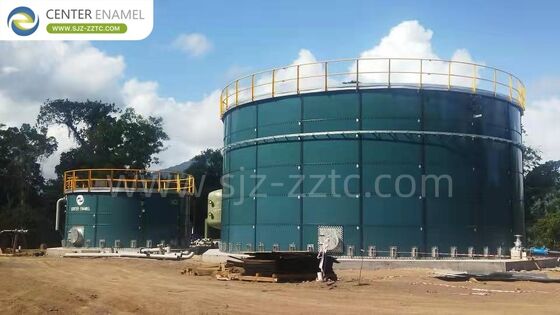
Innovative Biogas Project for Restaurant Food Waste Treatment in Myanmar: GFS Tanks+Double Membrane Roofs
| Place of Origin: | China |
| Brand Name: | CEC TANKS |
| Certification: | ISO 9001:2008, AWWA D103 , OSHA , BSCI |
| Model Number: | W |
| Minimum Order Quantity: | 1set |
| Price: | $5000~$20000 one set |
| Packaging Details: | PE poly-foam between each two steel plates ; wooden pallet and wooden |
| Delivery Time: | 10-30 days after deposit received |
| Payment Terms: | L/C,T/T |
| Supply Ability: | 60 sets per month |
|
Detail Information |
|||
| Place of Origin | China | Brand Name | CEC TANKS |
|---|---|---|---|
| Certification | ISO 9001:2008, AWWA D103 , OSHA , BSCI | Model Number | W |
| Tank Body Color: | Dark Green / Can Be Customized | Corrosion Integrity: | Excellent |
| Steel Plates Thickness: | 3mm To 12mm , Depends On The Tank Structure | Chemical Resistance: | Excellent |
| Size Of Panel: | 2.4M * 1.2M | Easy To Clean: | Smooth, Glossy, Inert, Anti-adhesion |
| Highlight: | biogas project for restaurant waste,food waste treatment GFS tanks,double membrane roofs wastewater treatment |
||
Product Description
As Myanmar undergoes a period of significant urban transformation, the hospitality and culinary sectors in burgeoning hubs are expanding rapidly. This growth brings a major challenge: the efficient management of substantial volumes of restaurant food waste. Conventional disposal strategies, such as dumping organic matter in landfills or informal disposal sites, create severe environmental hazards, including the release of harmful methane emissions and the risk of leachate contaminating vital soil and water resources. For Myanmar’s cities, addressing this waste accumulation is critical for sustainable urban development. Transitioning toward modern, high-tech waste-to-energy conversion is a necessary step, allowing the country to shift away from antiquated disposal methods and instead reclaim organic materials as a dependable, renewable energy asset that bolsters energy security for local communities.
Converting restaurant food waste into biogas represents a sustainable, circular economy solution for Myanmar’s evolving energy landscape. By utilizing anaerobic digestion, organic scraps are treated in a fully controlled, oxygen-free system that promotes the generation of clean, high-energy, methane-rich biogas. This conversion process yields dual advantages: it effectively stabilizes volatile organic waste, which drastically reduces the environmental risks associated with traditional disposal, and it produces a high-value renewable fuel source. Whether the captured biogas is applied for electricity generation, industrial-scale heating, or as a clean fuel for cooking, this energy recovery framework helps Myanmar diversify its energy portfolio, reduce reliance on conventional fuel sources, and construct a resilient, decentralized energy infrastructure that supports long-term economic and environmental sustainability.
Center Enamel is dedicated to driving Myanmar’s renewable energy sector forward through expert, customized engineering and design. With over 36 years of international expertise, our technical team specializes in developing comprehensive process packages that are meticulously engineered to match the specific characteristics and high organic concentrations of food waste streams common in Myanmar. We avoid generic, one-size-fits-all solutions; instead, we collaborate closely with local project developers to architect systems that are optimized for peak performance, reliability, and full environmental compliance. From the initial site evaluation and feasibility studies to advanced structural and process design, our engineering focus is on delivering maximum biogas yields and operational excellence, all tailored to meet the unique operational requirements of the Myanmar market.
At the foundation of Center Enamel’s technical portfolio is the Continuous Stirred-Tank Reactor (CSTR) process, an advanced anaerobic treatment technology that is highly effective for food waste applications. This solution is engineered specifically to handle feedstocks that feature high organic concentrations and significant suspended solids. The reactor employs a high-torque, precision-engineered mechanical stirring device that ensures all organic materials and anaerobic microorganisms remain in a state of consistent and thorough integration. This uniform, highly controlled fermentation environment effectively eliminates dead zones within the tank, significantly accelerating the degradation of complex organic matter and ensuring a stable, high-output production of quality biogas throughout the entire operational lifespan of the project.
To ensure optimal performance and durability in biogas applications, Center Enamel utilizes industry-leading Glass-Fused-to-Steel (GFS) tanks. These tanks are fabricated through an advanced, high-temperature firing process (820°C–930°C), which creates an inert, exceptionally durable bond that unites the structural strength of steel with the unparalleled corrosion resistance of glass. When integrated with a Double Membrane Roof, the system serves as the gold standard for biogas storage. This roof configuration provides essential airtightness for superior odor control and efficient biogas collection, while simultaneously offering a cost-effective, space-saving alternative to traditional, ground-mounted gas holders by maximizing vertical storage capacity.
Center Enamel provides a comprehensive range of roofing options designed to meet the specific requirements of various biogas and infrastructure projects:
- Aluminum Geodesic Dome Roof: Combines expansive clear-span capabilities with high resistance to corrosion and rapid, cost-effective assembly.
- Glass-Fused-to-Steel Roof: The ideal choice for pressurized containment environments where stringent odor management is a primary requirement.
- Aluminum Alloy Trough Deck Roof: An economical, weather-resistant cover perfect for water storage scenarios where airtightness is not a functional necessity.
- Stainless Steel Roof: Expertly crafted to withstand the most aggressive chemical environments, ensuring long-term structural reliability and performance.
- FRP Roof: A versatile, cost-effective option available in both dome and flat profiles, perfectly suited for standard agricultural irrigation or water storage.
High-efficiency biogas operations require integrated mechanical support. Center Enamel supplies a complete range of essential auxiliary equipment, including:
- Gas Holders & Black Membranes: Designed for secure, flexible, and efficient biogas containment.
- Solid-liquid Separators: Vital for streamlining the pre-treatment and preparation of complex, raw food waste feedstocks.
- Torch Systems & Lifting Pumps: Engineered to ensure optimal site safety and efficient fluid handling during the digestion process.
- Dehydration & Desulfurization Tanks: Essential components for purifying raw biogas to meet rigorous quality standards for industrial use.
- Screw Sludge Dewatering Machines: Built to manage and reduce the volume of digestate efficiently for sustainable disposal or repurposing.
Center Enamel is a dedicated EPC (Engineering, Procurement, and Construction) service provider committed to the success of Myanmar’s biogas initiatives, offering a comprehensive, one-stop solution:
- Full EPC Service: We provide full-cycle management from initial engineering design and equipment procurement to final construction and commissioning.
- Customized Process Packages: Tailored engineering packages specifically designed to address the unique composition of organic waste found in Myanmar.
- Premium Equipment Supply: As Asia’s largest manufacturer of GFS tanks, we provide the robust, reliable infrastructure necessary for large-scale energy projects.
- International Compliance: All our solutions adhere to rigorous global quality benchmarks—including ISO9001, NSF61, and EN28765—ensuring that every project is built to the highest safety and durability standards.
Myanmar’s path to a sustainable future is linked to the intelligent repurposing of its organic resources. By adopting Center Enamel’s integrated GFS tank and CSTR technology, Myanmar’s municipalities and the industrial sector can convert food waste into a high-value energy asset. We provide the expertise, engineering excellence, and equipment required to drive the nation’s renewable energy goals forward. Through our partnership, we help build resilient infrastructure that minimizes environmental impact while delivering long-term economic benefits, establishing a firm foundation for a cleaner, more energy-secure future.
-
How does the CSTR technology support the integration of biogas projects into urban areas in Myanmar?
The CSTR system’s high-efficiency digestion and GFS tanks’ vertical construction allow for a compact footprint, making it easier to integrate waste-to-energy facilities into urban or semi-urban restaurant districts without requiring expansive land plots.
-
How does Center Enamel ensure the long-term reliability of its GFS tanks in Myanmar’s climate?
Our GFS tanks undergo a high-temperature firing process that bonds glass to steel, creating an inert surface that is highly resistant to both extreme heat and high humidity, preventing corrosion and ensuring long-term structural stability in tropical climates.
-
What support does Center Enamel offer for initial biogas project planning in Myanmar?
As a one-stop EPC provider, we offer comprehensive support starting from site assessment and waste characterization to final system design, ensuring that every project is technically optimized to provide the best possible energy recovery results from the outset.