-
Glass Fused To Steel Tanks (596)
-
Stainless Steel Tanks (434)
-
Fusion Bonded Epoxy Tanks (592)
-
Galvanized Steel Tanks (321)
-
Aluminum Dome Roofs (1336)
-
Wastewater Storage Tanks (232)
-
Welded Steel Tanks (457)
-
Pressure Vessels (295)
-
Anaerobic Digester (201)
-
Industrial Water Tanks (349)
-
Glass Lined Steel Tanks (180)
-
Bolted Steel Tanks (389)
-
Sludge Storage Tank (115)
-
Biogas Storage Tank (173)
-
Leachate Storage Tanks (133)
-
Agricultural Water Storage Tanks (179)
-
Fire Water Tank (166)
-
Grain Storage Silos (146)
-
Biogas Projects (425)
-
Wastewater Treatment Projects (928)
-
Double Membrane Roof (223)


|
Zimbabwe Bagasse to Power: EPC Contractor for GFS Tanks + Double Membrane Roofs
| Place of Origin: | China |
| Brand Name: | CEC TANKS |
| Certification: | ISO 9001:2008, AWWA D103 , OSHA , BSCI |
| Model Number: | W |
| Minimum Order Quantity: | 1set |
| Price: | $5000~$20000 one set |
| Packaging Details: | PE poly-foam between each two steel plates ; wooden pallet and wooden |
| Delivery Time: | 10-30 days after deposit received |
| Payment Terms: | L/C,T/T |
| Supply Ability: | 60 sets per month |
|
Detail Information |
|||
| Place of Origin | China | Brand Name | CEC TANKS |
|---|---|---|---|
| Certification | ISO 9001:2008, AWWA D103 , OSHA , BSCI | Model Number | W |
| Tank Body Color: | Dark Green / Can Be Customized | Corrosion Integrity: | Excellent |
| Steel Plates Thickness: | 3mm To 12mm , Depends On The Tank Structure | Chemical Resistance: | Excellent |
| Size Of Panel: | 2.4M * 1.2M | Easy To Clean: | Smooth, Glossy, Inert, Anti-adhesion |
| Highlight: | Zimbabwe bagasse power EPC contractor,GFS tanks wastewater treatment projects,double membrane roofs wastewater treatment |
||
Product Description
Zimbabwe’s agricultural sector, particularly its thriving sugar estates, serves as a vital pillar of the nation's economy. Yet, this productivity generates massive quantities of sugarcane bagasse—the fibrous byproduct left after juice extraction. Historically, this biomass has often been treated as mere waste, left to decompose in open heaps or disposed of through inefficient, polluting incineration practices. These traditional disposal pathways not only lead to significant greenhouse gas emissions but also squander a potent energy resource. As Zimbabwe prioritizes sustainable industrialization and energy independence, the need to transition toward a sophisticated waste-to-energy model has never been more critical. Effectively managing this high-volume organic stream is the key to turning a pervasive environmental burden into a sustainable pillar of Zimbabwe's renewable energy infrastructure.
Transforming sugarcane bagasse into biogas represents a strategic shift toward a circular economy. By employing controlled anaerobic digestion, the fibrous lignin and cellulose in bagasse are broken down, yielding methane-rich biogas that can be leveraged for industrial power, heat, or regional grid support. This approach provides a dual benefit: it drastically reduces the carbon footprint associated with untreated organic waste and provides Zimbabwean sugar producers with a reliable, decentralized source of renewable energy. By harnessing this byproduct, the industry can reduce its dependency on external power sources, lower operational costs, and demonstrate a commitment to environmental stewardship, setting a benchmark for green manufacturing across Southern Africa.
Center Enamel is committed to empowering Zimbabwe’s renewable energy sector through customized engineering and precision-focused technical design. Drawing on over 36 years of international expertise, our team develops process packages meticulously calibrated to the unique chemical profiles of Zimbabwean sugarcane residues. We bypass generic, one-size-fits-all approaches, instead collaborating with local stakeholders to architect systems that maximize throughput, ensure operational stability, and strictly adhere to environmental standards. From the initial conceptual feasibility studies to the complex final structural design, our end-to-end service ensures that each biogas facility is built to achieve optimal biogas yield, operational longevity, and robust performance within the local climate.
Central to our technical solution is the Continuous Stirred-Tank Reactor (CSTR) process, an elite anaerobic digestion technology engineered for high-solid organic waste. This reactor design excels at managing feedstocks like bagasse, which require consistent, high-intensity mixing to maintain digestion efficiency. By utilizing a high-torque mechanical stirring system, the CSTR ensures the uniform distribution of microorganisms and organic substrates, preventing the formation of stagnant zones that hinder biogas production. This rigorous level of process control accelerates the degradation of even the most complex organic matter, ensuring a steady, reliable output of high-quality methane and providing a superior return on investment for long-term project viability.
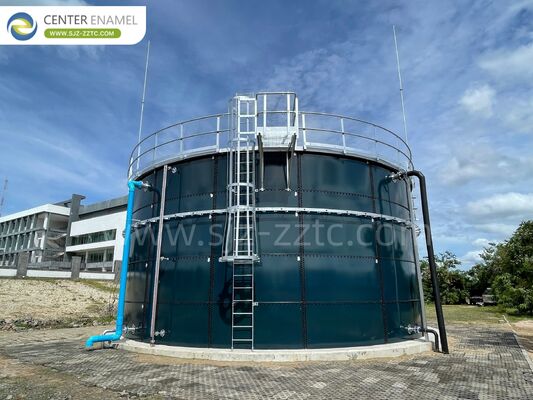
For robust containment and storage, Center Enamel utilizes industry-standard Glass-Fused-to-Steel (GFS) tanks. These structures are created through a specialized high-temperature firing process (820°C–930°C), which creates an inert, impermeable bond that fuses the strength of steel with the chemical resistance of glass. When integrated with our specialized Double Membrane Roof, the system provides an unmatched solution for biogas storage. This combination ensures perfect airtightness, critical for superior odor control and efficient, large-scale gas collection. Furthermore, the lightweight nature of the membrane roof allows for maximum vertical storage while streamlining the plant layout, a distinct structural advantage for facility developers looking to optimize their footprint.
Center Enamel provides a comprehensive suite of roofing designs, each tailored to meet specific functional requirements and environmental site conditions:
- Aluminum Geodesic Dome Roof: Offers expansive clear-span capability with exceptional corrosion resistance, ensuring rapid and cost-effective assembly.
- Glass-Fused-to-Steel Roof: The optimal choice for high-pressure environments that demand stringent odor management and containment.
- Aluminum Alloy Trough Deck Roof: A highly economical, weather-resistant cover suitable for applications where extreme airtightness is not a primary requirement.
- Stainless Steel Roof: Expertly fabricated to withstand the most aggressive chemical environments, guaranteeing long-term structural reliability and safety.
- FRP Roof: A versatile, cost-effective solution available in both dome and flat profiles, ideal for standardized storage and biogas requirements.
A high-efficiency biogas facility requires a fully integrated mechanical ecosystem to maintain peak operational output. Center Enamel delivers a comprehensive range of critical auxiliary equipment:
- Gas Holders & Black Membranes: Engineered for the secure, flexible, and efficient storage of biogas.
- Solid-Liquid Separators: Crucial for the pre-treatment and streamlined preparation of raw, complex agricultural residues.
- Torch Systems & Lifting Pumps: Designed to ensure optimal site safety and efficient, reliable fluid handling throughout the fermentation cycle.
- Dehydration & Desulfurization Tanks: Essential components for purifying biogas to meet rigorous quality standards for industrial usage.
- Screw Sludge Dewatering Machines: Built to manage and effectively reduce digestate volume for sustainable repurposing or environmentally sound disposal.
Center Enamel serves as a dedicated EPC (Engineering, Procurement, and Construction) partner, providing a comprehensive, one-stop solution for Zimbabwe’s biogas ambitions:
- Full EPC Service: We provide full-cycle management, overseeing every phase from the initial engineering design and equipment procurement to the final construction and system commissioning.
- Customized Process Packages: We deliver tailored engineering packages designed to handle the specific organic waste composition and operational demands of the Zimbabwean market.
- Premium Equipment Supply: As a global leader in GFS tank manufacturing, we provide the reliable, durable infrastructure required for the most demanding renewable energy projects.
- International Compliance: All our solutions are built to exceed global benchmarks—including ISO9001 and EN28765—ensuring that every project achieves the highest standards of safety and structural durability.
Zimbabwe’s transition to a sustainable energy future depends on the intelligent transformation of its abundant agricultural organic resources. By adopting Center Enamel’s integrated GFS tank and CSTR technology, Zimbabwean industrial facilities can turn problematic sugarcane bagasse into a high-value, renewable energy asset. We provide the specialized engineering, manufacturing excellence, and comprehensive EPC services required to drive the nation’s renewable energy goals. Through our strategic partnership, we build resilient infrastructure that minimizes environmental impact while delivering long-term economic advantages, laying a firm foundation for a cleaner, more energy-independent Zimbabwe.
- How does the CSTR system manage the fibrous nature of sugarcane bagasse effectively? Our CSTR systems incorporate high-torque, industrial-grade agitators specifically designed to break down and maintain the suspension of fibrous lignocellulosic materials. This ensures that the bagasse remains in constant contact with the active anaerobic bacteria, facilitating efficient degradation and preventing material buildup within the tank.
- Are the GFS tanks suitable for regions in Zimbabwe that experience significant temperature fluctuations? Yes, GFS tanks are highly resilient to thermal expansion and contraction. The fusion-bonded glass surface is chemically inert and does not degrade under varying temperatures, ensuring that the tank’s structural integrity and airtightness remain intact regardless of seasonal shifts in Zimbabwe’s climate.
- Does Center Enamel offer maintenance support after the biogas project is commissioned? Absolutely. As an EPC contractor, we provide post-commissioning support, including operational training for local staff, routine maintenance schedules, and technical troubleshooting, to ensure your biogas facility maintains its efficiency and reliability for its entire operational lifecycle.