-
Glass Fused To Steel Tanks (596)
-
Stainless Steel Tanks (434)
-
Fusion Bonded Epoxy Tanks (592)
-
Galvanized Steel Tanks (321)
-
Aluminum Dome Roofs (1316)
-
Wastewater Storage Tanks (231)
-
Welded Steel Tanks (457)
-
Pressure Vessels (295)
-
Anaerobic Digester (201)
-
Industrial Water Tanks (349)
-
Glass Lined Steel Tanks (180)
-
Bolted Steel Tanks (390)
-
Sludge Storage Tank (115)
-
Biogas Storage Tank (173)
-
Leachate Storage Tanks (133)
-
Agricultural Water Storage Tanks (179)
-
Fire Water Tank (166)
-
Grain Storage Silos (146)
-
Biogas Projects (425)
-
Wastewater Treatment Projects (788)
-
Double Membrane Roof (223)
|
Prefabricated Dome Structures: Advanced Modular Engineering for Industrial Bulk Storage and Environmental Infrastructure (2026)
| Brand Name: | Shijiazhuang Zhengzhong Technology Co., Ltd (Center Enamel) |
|
Detail Information |
|||
Product Description
Prefabricated Dome Structures: Advanced Modular Engineering for Industrial Bulk Storage and Environmental Infrastructure (2026)
In modern industrial architecture, civil engineering, and material management layouts, optimization of storage assets relies on maximizing clear-span internal volume while driving down construction timelines and lifecycle capital expenditures (CAPEX). Traditional brick-and-mortar, column-supported flat roofs, or heavy welded steel structural systems pose severe operational liabilities, including high dead loads, susceptible corrosion zones, and prolonged field assembly requirements.
To overcome these structural boundaries, prefabricated dome structures—specifically self-supporting aluminum space-frame geodesic systems—have emerged as the premier global engineering choice. By shifting structural fabrication from the unpredictable field environment into highly automated, precision-controlled factories, prefabrication delivers zero-defect, modular components optimized for rapid assembly and extreme structural resilience.
1. What is a Prefabricated Dome Structure?
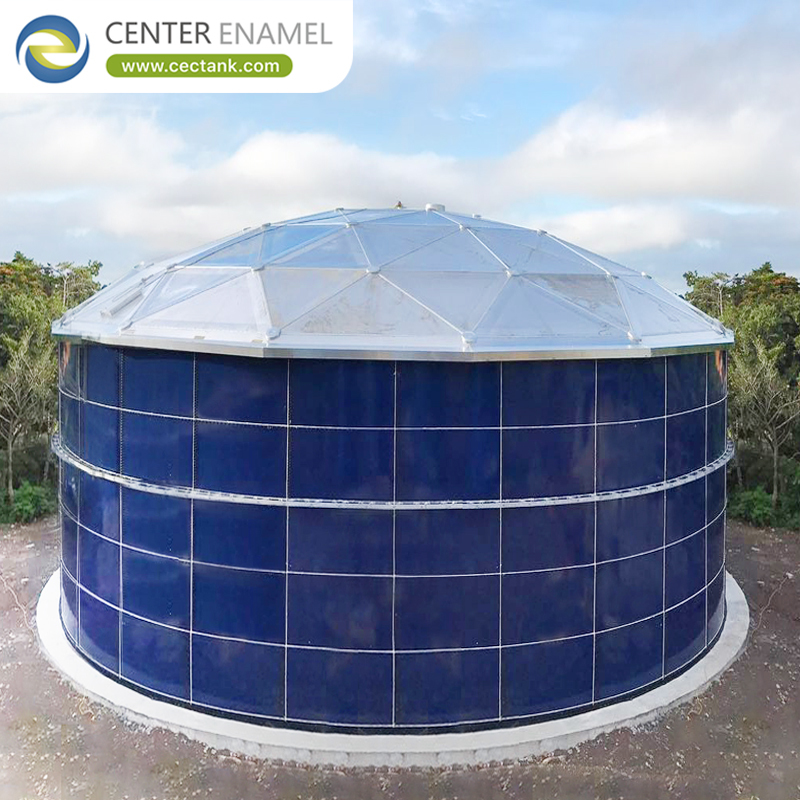
A prefabricated dome structure is a modular, self-supporting spherical shell composed of a network of factory-machined, high-strength aluminum alloy extruded struts enclosed by precisely stamped aluminum paneling. The core mechanical principle relies on the triangulation of space, a geometric arrangement that distributes external dead, live, and environmental loads into a multi-directional matrix of tension and compression vectors across the shell.
Because the space-frame configuration distributes stresses uniformly to the perimeter foundation or the rim of a containment vessel, the dome remains completely self-supporting across immense spans—frequently exceeding 30 to over 100 meters in diameter—without requiring any internal vertical support pillars, beams, or columns.
2. Technical Performance: Factory-Controlled Precision vs. Field Constraints
The defining competitive advantage of a prefabricated dome structure lies in its manufacturing pipeline. Shifting the engineering tolerances from the field to a specialized manufacturing center yields superior performance metrics across several operational verticals:
CNC Precision and Zero-Leak Interlocking Nodes
The structural integrity and absolute sealing capability of a geodesic dome rely heavily on its mechanical connection points. Prefabricated domes feature connection struts and structural gussets machined via automated CNC (Computer Numerical Control) profiling centers. This factory automation achieves tolerances measured in millimeters, ensuring that structural batten bars and panels lock seamlessly into specialized compression hubs or discs. The panel intersections are backed by UV-stabilized EPDM gaskets or premium silicone sealant beads, establishing a completely hermetic barrier that traps volatile organic compounds (VOCs), manages offensive odors, and prevents external rainwater ingress.
Advanced Metallurgy and Corrosion Immunity
Industrial bulk storage and environmental containment facilities expose structures to aggressive atmospheres. Prefabricated aluminum domes utilize structural space-frame components extruded from high-tensile 6061-T6 or 6082-T6 aluminum alloys, while panel cladding is stamped from marine-grade 3003-H14 or 5052-H32 aluminum sheets. These alloys naturally form a dense, microscopic aluminum oxide passivation film upon atmospheric contact. If physically scratched during operation, the layer instantaneously self-heals, providing exceptional long-term immunity to hydrogen sulfide ($text{H}_2text{S}$), sulfur dioxide ($text{SO}_2$), biogenic sulfuric acids, and airborne coastal chlorides without requiring periodic sandblasting or field painting.
Extreme Strength-to-Weight Optimization
Aluminum exhibits an excellent strength-to-weight ratio compared to structural carbon steel. A prefabricated aluminum dome structure weighs roughly one-third to one-fifth of a comparable steel cone or truss roof, averaging an extremely low dead load of only 10 to 15 $text{kg/m}^2$. This minimal dead-weight profile drastically reduces the downward loading applied to the tank shell, primary silo walls, or concrete foundations. This enables operators to safely retrofit older, open-top concrete clarifiers or bolted storage tanks with environmental containment covers without requiring expensive, disruptive foundation reinforcement.
3. Structural Comparison: Prefabricated Aluminum Domes vs. Field-Welded Steel
| Engineering Parameter | Prefabricated Aluminum Geodesic Dome | Field-Welded Carbon Steel Roof |
| Manufacturing Method | 100% Factory Prefabricated (CNC Modular) | Field Fabricated (Heavy cutting/shaping) |
| Assembly Mechanics | Bolted structural connections (No hot work) | Continuous field welding (Highly labor intensive) |
| Internal Structural Spans | 100% Column-Free Clear Span | Requires internal columns or heavy trusses |
| Corrosion Protection | Inherent self-passivating oxide film | Dependent on field primers and industrial paints |
| Structural Dead Load | Extremely Low ($sim 10text{–}15 text{ kg/m}^2$) | High ($sim 40text{–}60 text{ kg/m}^2$) |
| Total Cost of Ownership (TCO) | Lowest (Zero maintenance over 30+ years) | High (Periodic recoating every 7–10 years) |
4. Ground-Level Value Engineering and Accelerated Construction Timelines
The modular nature of prefabricated dome structures enables a highly optimized, low-risk field erection process known as the top-down, ground-level assembly method. This sequence eliminates the safety risks and escalating equipment costs associated with high-altitude scaffolding or heavy crane operations:
Flat-Packed Logistics: All space-frame struts, hub connections, cladding panels, and gaskets are flat-packed into standard shipping containers, facilitating highly economical transport to remote or constrained international project sites.
Synchronized Ground Assembly: Construction crews assemble the lightweight struts and interlocking hubs entirely at ground level or on low-profile temporary staging platforms.
Single Crane Erection: Once the structural shell is bolted together and sealed, the entire monolithic dome structure is raised in a single crane lift.
Perimeter Fastening: The dome is anchored directly to the tank's top perimeter tension ring or concrete basin rim via heavy-duty anchor brackets, accelerating installation timelines by up to 60% compared to traditional steel roofs.
5. Global Engineering Design Standards and Civil Compliance
To clear rigorous civil engineering checks, pass international infrastructure bidding screens, and withstand extreme environmental loads, premium prefabricated dome structures—such as those manufactured by global industry leaders like Center Enamel (Shijiazhuang Zhengzhong Technology Co., Ltd)—are engineered in strict compliance with international structural codes:
API 650 Appendix G: The definitive American Petroleum Institute standard governing the structural design, calculation parameters, fabrication tolerances, and erection metrics of structurally supported aluminum dome roofs for petrochemical and chemical containment.
AWWA D103-19 (Section 13): The premier global benchmark standard for factory-coated bolted carbon steel liquid storage systems, validating the structural integration of aluminum geodesic domes onto modular bolted tanks.
The Aluminum Design Manual (ADM): Providing the fundamental structural design criteria, load factors, and safety limits for specialized aluminum alloys under sustained stress, buckling, and compression profiles.
ASCE 7-22 / Eurocode 9: Structural design parameters ensuring that the prefabricated space frame calculates accurately for dynamic live loads, heavy asymmetric snow accumulations, and extreme wind-tunnel pressures up to 250 km/h.
Securing Plant Longevity and Lowering Lifecycle CAPEX
For environmental consultants, industrial plant managers, municipal utility directors, and clean-tech EPC contractors focused on maximizing Return on Investment (ROI), a prefabricated aluminum dome structure represents a secure, durable, and highly cost-effective asset for 2026. By choosing a system engineered with factory-controlled CNC precision, verifiable compliance with API and AWWA codes, and an optimized ground-level assembly profile, operators can completely eliminate the cracking, gas-loss, and heavy maintenance costs of traditional steel and concrete covers. This strategic selection ensures zero-maintenance, airtight storage protection for an operational lifespan exceeding 50 years.
Are you currently designing an industrial dry bulk storage yard, planning a municipal wastewater treatment expansion, or upgrading a clean-water reservoir asset, and would you like to connect with an established global manufacturer for a detailed technical proposal including geometric dome sizing, structural weight calculations, and custom engineering drawings for your specific diameter?