-
Glass Fused To Steel Tanks (596)
-
Stainless Steel Tanks (434)
-
Fusion Bonded Epoxy Tanks (592)
-
Galvanized Steel Tanks (321)
-
Aluminum Dome Roofs (1336)
-
Wastewater Storage Tanks (232)
-
Welded Steel Tanks (457)
-
Pressure Vessels (295)
-
Anaerobic Digester (201)
-
Industrial Water Tanks (349)
-
Glass Lined Steel Tanks (180)
-
Bolted Steel Tanks (389)
-
Sludge Storage Tank (115)
-
Biogas Storage Tank (173)
-
Leachate Storage Tanks (133)
-
Agricultural Water Storage Tanks (179)
-
Fire Water Tank (166)
-
Grain Storage Silos (146)
-
Biogas Projects (425)
-
Wastewater Treatment Projects (908)
-
Double Membrane Roof (223)
|
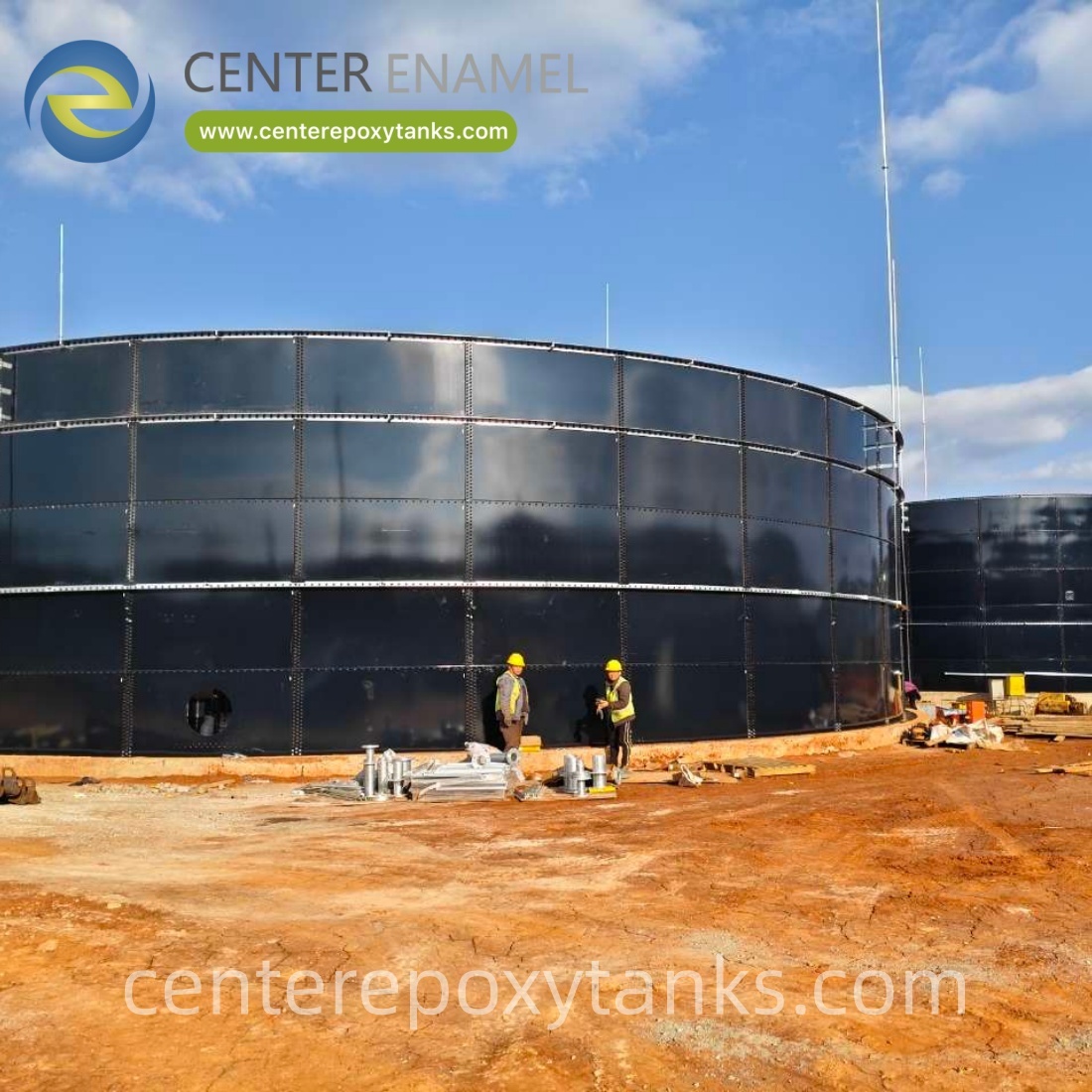
Bolted Steel Tanks for Large-Scale Irrigation: Engineering Reliable Water Security
| Place of Origin: | China |
| Brand Name: | CEC TANKS |
| Certification: | ISO 9001:2008, AWWA D103 , OSHA , BSCI |
| Model Number: | W |
| Minimum Order Quantity: | 1set |
| Price: | $5000~$20000 one set |
| Packaging Details: | PE poly-foam between each two steel plates ; wooden pallet and wooden |
| Delivery Time: | 10-30 days after deposit received |
| Payment Terms: | L/C,T/T |
| Supply Ability: | 60 sets per month |
|
Detail Information |
|||
Product Description
For large-scale agricultural operations and greenhouse facilities, the reliability of the water supply is not just an operational detail—it is the lifeline of the business. As climatic volatility increases and water scarcity becomes a more frequent challenge, the move away from traditional earthen ponds and aging concrete reservoirs toward engineered bolted steel storage tanks is accelerating.
Bolted steel tanks provide a consistent, high-capacity, and low-maintenance water storage solution that ensures your crops and greenhouse environments receive the precise irrigation volumes required, regardless of external water availability or delivery fluctuations.
Traditional storage methods, such as open ponds, suffer from significant losses due to evaporation, seepage, and contamination, which can introduce pathogens into your irrigation system. Bolted steel tanks mitigate these risks through structural engineering and material science.
Unlike surface ponds that fluctuate with seasonal weather, bolted steel tanks act as a secure buffer. They allow you to store water during high-availability periods or from reliable sources (such as rainfall harvesting or municipal lines), ensuring that even during peak growing seasons or droughts, your irrigation system operates at full capacity.
Agricultural operations are dynamic. Whether you are expanding your greenhouse footprint or diversifying your crop rotation, your storage capacity needs may change. Bolted steel tanks are modular by design. Unlike concrete tanks, which are permanent and difficult to modify, bolted tanks can be easily expanded by adding additional ring panels, providing a long-term infrastructure investment that grows with your business.
Closed-top bolted steel tanks prevent the entry of debris, algae, insects, and wildlife. This is critical for greenhouse operations where irrigation water must remain pristine to avoid clogging drip-tape emitters, misters, and micro-sprinklers. By maintaining water purity, you reduce the time and cost associated with filtering and nozzle maintenance.
When procurement and facility managers evaluate the Total Cost of Ownership (TCO), the structural and operational advantages of bolted steel often outperform traditional methods.
| Feature | Bolted Steel Tanks | Earthen Ponds | Poured Concrete Tanks |
|---|---|---|---|
| Water Security | High (Closed, sealed) | Low (Evaporation/seepage) | Medium (Cracking/leak risk) |
| Footprint | Compact (Vertical) | Massive (Horizontal) | Moderate |
| Installation Time | Rapid (Modular) | Slow (Excavation/lining) | Very Slow (Curing) |
| Contamination Risk | Near Zero | High (Open air) | Low |
| Scalability | High (Modular rings) | Low (New excavation) | None |
| Maintenance | Low (Minimal) | High (Dredging/weed control) | High (Crack sealing) |
The longevity of a bolted steel irrigation tank relies on high-quality manufacturing and coating technology. Leading manufacturers use factory-controlled processes to ensure that every steel panel is protected before it ever reaches your farm.
Note on Coating Technologies: Look for tanks utilizing Glass-Fused-to-Steel (GFS) or Fusion-Bonded Epoxy (FBE). These coatings are electrostatically applied and cured in controlled environments, creating a bond that is far more resistant to corrosion and chemical attack than field-applied paints or liners, ensuring the steel remains intact for decades.
Agricultural water tanks hold massive loads. Bolted steel tanks are engineered to meet strict structural standards (such as AWWA D103-19 or equivalent international codes), which account for peak wind loads, seismic activity, and soil conditions. This structural reliability ensures that your water supply remains secure even in the face of extreme weather events.
Q: Can these tanks be used to store treated or fertilizer-mixed water?
A: Yes. Depending on the coating specification (such as high-performance glass or epoxy), bolted steel tanks can be engineered to store irrigation water treated with fertilizers, pH adjusters, or sanitizers without risking corrosion to the tank walls.
Q: How long does installation typically take?
A: Because they are modular and do not require on-site welding or extensive curing (like concrete), bolted steel tanks can often be assembled in a fraction of the time of traditional tanks. The "top-down" jacking method allows for safe and rapid erection, often reducing field construction time by up to 60%.
Q: Are these tanks susceptible to freezing?
A: Steel tanks can be equipped with insulation jackets and, if necessary, internal heating elements or circulation systems to prevent freezing in colder climates, ensuring year-round irrigation capability for greenhouse operations.
For large-scale agricultural and greenhouse irrigation, reliability is the greatest variable you can control. By transitioning from open-air or unreliable storage to engineered bolted steel tanks, you gain a scalable, low-maintenance asset that protects your water supply and supports your crop yields.
To discuss specific load calculations, site footprint requirements, and system integration for your irrigation project, consult with an industrial storage specialist.