-
Glass Fused To Steel Tanks (596)
-
Stainless Steel Tanks (434)
-
Fusion Bonded Epoxy Tanks (592)
-
Galvanized Steel Tanks (321)
-
Aluminum Dome Roofs (1336)
-
Wastewater Storage Tanks (232)
-
Welded Steel Tanks (457)
-
Pressure Vessels (295)
-
Anaerobic Digester (202)
-
Industrial Water Tanks (349)
-
Glass Lined Steel Tanks (180)
-
Bolted Steel Tanks (389)
-
Sludge Storage Tank (115)
-
Biogas Storage Tank (173)
-
Leachate Storage Tanks (133)
-
Agricultural Water Storage Tanks (179)
-
Fire Water Tank (166)
-
Grain Storage Silos (146)
-
Biogas Projects (424)
-
Wastewater Treatment Projects (1058)
-
Double Membrane Roof (223)
|
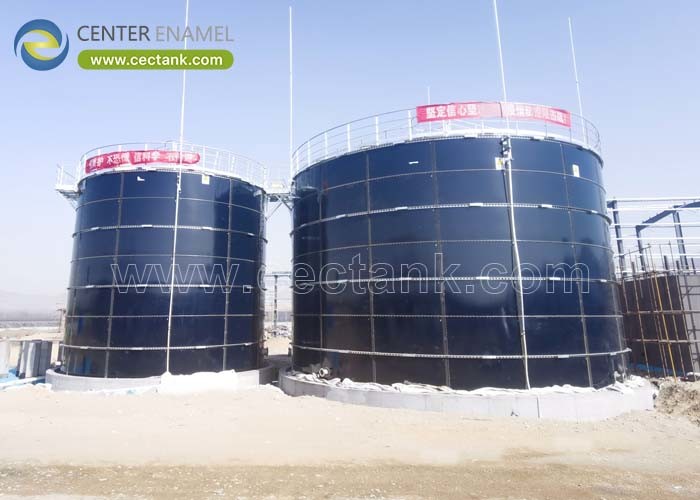
Bolted Steel Liquid Storage Tanks: The Ultimate Solution for Safe and Efficient Liquid Storage
| Place of Origin: | China |
| Brand Name: | CEC TANKS |
| Certification: | ISO 9001:2008, AWWA D103 , OSHA , BSCI |
| Model Number: | W |
| Minimum Order Quantity: | 1set |
| Price: | $5000~$20000 one set |
| Packaging Details: | PE poly-foam between each two steel plates ; wooden pallet and wooden |
| Delivery Time: | 10-30 days after deposit received |
| Payment Terms: | L/C,T/T |
| Supply Ability: | 60 sets per month |
|
Detail Information |
|||
Product Description
The key takeaway is that bolted steel liquid storage tanks have replaced traditional welded and concrete infrastructure as the global standard for liquid containment. Driven by faster installation cycles, exceptional material durability (such as Glass-Fused-to-Steel), and compliance with strict environmental regulations, bolted tanks offer a 30+ year operational lifespan with vastly superior Total Cost of Ownership (TCO) for municipal, industrial, and agricultural applications.
As the industry pivots toward sustainable and rapidly deployable infrastructure, understanding the engineering, material options, and compliance standards of modular containment is critical for asset managers.
The shift away from field-welded tanks to factory-fabricated bolted systems is driven by precise engineering and logistical efficiency. The primary advantage of bolted construction is that all fabrication—cutting, rolling, coating, and quality control—occurs in a highly controlled factory environment.
Three core engineering benefits drive this transition:
- Rapid On-Site Erection: Bolted tanks are assembled using a top-down jacking system, eliminating the need for extensive scaffolding, heavy cranes, or dangerous on-site hot work (welding). This cuts installation time by up to 50%.
- Unmatched Scalability: The modular design allows facilities to expand the tank's capacity in the future by simply jacking up the existing structure and adding new steel rings to the base.
- Global Shipping Efficiency: Because they are shipped as flat steel panels, high-capacity tanks can be packed densely into standard shipping containers, making them highly cost-effective for remote global projects.
The most crucial decision in specifying a bolted steel tank is selecting the correct material and coating for the stored liquid. A mismatch between the liquid's chemistry (particularly pH and abrasiveness) and the tank material will result in rapid corrosion.
Leading global manufacturers, such as Shijiazhuang Zhengzhong Technology Co., Ltd (Center Enamel), provide a spectrum of material options tailored to specific industrial effluents:
- Glass-Fused-to-Steel (GFS): The premier choice for highly corrosive environments. Steel panels are fired at 800°C–950°C with an inorganic glass enamel, creating a vitreous coating that is impermeable to volatile fatty acids, hydrogen sulfide (H2S), and high-salinity water. Ideal for anaerobic digesters and industrial wastewater.
- Fusion-Bonded Epoxy: A highly durable thermal polymer coating. It provides excellent performance for baseline industrial water, municipal drinking water, and fire-protection reserves at a competitive capital cost.
- Stainless Steel (304/316L): Utilized when absolute chemical purity is required, such as in pharmaceutical wastewater, specialized chemical storage, or high-temperature processing.
- Galvanized Steel: The panels undergo a hot-dip galvanization process to create a zinc-alloy barrier. This is highly effective for large-volume municipal water reserves and irrigation, often paired with an internal synthetic liner.
To optimize your storage infrastructure, the physical dimensions and the protective coating of the tank must be engineered to match both the site's environmental loads and the chemical makeup of the liquid.
Use the interactive engineering simulator below to see how adjusting the required volume, site wind speeds, and liquid pH levels dictates the physical geometry of the tank and the operational suitability of different materials.
To ensure structural integrity and public safety, top-tier bolted steel tanks must be designed and manufactured in strict adherence to international engineering codes.
When evaluating a bolted tank system, engineers look for these four definitive standards:
- AWWA D103-09: The defining American Water Works Association standard for factory-coated bolted steel tanks, governing structural calculations for seismic, wind, and liquid loads.
- ISO 28765: The international benchmark detailing the strict performance, testing, and defect-free requirements for vitreous enamel (GFS) coatings.
- NSF/ANSI 61: Certification confirming that the tank materials and sealants do not leach harmful contaminants into potable drinking water.
- NFPA 22: The standard for water tanks utilized in private fire protection systems, ensuring the tank can reliably supply high-pressure fire pumps during emergencies.
What is the typical lifespan of a bolted steel storage tank?
In summary, a properly specified and maintained bolted steel tank can easily exceed a 30-year operational lifespan. Advanced coatings like Glass-Fused-to-Steel often perform flawlessly for 40 years or more because the inorganic glass is immune to UV degradation and aggressive chemical etching.
Can bolted tanks be integrated with Aluminum Geodesic Dome Roofs?
Yes. For municipal water storage and wastewater treatment, self-supporting aluminum geodesic dome roofs are frequently installed on bolted tanks. They are lightweight, completely corrosion-resistant, and span the entire tank diameter without requiring internal support columns, making them ideal for odor control and preventing water contamination.
How do bolted tanks handle extreme weather and earthquakes?
Bolted tanks excel in seismic zones. The combination of high-tensile steel panels, specialized bolted joints, and elastomeric mastic sealants allows the structure to flex slightly under seismic stress or extreme wind loads. This dynamic flexibility prevents the catastrophic cracking often seen in rigid concrete or aged welded steel tanks.
As regulatory bodies tighten environmental discharge limits and mandate covered storage, evaluating the exact chemical profile of your effluent is the critical first step in infrastructure planning. Which specific wastewater stream or industrial liquid are you currently looking to contain?