-
Glass Fused To Steel Tanks (596)
-
Stainless Steel Tanks (434)
-
Fusion Bonded Epoxy Tanks (592)
-
Galvanized Steel Tanks (321)
-
Aluminum Dome Roofs (1336)
-
Wastewater Storage Tanks (232)
-
Welded Steel Tanks (457)
-
Pressure Vessels (295)
-
Anaerobic Digester (201)
-
Industrial Water Tanks (349)
-
Glass Lined Steel Tanks (180)
-
Bolted Steel Tanks (389)
-
Sludge Storage Tank (115)
-
Biogas Storage Tank (173)
-
Leachate Storage Tanks (133)
-
Agricultural Water Storage Tanks (179)
-
Fire Water Tank (166)
-
Grain Storage Silos (146)
-
Biogas Projects (425)
-
Wastewater Treatment Projects (908)
-
Double Membrane Roof (223)
|
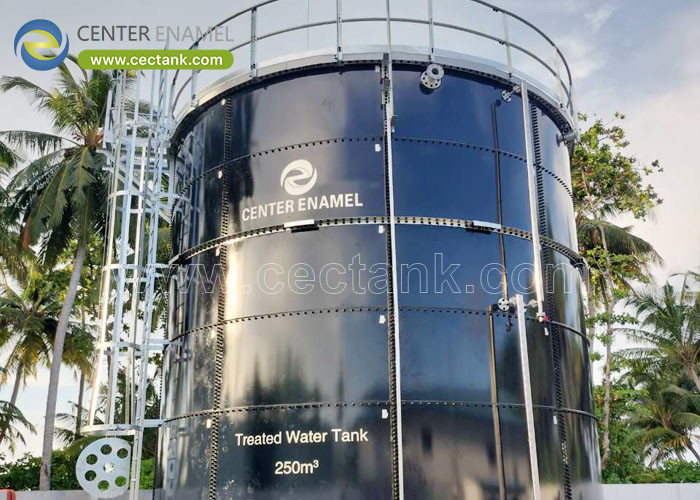
Bolted Steel Potable Water Storage Tanks: Ensuring Safe and Reliable Infrastructure
| Place of Origin: | China |
| Brand Name: | CEC TANKS |
| Certification: | ISO 9001:2008, AWWA D103 , OSHA , BSCI |
| Model Number: | W20161124014 |
| Minimum Order Quantity: | 1set |
| Price: | $5000~$20000 one set |
| Packaging Details: | PE poly-foam between each two steel plates ; wooden pallet and wooden box |
| Delivery Time: | 0-60 days after deposit received |
| Payment Terms: | L/C,T/T |
| Supply Ability: | 60 sets per month |
|
Detail Information |
|||
Product Description
In the realm of municipal and industrial infrastructure, the containment of potable water is a mission-critical responsibility. Utility managers, engineers, and developers face a constant challenge: balancing the need for absolute water safety and purity with the demands of budget, project timelines, and long-term maintenance.
Bolted steel storage tanks have emerged as the global industry standard for potable water storage, effectively bridging the gap between legacy concrete infrastructure and the requirements of modern, high-speed project deployment.
Unlike traditional field-welded steel or poured-in-place concrete tanks, bolted steel tanks are manufactured in an ISO-certified, climate-controlled factory environment. This approach eliminates the variability of on-site construction, where weather conditions and manual labor can compromise coating integrity.
The gold standard for these structures is the AWWA D103 standard (American Water Works Association). This code provides the rigorous mathematical framework for the design, fabrication, and installation of factory-coated bolted steel tanks. Adhering to AWWA D103 ensures the tank is structurally sound, capable of withstanding local seismic, wind, and hydrostatic loads, and designed for a service life that often exceeds 30–50 years.
For potable water, safety is non-negotiable. Bolted steel tanks utilize specialized internal coating systems—such as Glass-Fused-to-Steel (GFS) or Fusion-Bonded Epoxy (FBE)—that are certified to NSF/ANSI 61 standards. This certification guarantees that the tank materials (panels, gaskets, and sealants) do not leach harmful chemicals into the water supply, keeping it safe for human consumption.
When evaluating the Total Cost of Ownership (TCO), bolted steel technology is consistently identified as the most efficient investment for municipal and industrial water storage.
| Feature | Bolted Steel Tanks | Poured Concrete | Field-Welded Steel |
|---|---|---|---|
| Quality Control | Factory-Controlled | Variable (Site-dependent) | Variable (Site-dependent) |
| Installation Speed | Fast (Weeks) | Slow (Months) | Slow (Months) |
| Maintenance | Low | High (Crack repair) | High (Periodic repainting) |
| Expandability | High (Modular) | None | None |
| Coating Integrity | Excellent (Uniform) | N/A (Porous) | Moderate |
-
Rapid Deployment: Because panels are "flat-packed" and shipped as a modular kit, they can be assembled on-site in a fraction of the time required for concrete curing or field welding. This reduces site labor costs and project downtime significantly.
-
Seismic Resilience: The bolted, flexible nature of the joints allows the tank to handle minor structural shifts without the risk of brittle fracture, a common failure point for concrete reservoirs in seismic zones.
-
Modular Scalability: One of the most unique features of a bolted system is its ability to grow with your community. If storage capacity needs increase, it is often possible to disassemble the roof and add additional ring panels, a feat virtually impossible with welded or monolithic structures.
The construction of a bolted steel tank utilizes a specialized top-down hydraulic jacking method. The roof and top shell ring are assembled first at ground level; then, the structure is jacked up, and subsequent rings are added beneath.
-
Periodic Inspection: Despite their durability, annual visual inspections of the exterior and internal liner are recommended.
-
Gasket and Bolt Checks: Ensure the high-tensile, self-locking bolts remain at the manufacturer's specified torque.
-
Surface Cleaning: In open-top or vented systems, occasional pressure washing helps maintain optimal water quality by preventing biofilm accumulation.
Selecting the right storage technology is a foundational decision that impacts your community’s water security for decades. By choosing a solution backed by international standards like AWWA D103, you ensure that your infrastructure is not only compliant but built for long-term performance.
Whether you are upgrading aging infrastructure or designing a new water distribution system, prioritize a modular, high-performance bolted steel tank to optimize your budget, timeline, and long-term operational success.