-
Glass Fused To Steel Tanks (596)
-
Stainless Steel Tanks (434)
-
Fusion Bonded Epoxy Tanks (592)
-
Galvanized Steel Tanks (321)
-
Aluminum Dome Roofs (1316)
-
Wastewater Storage Tanks (231)
-
Welded Steel Tanks (457)
-
Pressure Vessels (295)
-
Anaerobic Digester (201)
-
Industrial Water Tanks (349)
-
Glass Lined Steel Tanks (180)
-
Bolted Steel Tanks (390)
-
Sludge Storage Tank (115)
-
Biogas Storage Tank (173)
-
Leachate Storage Tanks (133)
-
Agricultural Water Storage Tanks (179)
-
Fire Water Tank (166)
-
Grain Storage Silos (146)
-
Biogas Projects (425)
-
Wastewater Treatment Projects (788)
-
Double Membrane Roof (223)


|
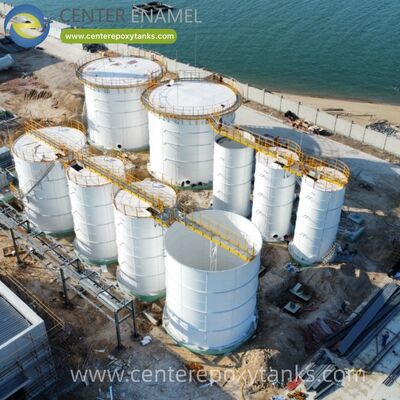
Epoxy Bonded Steel Bolted Tanks as Landfill Leachate Tank: High chemical resistance for complex and hazardous landfill seepage.
| Place of Origin: | China |
| Brand Name: | CEC TANKS |
| Certification: | ISO 9001:2008, AWWA D103 , OSHA , BSCI |
| Model Number: | W201691123005 |
| Minimum Order Quantity: | 1set |
| Price: | $5000~$20000 one set |
| Packaging Details: | PE poly-foam between each two steel plates ; wooden pallet and wooden box |
| Delivery Time: | 0-60 days after deposit received |
| Payment Terms: | L/C, T/T |
| Supply Ability: | 60 sets per month |
|
Detail Information |
|||
| Place of Origin | China | Brand Name | CEC TANKS |
|---|---|---|---|
| Certification | ISO 9001:2008, AWWA D103 , OSHA , BSCI | Model Number | W201691123005 |
| Steel Plates Thickness: | 3mm To 12mm , Depends On The Tank Structure | Corrosion Integrity: | Excellent |
| Chemical Resistance: | Excellent | Capacity: | 20 M3 To 18,000 M3 |
| Service Life: | ≥30 Years | Permeability: | Gas / Liquid Impermeable |
| Highlight: | epoxy bonded steel leachate tank,landfill seepage storage tank,chemical resistant bolted tanks |
||
Product Description
Epoxy Bonded Steel Bolted Tanks as Landfill Leachate Tank: High chemical resistance for complex and hazardous landfill seepage.
Landfill leachate is widely considered one of the most challenging liquids to manage in the field of environmental engineering. As water percolates through layers of solid waste, it extracts a wide array of organic and inorganic contaminants, resulting in a concentrated, toxic "cocktail." This liquid, known as leachate, is characterized by its extreme chemical complexity, high salinity, and the presence of heavy metals and ammonia. If not contained within a high-integrity vessel, leachate poses a catastrophic risk to local groundwater supplies and soil health.
Traditional containment solutions, such as concrete lagoons or field-painted welded tanks, often fail when exposed to the relentless chemical attack of leachate. Concrete is susceptible to microbial-induced corrosion and structural cracking, while field-applied coatings are prone to pinholes and inconsistent thickness. To address these risks, the industry has turned to Epoxy Coated Tanks, specifically the Epoxy Bonded Steel Bolted Tank, as the premier solution for secure leachate storage and treatment.
The Aggressive Chemical Profile of Landfill Leachate
To ensure long-term containment, a storage vessel must be engineered to withstand the specific destructive properties of landfill seepage:
Extreme Salinity and Chlorides: Leachate often contains high concentrations of dissolved salts. These chlorides act as electrolytes, accelerating galvanic corrosion in standard steel. The non-conductive nature of a high-quality epoxy barrier is essential to prevent this electrochemical decay.
High Ammonia Nitrogen Levels: The decomposition of organic waste produces significant amounts of ammonia. This compound is highly corrosive to many metals and can cause standard industrial coatings to blister or delaminate if they are not molecularly fused to the steel.
Heavy Metals and Organic Solvents: From lead and mercury to various industrial solvents, leachate carries a wide range of hazardous substances. The tank lining must be chemically inert to ensure these substances do not react with or permeate the structural shell of the tank.
Variable Acidity (pH) Fluctuations: Depending on the age of the landfill and the stage of waste decomposition, leachate can shift from highly acidic to alkaline. A robust containment system must offer a broad spectrum of chemical resistance to handle these shifts.
By utilizing Epoxy Coated Tanks, landfill operators gain a vessel that is specifically designed to neutralize these threats, ensuring that hazardous seepage remains securely isolated from the environment.
Engineering Excellence: The Fusion Bonded Epoxy Process
The reliability of the Epoxy Bonded Steel Bolted Tank is rooted in its advanced manufacturing process. Unlike conventional paint, the coating for these tanks is applied in a high-tech, strictly controlled factory environment.
The process begins with the precision preparation of high-strength steel panels. Each panel is grit-blasted to achieve a near-white finish, creating an ideal anchor profile for the coating. A high-performance, thermosetting epoxy powder is then electrostatically applied. The coated steel is moved into specialized curing ovens where it is heated to extreme temperatures. During this thermal phase, the epoxy resins melt, flow, and undergo a chemical cross-linking reaction, molecularly fusing with the steel substrate.
This results in a dense, uniform, and incredibly tough barrier. Because the panels are coated before assembly, every part of the structure—including the edges and the pre-punched bolt holes—is fully encapsulated. This is a critical advantage for leachate applications, as it eliminates the joint vulnerabilities common in welded tanks. The panels are then joined on-site using high-strength fasteners and specialized industrial-grade sealants, creating a liquid-tight and gas-tight structure.
Integrating Aluminum Dome Roofs for Enhanced Safety
In the management of hazardous waste like leachate, the area above the liquid level—the vapor zone—is a highly aggressive environment. This is why the integration of Aluminum Dome Roofs has become a standard requirement for many facilities:
Unmatched Corrosion Resistance: The headspace of a leachate tank is often filled with moist, corrosive gases like hydrogen sulfide. While a steel roof would require constant maintenance and recoating, aluminum is naturally resistant to these vapors, providing a maintenance-free cover.
Effective Odor and Emission Control: Leachate can produce intense, pungent odors and volatile organic compounds (VOCs). Aluminum Dome Roofs provide a secure, gas-tight seal that traps these emissions, allowing them to be safely diverted to specialized treatment or scrubbing systems.
Lightweight Clear-Span Design: The geodesic design of the aluminum dome provides exceptional strength while remaining lightweight. Its clear-span nature means there are no internal support columns, making the tank interior easier to clean and inspect.
Weather Protection: The dome prevents rainwater from entering the tank, which is critical for maintaining the precise volume of leachate and preventing unnecessary dilution that would complicate the treatment process.
Efficiency and Structural Stability
The modular nature of the Epoxy Bonded Steel Bolted Tank offers significant advantages for landfill projects, which are often located in remote or challenging terrain. Because the components are prefabricated, the on-site assembly is fast and efficient, requiring no on-site welding or large-scale scaffolding. This reduces the carbon footprint associated with construction and allows for rapid deployment.
Furthermore, these tanks provide a scalable solution. If the volume of leachate increases as a landfill expands, the bolted design often allows for the tank's capacity to be increased by adding additional rings of panels. This modularity makes the system an economical and future-proof investment for waste management authorities.
Project Cases: Proven Performance in Hazardous Waste Management
The following non-fictitious projects illustrate the successful implementation of our Epoxy Coated Tanks in demanding landfill and industrial waste environments:
Hebei Municipal Landfill Leachate Treatment Project: This project required a high-integrity solution for the primary storage and treatment of toxic landfill runoff. The site utilized 2 units of tanks, providing a robust and durable environment for leachate stabilization. The epoxy-bonded coating has proven effective against the high salinity of the waste stream.
Sichuan Chengdu Wastewater Treatment Plant Project: To support the massive waste management needs of a major metropolitan area, this project deployed a high-capacity system featuring 16 units of tanks. This project demonstrates the structural stability and modular efficiency required for large-volume industrial waste processing.
Inner Mongolia Xing'an League Bio-natural Gas Project: Supporting a large-scale organic waste-to-energy initiative, this project deployed 4 units of tanks. This project demonstrates the gas-tight performance and structural stability of the bolted system when used for high-volume waste processing, similar to the requirements of leachate gas management.
Conclusion: A Secure Solution for Complex Seepage
The effective management of landfill leachate requires infrastructure that is engineered for extreme chemical resistance and structural integrity. The Epoxy Bonded Steel Bolted Tank represents the most advanced solution for this challenging sector.
By providing a factory-fused barrier that is immune to the corrosive effects of salts and ammonia, and by incorporating the advanced protection of Aluminum Dome Roofs, these tanks ensure that hazardous seepage is managed with absolute security. They offer a high-strength, low-maintenance, and scalable solution that protects the environment and ensures the continued success of the global waste management industry.