-
Glass Fused To Steel Tanks (596)
-
Stainless Steel Tanks (434)
-
Fusion Bonded Epoxy Tanks (592)
-
Galvanized Steel Tanks (321)
-
Aluminum Dome Roofs (1316)
-
Wastewater Storage Tanks (231)
-
Welded Steel Tanks (457)
-
Pressure Vessels (295)
-
Anaerobic Digester (201)
-
Industrial Water Tanks (349)
-
Glass Lined Steel Tanks (180)
-
Bolted Steel Tanks (390)
-
Sludge Storage Tank (115)
-
Biogas Storage Tank (173)
-
Leachate Storage Tanks (133)
-
Agricultural Water Storage Tanks (179)
-
Fire Water Tank (166)
-
Grain Storage Silos (146)
-
Biogas Projects (425)
-
Wastewater Treatment Projects (788)
-
Double Membrane Roof (223)

|
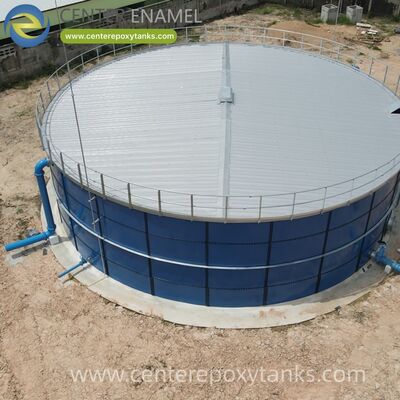
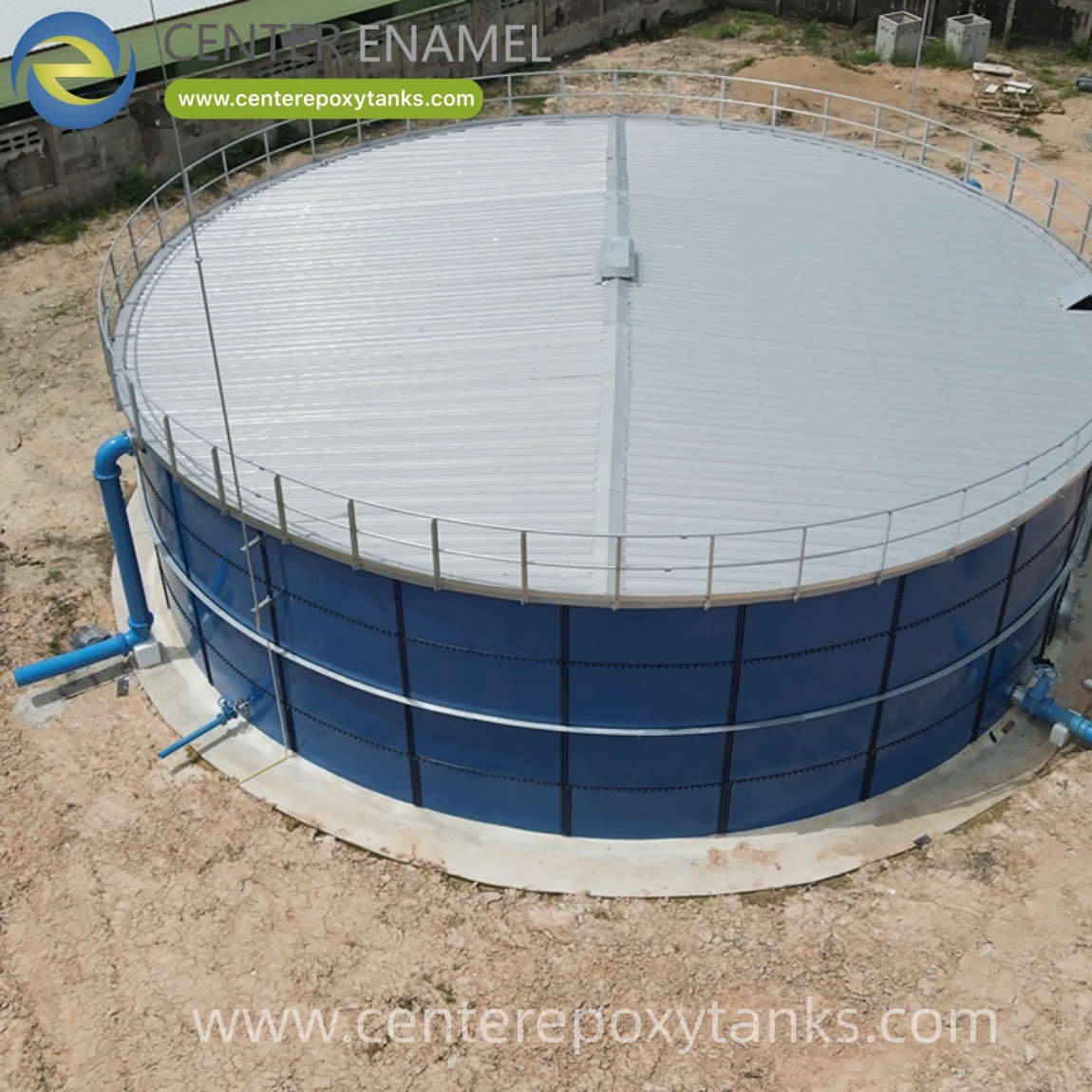
Epoxy Bonded Steel Bolted Tanks as Agricultural Water Tank: Versatile storage for livestock watering and general farm water management.
| Place of Origin: | China |
| Brand Name: | CEC TANKS |
| Certification: | ISO 9001:2008, AWWA D103 , OSHA , BSCI |
| Model Number: | W201691123005 |
| Minimum Order Quantity: | 1set |
| Price: | $5000~$20000 one set |
| Packaging Details: | PE poly-foam between each two steel plates ; wooden pallet and wooden box |
| Delivery Time: | 0-60 days after deposit received |
| Payment Terms: | L/C, T/T |
| Supply Ability: | 60 sets per month |
|
Detail Information |
|||
| Place of Origin | China | Brand Name | CEC TANKS |
|---|---|---|---|
| Certification | ISO 9001:2008, AWWA D103 , OSHA , BSCI | Model Number | W201691123005 |
| Steel Plates Thickness: | 3mm To 12mm , Depends On The Tank Structure | Corrosion Integrity: | Excellent |
| Chemical Resistance: | Excellent | Capacity: | 20 M3 To 18,000 M3 |
| Service Life: | ≥30 Years | Permeability: | Gas / Liquid Impermeable |
| Highlight: | epoxy bonded steel water tank,agricultural water storage tank,farm livestock watering tank |
||
Product Description
Epoxy Bonded Steel Bolted Tanks as Agricultural Water Tank: Versatile storage for livestock watering and general farm water management.
In the realm of modern farming and livestock management, water is the lifeblood of the operation. Whether it is providing clean drinking water for thousands of head of cattle or maintaining a reserve for general farm maintenance, the reliability of the storage vessel is paramount. Agricultural water storage faces a unique set of challenges: tanks must be located in open, often harsh environments, handle water that may contain high mineral content, and provide a hygienic environment to prevent the spread of waterborne pathogens among livestock.
Traditional solutions like concrete troughs or galvanized steel tanks often fall short over the long term. Concrete is prone to cracking from soil movement, and galvanized coatings can eventually wear thin, leading to rust and water contamination. To ensure a sustainable and safe water supply, the global agricultural industry has shifted toward Epoxy Coated Tanks, specifically Epoxy Bonded Steel Bolted Tanks. These vessels offer a high-performance, inert storage environment that is perfectly suited for the versatile needs of the modern farm.
The Diverse Demands of Agricultural Water Storage
Agricultural water tanks must be engineered to address a variety of environmental and biological factors:
Resistance to Source Water Chemistry: Water pulled from wells or surface runoff often has a high mineral content or varying pH levels. The tank lining must be chemically inert to prevent these minerals from causing internal corrosion or "pitting" of the steel walls.
Hygienic Surface for Biofilm Prevention: Livestock health depends on clean water. The smooth, glass-like finish of an Epoxy Bonded Steel Bolted Tank inhibits the growth of algae and the formation of bacterial biofilms, ensuring the water remains fresh and safe.
Durability Against Environmental Extremes: Farm tanks are exposed to intense solar heat, freezing temperatures, and high winds. The external coating must be UV-stable and resilient enough to prevent chalking or degradation over decades of service.
Structural Integrity in Rural Settings: Unlike urban environments, farm soil can be unpredictable. The bolted steel system provides the necessary structural strength and slight flexibility to withstand minor ground shifts without the risk of catastrophic cracking associated with rigid concrete.
By providing a molecularly bonded barrier, Epoxy Coated Tanks ensure the farm’s water reserve remains a secure and low-maintenance asset.
Engineering Excellence: The Fusion Bonded Epoxy Barrier
The technical advantage of the Epoxy Bonded Steel Bolted Tank is rooted in the Fusion Bonded Epoxy (FBE) manufacturing process. Unlike paints applied in a field environment, FBE is a high-performance polymer applied in a strictly controlled factory setting.
The process begins with the precision preparation of high-strength steel panels. Each panel is grit-blasted to achieve a near-white finish, creating an ideal mechanical anchor profile. A high-grade, thermosetting epoxy powder is then electrostatically applied. The panels are cured in specialized ovens at extreme temperatures, causing the epoxy to melt, flow, and undergo a chemical cross-linking reaction with the steel substrate.
This results in a dense, uniform, and incredibly tough barrier that is molecularly fused to the steel. Because the panels are coated before assembly, every edge and pre-punched bolt hole is fully encapsulated. In the bolted system, these panels are joined on-site using specialized high-strength fasteners and industrial-grade sealants, creating a liquid-tight structure that is immune to the environmental stresses of rural service.
Protecting the Resource with Aluminum Dome Roofs
In agricultural water management, protecting the water from external contaminants and evaporation is essential. This is where the integration of Aluminum Dome Roofs provides a significant advantage for the farm:
Prevention of Algae and Contamination: Aluminum Dome Roofs block out sunlight, which is the primary driver of algae growth in stored water. They also prevent dust, bird droppings, and wind-blown debris from entering the supply, maintaining higher water quality for livestock.
Unmatched Weather Resistance: The exterior of a farm tank is a high-corrosion zone due to rain and humidity. While a steel roof would require constant maintenance and repainting, aluminum is naturally resistant to these elements, providing a maintenance-free cover.
Lightweight Clear-Span Design: The geodesic design of the aluminum dome provides immense structural strength without the need for internal support columns. This clear-span architecture maximizes the usable volume of the tank and simplifies periodic internal inspections.
Conservation Through Reduced Evaporation: In arid or windy regions, evaporation can lead to significant water loss. A secure aluminum dome keeps the water where it belongs—inside the tank—improving the overall water efficiency of the farm.
Rapid Deployment and Modular Scalability
For a working farm, time is a critical resource. One of the primary benefits of the bolted tank system is its speed of installation. Because the components are prefabricated, the on-site assembly is fast and efficient, requiring no on-site welding or heavy infrastructure. This allows farmers to establish or expand water storage quickly, often between seasons.
Furthermore, the modular nature of the Epoxy Bonded Steel Bolted Tank allows for future growth. If a livestock operation expands, these tanks can often be heightened by adding more rings of panels. This modularity ensures that the storage infrastructure can evolve alongside the farm's needs, providing a flexible and future-proof investment.
Project Cases: Proven Performance in Agricultural Settings
The following non-fictitious projects illustrate the successful implementation of our Epoxy Coated Tanks in demanding agricultural and water management environments:
Shandong Large-Scale Breeding Wastewater Project: This project demonstrated the ability of the bolted system to handle high organic loads and environmental stress in a major livestock region. The facility utilized 2 units of tanks to provide a secure containment solution.
Inner Mongolia Xing'an League Bio-natural Gas Project: Located in a rural agricultural hub, this project utilized 4 units of tanks. It highlights the reliability of the bolted system in diverse climates and remote locations where durability is essential.
Sichuan Chengdu Wastewater Treatment Plant Project: This high-capacity project utilized 16 units of tanks to manage massive liquid volumes. It serves as a testament to the structural stability and modular efficiency required for large-scale water storage applications.
Conclusion: A Versatile Standard for Modern Farming
The effective management of agricultural water requires infrastructure engineered for hygiene, durability, and versatility. The Epoxy Bonded Steel Bolted Tank represents the most advanced solution for the modern farm.
By providing a factory-fused barrier that resists environmental corrosion and by incorporating the advanced protection of Aluminum Dome Roofs, these tanks ensure that agricultural water is stored with absolute security. They offer a high-strength, low-maintenance, and scalable solution that protects the farm's most valuable resource and supports the continued success of livestock and crop management.