-
Glass Fused To Steel Tanks (596)
-
Stainless Steel Tanks (434)
-
Fusion Bonded Epoxy Tanks (592)
-
Galvanized Steel Tanks (321)
-
Aluminum Dome Roofs (1316)
-
Wastewater Storage Tanks (231)
-
Welded Steel Tanks (457)
-
Pressure Vessels (295)
-
Anaerobic Digester (201)
-
Industrial Water Tanks (349)
-
Glass Lined Steel Tanks (180)
-
Bolted Steel Tanks (390)
-
Sludge Storage Tank (115)
-
Biogas Storage Tank (173)
-
Leachate Storage Tanks (133)
-
Agricultural Water Storage Tanks (179)
-
Fire Water Tank (166)
-
Grain Storage Silos (146)
-
Biogas Projects (425)
-
Wastewater Treatment Projects (788)
-
Double Membrane Roof (223)


|
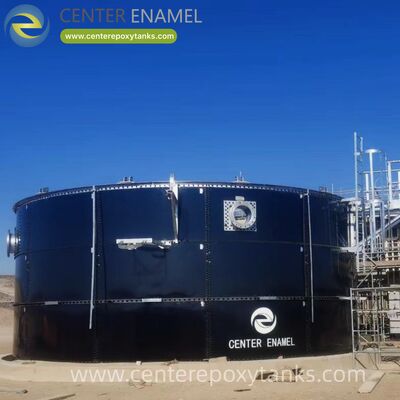
Epoxy Bonded Steel Bolted Tanks as Juice Processing Wastewater Tank: Hygienic storage for sugary and acidic beverage production runoff.
| Place of Origin: | China |
| Brand Name: | CEC TANKS |
| Certification: | ISO 9001:2008, AWWA D103 , OSHA , BSCI |
| Model Number: | W201691123005 |
| Minimum Order Quantity: | 1set |
| Price: | $5000~$20000 one set |
| Packaging Details: | PE poly-foam between each two steel plates ; wooden pallet and wooden box |
| Delivery Time: | 0-60 days after deposit received |
| Payment Terms: | L/C, T/T |
| Supply Ability: | 60 sets per month |
|
Detail Information |
|||
| Place of Origin | China | Brand Name | CEC TANKS |
|---|---|---|---|
| Certification | ISO 9001:2008, AWWA D103 , OSHA , BSCI | Model Number | W201691123005 |
| Steel Plates Thickness: | 3mm To 12mm , Depends On The Tank Structure | Corrosion Integrity: | Excellent |
| Chemical Resistance: | Excellent | Capacity: | 20 M3 To 18,000 M3 |
| Service Life: | ≥30 Years | Permeability: | Gas / Liquid Impermeable |
| Highlight: | epoxy bonded steel wastewater tank,juice processing epoxy storage tank,hygienic bolted tanks for beverage runoff |
||
Product Description
Epoxy Bonded Steel Bolted Tanks as Juice Processing Wastewater Tank: Hygienic storage for sugary and acidic beverage production runoff.
The juice processing industry is a high-volume sector that demands the strictest adherence to sanitation and environmental safety. During the extraction, filtration, and bottling of fruit juices, a significant amount of wastewater is generated. This runoff is notably high in soluble sugars, fruit acids, and cleaning chemicals. If left unmanaged, the high sugar content leads to rapid fermentation, which not only creates pungent odors but also produces organic acids that are highly corrosive to standard containment structures.
Traditional storage solutions often fall short in this specialized environment. Concrete tanks are susceptible to chemical etching from the acidic runoff, which can lead to structural leaching and groundwater contamination. Similarly, standard welded tanks can suffer from localized corrosion at the seams where the internal coating is most vulnerable. For juice processors looking to maintain a hygienic facility and ensure long-term structural reliability, Epoxy Coated Tanks have become the industry gold standard.
Epoxy Bonded Steel Bolted Tanks are engineered to provide a non-porous, inert, and durable environment for beverage runoff. By utilizing a factory-applied, thermally fused epoxy barrier, these tanks resist the punishing effects of sugary fermentation and organic acidity, providing a high-performance solution for the modern juice production plant.
The Chemical and Biological Challenges of Juice Runoff
To ensure a secure sanitary perimeter, a storage vessel must be designed to manage the unique characteristics of juice processing wastewater:
High Sugar Content and Fermentation: Residual sugars from fruits like apples, grapes, and oranges are highly biodegradable. When stored, these sugars quickly ferment, producing ethanol and organic acids. This process rapidly lowers the pH of the wastewater, creating a corrosive environment.
Organic Acidity: Natural acids such as citric, malic, and tartaric acid are present in high concentrations. These acids aggressively attack unprotected carbon steel and can penetrate the porous surface of concrete.
Clean-in-Place (CIP) Effluents: Juice facilities utilize frequent caustic and acidic washdowns to maintain food safety. The resulting wastewater contains high concentrations of these cleaning agents, requiring a tank lining with a broad chemical resistance spectrum.
Aseptic and Smooth Surfaces: To prevent the buildup of mold, yeast, and bacteria, the internal surface of the tank must be exceptionally smooth. A non-porous surface ensures that organic residues cannot adhere to the walls, facilitating easier cleaning and odor control.
By providing a molecularly bonded barrier, Epoxy Coated Tanks ensure that the vessel remains a hygienic and stable component of the facility’s waste management infrastructure.
Advanced Manufacturing: The Fusion Bonded Epoxy Barrier
The core strength of the Epoxy Bonded Steel Bolted Tank is the Fusion Bonded Epoxy (FBE) coating. This is not a standard liquid paint; it is a high-performance polymer that is molecularly fused to the steel substrate in a controlled factory environment.
The process begins with the precision preparation of high-strength steel panels. Each panel is grit-blasted to achieve a near-white finish, creating an ideal surface anchor profile. A high-grade, thermosetting epoxy powder is then electrostatically applied. The panels are cured in specialized ovens at extreme temperatures, causing the epoxy to melt, flow, and chemically cross-link.
The result is a dense, uniform, and incredibly tough barrier. Because the panels are coated before assembly, every edge and pre-punched bolt hole is fully encapsulated. In the bolted system, these panels are joined on-site using specialized industrial-grade sealants and high-strength fasteners, creating a liquid-tight structure that is immune to the corrosive gases and acidic liquids found in juice processing.
The Strategic Value of Aluminum Dome Roofs
In juice waste management, managing the headspace is critical for odor control and structural longevity. This is why the integration of Aluminum Dome Roofs is a key feature for beverage wastewater systems:
Unmatched Corrosion Resistance: The headspace of a juice wastewater tank is a highly aggressive environment filled with moist, acidic vapors from fermentation. While a steel roof would require constant maintenance and recoating, aluminum is naturally resistant to these vapors, providing a maintenance-free cover.
Effective Odor Containment: Fermenting juice waste can produce intense, sweet, or pungent odors. Aluminum Dome Roofs provide a secure, gas-tight seal that traps these odors, allowing them to be diverted to specialized treatment systems, ensuring the facility remains a good neighbor in its community.
Hygienic Clear-Span Design: The geodesic design of the aluminum dome provides immense structural strength without the need for internal support columns. This clear-span architecture is a major advantage for juice processing tanks, as it eliminates internal structures where organic debris or mold could accumulate.
Process Consistency: The dome protects the treatment process from rainwater, preventing the unwanted dilution of the wastewater and ensuring a consistent chemical and biological treatment cycle.
Modular Efficiency and Rapid Installation
For a juice production facility, minimizing construction time is vital to avoid interfering with production schedules. One of the primary benefits of the bolted tank system is its rapid installation. Because the components are prefabricated, the on-site assembly is fast and efficient, requiring no on-site welding or extensive scaffolding.
Furthermore, the modular nature of the Epoxy Bonded Steel Bolted Tank allows for future expansion. If a facility increases its juice production capacity, these tanks can often be heightened by adding more rings of panels. This modularity ensures that the storage infrastructure can evolve alongside the business, providing an economical and flexible investment.
Project Cases: Proven Performance in Industrial and Organic Waste
The following non-fictitious projects illustrate the successful implementation of our Epoxy Coated Tanks in demanding industrial wastewater and organic waste environments:
Ethiopia Textile Industrial Park Wastewater Treatment Project: This project required a high-integrity solution to handle chemically complex industrial effluents. The facility utilized 3 units of tanks to provide a robust environment for wastewater management. This project highlights the coating's ability to resist diverse chemical profiles, similar to those found in beverage processing.
Sichuan Chengdu Wastewater Treatment Plant Project: To support the massive waste management needs of a major metropolitan area, this project deployed a high-capacity system featuring 16 units of tanks. This case demonstrates the structural stability and modular efficiency required for large-scale organic waste management.
Inner Mongolia Xing'an League Bio-natural Gas Project: This project utilized high-capacity tanks for the anaerobic digestion of agricultural and organic residues. The facility utilized 4 units of tanks, demonstrating the gas-tight performance and structural stability of the bolted system when handling high-organic waste streams.
Conclusion: A Durable Standard for Juice Processing Waste
The effective management of sugary and acidic juice processing wastewater requires infrastructure engineered for hygiene, chemical resistance, and structural longevity. The Epoxy Bonded Steel Bolted Tank represents the most advanced solution for this challenging beverage industry sector.
By providing a factory-fused barrier that resists organic acids and by incorporating the advanced protection of Aluminum Dome Roofs, these tanks ensure that juice waste is managed with absolute security. They offer a high-strength, low-maintenance, and scalable solution that protects the environment and ensures the continued success of the juice and beverage production industry.