-
Glass Fused To Steel Tanks (596)
-
Stainless Steel Tanks (434)
-
Fusion Bonded Epoxy Tanks (592)
-
Galvanized Steel Tanks (321)
-
Aluminum Dome Roofs (1316)
-
Wastewater Storage Tanks (231)
-
Welded Steel Tanks (457)
-
Pressure Vessels (295)
-
Anaerobic Digester (201)
-
Industrial Water Tanks (349)
-
Glass Lined Steel Tanks (180)
-
Bolted Steel Tanks (390)
-
Sludge Storage Tank (115)
-
Biogas Storage Tank (173)
-
Leachate Storage Tanks (133)
-
Agricultural Water Storage Tanks (179)
-
Fire Water Tank (166)
-
Grain Storage Silos (146)
-
Biogas Projects (425)
-
Wastewater Treatment Projects (788)
-
Double Membrane Roof (223)


|
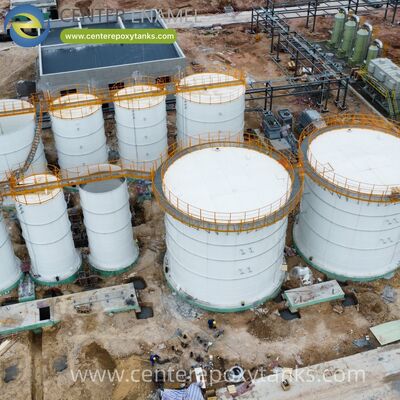
Epoxy Bonded Steel Bolted Tanks as Food Processing Wastewater: A versatile solution for diverse organic streams in the food industry.
| Place of Origin: | China |
| Brand Name: | CEC TANKS |
| Certification: | ISO 9001:2008, AWWA D103 , OSHA , BSCI |
| Model Number: | W201691123005 |
| Minimum Order Quantity: | 1set |
| Price: | $5000~$20000 one set |
| Packaging Details: | PE poly-foam between each two steel plates ; wooden pallet and wooden box |
| Delivery Time: | 0-60 days after deposit received |
| Payment Terms: | L/C, T/T |
| Supply Ability: | 60 sets per month |
|
Detail Information |
|||
| Place of Origin | China | Brand Name | CEC TANKS |
|---|---|---|---|
| Certification | ISO 9001:2008, AWWA D103 , OSHA , BSCI | Model Number | W201691123005 |
| Steel Plates Thickness: | 3mm To 12mm , Depends On The Tank Structure | Corrosion Integrity: | Excellent |
| Chemical Resistance: | Excellent | Capacity: | 20 M3 To 18,000 M3 |
| Service Life: | ≥30 Years | Permeability: | Gas / Liquid Impermeable |
| Highlight: | epoxy bonded steel bolted tanks,food processing wastewater tanks,fusion bonded epoxy storage tanks |
||
Product Description
Epoxy Bonded Steel Bolted Tanks as Food Processing Wastewater: A versatile solution for diverse organic streams in the food industry.
The food processing industry is incredibly diverse, spanning the production of prepared meals, snacks, canned goods, and condiments. This diversity results in a wastewater stream that is notoriously unpredictable, containing a shifting mixture of fats, oils, grease (FOG), suspended solids, sugars, and salts. Furthermore, the chemical load fluctuates daily as facilities switch between production cycles and intensive sanitation procedures. For any food processing plant, the wastewater storage and treatment system must be a "universal" container—robust enough to handle high organic loads and versatile enough to resist a wide range of chemical cleaning agents.
Traditional infrastructure often falls victim to this variability. Concrete tanks are frequently compromised by the acidic byproduct of organic decomposition, leading to surface softening and structural leaks. Field-painted welded tanks often suffer from localized corrosion at the joints, where the environment is most aggressive. To ensure operational continuity and meet strict environmental discharge standards, the industry has widely adopted Epoxy Coated Tanks.
Epoxy Bonded Steel Bolted Tanks represent the ultimate versatile solution. By utilizing a factory-applied, thermally fused epoxy barrier, these tanks provide a non-porous and chemically inert environment capable of handling diverse organic streams. This technology ensures that the structural integrity of the facility’s waste management system remains secure, regardless of the complexity of the production effluent.
The Versatile Demands of Food Processing Effluents
A storage vessel in the food industry must be engineered to withstand a combination of physical, chemical, and biological stresses:
Diverse Organic Loading: Wastewater often contains high concentrations of proteins and carbohydrates. As these substances break down anaerobically, they produce volatile organic acids that are highly corrosive to unprotected steel and concrete.
Fats, Oils, and Grease (FOG): These substances are a hallmark of food processing waste. They tend to adhere to tank surfaces, creating thick biofilms. The smooth, glass-like finish of an Epoxy Bonded Steel Bolted Tank prevents this adhesion, making the tank easier to clean and preventing rancid odor buildup.
Variable Salinity and Spice Residues: Many food products involve high salt and vinegar content. High chlorides are particularly aggressive toward metal, accelerating corrosion. The non-conductive nature of the epoxy barrier is essential to prevent this electrochemical decay.
High-Intensity Sanitation: Food safety standards require the frequent use of caustic detergents and acidic sanitizers. The tank lining must possess a broad spectrum of chemical resistance to withstand these rapid shifts in pH.
By providing a molecularly bonded barrier, Epoxy Coated Tanks ensure that the vessel remains a hygienic and stable component of the facility’s infrastructure, regardless of the waste profile.
Engineering Excellence: The Fusion Bonded Epoxy Barrier
The reliability of these tanks is rooted in the Fusion Bonded Epoxy (FBE) manufacturing process. Unlike liquid paints applied on-site, FBE is a high-performance polymer applied in a strictly controlled factory environment.
The process begins with the precision preparation of high-strength steel panels. Each panel is grit-blasted to achieve a near-white finish, creating an ideal mechanical anchor profile. A high-grade, thermosetting epoxy powder is then electrostatically applied. The panels are cured in specialized ovens at extreme temperatures, causing the epoxy to melt, flow, and undergo a chemical cross-linking reaction.
This results in a dense, uniform, and incredibly tough barrier that is molecularly fused to the steel substrate. Because the panels are coated before assembly, every edge and pre-punched bolt hole is fully encapsulated. In the bolted system, these panels are joined on-site using specialized high-strength fasteners and industrial-grade sealants, creating a liquid-tight structure that is immune to the corrosive gases and liquids found in food processing.
The Strategic Integration of Aluminum Dome Roofs
In the food processing industry, managing the atmosphere within the tank is critical for both safety and odor control. This is where the integration of Aluminum Dome Roofs provides a significant advantage:
Superior Corrosion Resistance: The headspace of a food waste tank is a highly aggressive environment filled with moist, acidic vapors. While a steel roof would require constant maintenance and repainting, aluminum is naturally resistant to these vapors, providing a maintenance-free cover.
Effective Odor Containment: Decomposing food waste can produce intense and unpleasant odors. Aluminum Dome Roofs provide a secure, gas-tight seal that traps these odors within the tank, allowing them to be diverted to specialized treatment or scrubbing systems.
Hygienic Clear-Span Design: The geodesic design of the aluminum dome provides immense structural strength without the need for internal support columns. This clear-span architecture is a major advantage for food processing tanks, as it eliminates internal structures that could collect organic debris or harbor bacteria.
Process Stability: The dome protects the treatment process from rainwater, preventing the unwanted dilution of the wastewater and ensuring a consistent chemical and biological treatment cycle.
Project Cases: Proven Performance in Organic and Industrial Waste
The following non-fictitious projects illustrate the successful implementation of our Epoxy Coated Tanks in demanding industrial wastewater and organic waste environments:
Kitchen Waste Treatment Project in China: This facility required a high-integrity solution for the treatment of concentrated organic waste. The project utilized 4 units of tanks, providing a robust environment for managing high-acid and high-oil organic loads.
Sichuan Chengdu Wastewater Treatment Plant Project: To support the massive waste management needs of a major metropolitan area, this project deployed a high-capacity system featuring 16 units of tanks. This case highlights the structural stability and modular efficiency required for large-scale organic waste management.
Ethiopia Textile Industrial Park Wastewater Treatment Project: This project involved treating chemically complex and aggressive industrial effluents. The facility utilized 3 units of tanks, confirming the ability of the epoxy-bonded barrier to resist a wide variety of aggressive chemical profiles, which is essential for the variable waste streams found in food processing.
Conclusion: A Versatile Standard for Food Industry Waste
The effective management of diverse food processing wastewater requires infrastructure engineered for extreme chemical resistance and structural longevity. The Epoxy Bonded Steel Bolted Tank represents the most advanced solution for this challenging sector.
By providing a factory-fused barrier that resists organic acids and sanitation chemicals, and by incorporating the advanced protection of Aluminum Dome Roofs, these tanks ensure that food processing waste is managed with absolute security. They offer a high-strength, low-maintenance, and scalable solution that protects the environment and ensures the continued success of the food production industry.