-
Glass Fused To Steel Tanks (596)
-
Stainless Steel Tanks (434)
-
Fusion Bonded Epoxy Tanks (592)
-
Galvanized Steel Tanks (321)
-
Aluminum Dome Roofs (1316)
-
Wastewater Storage Tanks (231)
-
Welded Steel Tanks (457)
-
Pressure Vessels (295)
-
Anaerobic Digester (201)
-
Industrial Water Tanks (349)
-
Glass Lined Steel Tanks (180)
-
Bolted Steel Tanks (390)
-
Sludge Storage Tank (115)
-
Biogas Storage Tank (173)
-
Leachate Storage Tanks (133)
-
Agricultural Water Storage Tanks (179)
-
Fire Water Tank (166)
-
Grain Storage Silos (146)
-
Biogas Projects (425)
-
Wastewater Treatment Projects (788)
-
Double Membrane Roof (223)


|
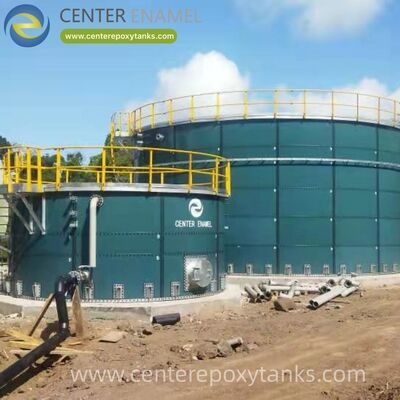
Epoxy Bonded Steel Bolted Tanks as Circular Wastewater Process Tanks: Optimized modular design for efficient flow and structural stability.
| Place of Origin: | China |
| Brand Name: | CEC TANKS |
| Certification: | ISO 9001:2008, AWWA D103 , OSHA , BSCI |
| Model Number: | W201691123005 |
| Minimum Order Quantity: | 1set |
| Price: | $5000~$20000 one set |
| Packaging Details: | PE poly-foam between each two steel plates ; wooden pallet and wooden box |
| Delivery Time: | 0-60 days after deposit received |
| Payment Terms: | L/C, T/T |
| Supply Ability: | 60 sets per month |
|
Detail Information |
|||
| Place of Origin | China | Brand Name | CEC TANKS |
|---|---|---|---|
| Certification | ISO 9001:2008, AWWA D103 , OSHA , BSCI | Model Number | W201691123005 |
| Steel Plates Thickness: | 3mm To 12mm , Depends On The Tank Structure | Corrosion Integrity: | Excellent |
| Chemical Resistance: | Excellent | Capacity: | 20 M3 To 18,000 M3 |
| Service Life: | ≥30 Years | Permeability: | Gas / Liquid Impermeable |
| Highlight: | epoxy bonded steel bolted tanks,circular wastewater process tanks,modular epoxy tanks structural stability |
||
Product Description
Epoxy Bonded Steel Bolted Tanks as Circular Wastewater Process Tanks: Optimized modular design for efficient flow and structural stability.
In the complex field of environmental engineering, the geometry of a treatment vessel is as critical as the chemical processes occurring within it. For wastewater treatment facilities, the circular tank design has long been recognized as the gold standard for hydraulic efficiency and structural integrity. Whether used for primary clarification, aeration, anaerobic digestion, or sedimentation, circular vessels provide an optimized environment for fluid dynamics and uniform stress distribution. However, the effectiveness of these circular structures depends heavily on the materials used and their ability to withstand the corrosive nature of the wastewater being processed.
Traditional circular tanks constructed from concrete or field-welded steel often face significant challenges. Concrete is prone to seepage and cracking under the dynamic loads of wastewater movement, while welded steel tanks require extensive on-site coating applications that are frequently compromised by environmental conditions during installation.
Epoxy Coated Tanks, specifically designed as Epoxy Bonded Steel Bolted Tanks, represent the peak of modern wastewater infrastructure. By combining the natural advantages of circular geometry with a factory-applied, thermally fused epoxy barrier, these tanks offer unparalleled chemical resistance and long-term durability. Their optimized modular design ensures efficient flow patterns and unmatched structural stability, making them the preferred choice for sophisticated wastewater treatment processes across industrial and municipal sectors.
The Strategic Advantage of Circular Geometry in Wastewater Treatment
The choice of a circular footprint for wastewater process tanks is driven by fundamental principles of physics and fluid mechanics. When a vessel is circular, it offers several key operational benefits:
Uniform Structural Stress Distribution: In a circular tank, the hydrostatic pressure exerted by the liquid is distributed evenly across the entire circumference of the wall. This eliminates the "stress concentrations" found in the corners of rectangular tanks, allowing for a more efficient use of materials and a significantly more stable structure under high-capacity loads.
Optimized Hydraulic Flow and Mixing: Circular tanks are ideal for processes requiring consistent mixing or sedimentation. The absence of dead corners ensures that wastewater moves in a predictable pattern, preventing the accumulation of stagnant solids and ensuring that aeration or chemical dosing is uniform throughout the entire volume.
Efficient Solids Removal: In sedimentation and clarification stages, the circular design allows for the use of center-driven scraper mechanisms that efficiently move settled sludge to a central hopper. This mechanical simplicity reduces the risk of equipment failure and improves the overall effectiveness of the treatment process.
Minimized Footprint and Surface Area: For a given volume, a circular tank has a smaller perimeter than a rectangular one. This reduces the amount of material required for construction and minimizes the heat loss through the tank walls, which is essential for biological processes that require stable temperatures.
By utilizing the Epoxy Bonded Steel Bolted Tank system, engineers can realize these geometric benefits while ensuring the structure remains corrosion-free and structurally sound for a service life spanning several decades.
Advanced Coating Technology: The Foundation of Long-Term Durability
The success of Epoxy Coated Tanks in circular wastewater processes is rooted in the Fusion Bonded Epoxy (FBE) technology. This is a sophisticated manufacturing process where high-performance epoxy powder is molecularly fused to the steel substrate in a controlled factory environment.
The process begins with a rigorous surface preparation, where steel panels are grit-blasted to remove all impurities and create a specific anchor profile. The panels are then electrostatically coated with epoxy powder and cured in high-temperature ovens. During this thermal phase, the epoxy resins undergo a chemical cross-linking reaction, creating a dense, non-porous, and incredibly tough barrier.
This factory-applied coating is far superior to any field-applied paint. It provides an inert surface that is highly resistant to the organic acids, nitrogen compounds, and abrasive grit found in wastewater. Because the coating is applied before the tank is assembled, every part of the panel—including the pre-punched bolt holes and the edges—is fully encapsulated. In a circular bolted structure, this ensures that there are no weak points for corrosion to take hold, guaranteeing the long-term durability of the entire treatment system.
Integrating Aluminum Dome Roofs for Environmental Protection
A critical component of a modern circular wastewater process tank is its cover. To maximize the performance and environmental safety of Epoxy Coated Tanks, the integration of Aluminum Dome Roofs has become an industry standard. These roofs provide a range of structural and operational benefits:
Superior Odor and Emission Control: Wastewater treatment processes, particularly those involving anaerobic digestion or primary sedimentation, can release significant odors and volatile gases. Aluminum Dome Roofs provide a secure, gas-tight seal that contains these emissions, allowing them to be safely diverted to odor control systems and ensuring the facility complies with environmental regulations.
Corrosion Resistance in the Vapor Space: The area above the liquid line is often the most aggressive part of a wastewater tank due to the accumulation of moist, corrosive gases like hydrogen sulfide. Unlike steel roofs, which would require frequent maintenance and repainting, aluminum is naturally resistant to these gases. This ensures the roof remains corrosion-free and maintenance-free throughout its lifespan.
Lightweight Clear-Span Design: The geodesic design of the aluminum dome is exceptionally strong yet incredibly lightweight. Because it is a clear-span structure, it does not require any internal support columns. This is a major advantage for circular process tanks, as it leaves the internal volume unobstructed for mixing equipment and scrapers.
Weather Resilience and Stability: The dome protects the treatment process from external factors like heavy rain, snow, and debris. By preventing rainwater from entering the tank, the system avoids unwanted dilution of the wastewater, which helps maintain the precise chemical and biological balance required for efficient treatment.
Modular Stability and Structural Integrity
The modular, bolted nature of these tanks is specifically engineered to complement the circular design. Each panel is precision-cut to fit the specific curvature of the tank, ensuring a perfect fit and a uniform structural shell. The use of high-strength fasteners and specialized sealants at every joint creates a structure that is not only liquid-tight but also capable of withstanding significant dynamic loads from internal mixing and aeration equipment.
For circular wastewater process tanks, this modularity also offers unmatched flexibility. As the treatment needs of a municipality or an industrial park grow, the capacity of these tanks can often be expanded by adding additional rings of panels. Furthermore, the rapid installation process—often completed in a fraction of the time required for concrete—allows facilities to come online faster, reducing project costs and minimizing operational downtime.
Project Cases: Proven Performance in Wastewater Infrastructure
The following non-fictitious projects demonstrate the effectiveness and reliability of Epoxy Coated Tanks in managing large-scale and complex wastewater processes:
Ethiopia Textile Industrial Park Wastewater Treatment Project: This project required a robust and high-integrity solution to handle the aggressive chemical effluents generated by large-scale textile manufacturing. The facility utilized 3 units of tanks to serve as primary process vessels. The high chemical resistance of the epoxy-bonded system has ensured stable performance and structural integrity in a demanding industrial environment.
Sichuan Chengdu Wastewater Treatment Plant Project: To support the massive waste management needs of a major metropolitan area, this project deployed a high-performance containment system. The installation included 16 units of tanks. This project highlights the structural stability and modular efficiency of the bolted circular system for very large-scale municipal and industrial wastewater management.
Saudi Municipal Sewage and Industrial Waste Project: Operating in a harsh environment with extreme temperatures, this project required tanks that could resist both internal biological attack and external environmental stress. The facility utilized 5 units of tanks. The combination of FBE coating and the bolted modular design ensured the tanks remained corrosion-free and reliable under intense operational conditions.
Conclusion: The Optimized Standard for Circular Process Tanks
The transition toward more efficient and sustainable wastewater treatment requires infrastructure that is engineered for performance. The Epoxy Bonded Steel Bolted Tank represents the ideal intersection of geometry and material science, providing an optimized solution for circular process applications.
By combining the natural structural and hydraulic advantages of a circular design with the superior chemical resistance of factory-applied epoxy and the advanced protection of Aluminum Dome Roofs, these tanks ensure that wastewater processes are secure, efficient, and durable. They offer a high-strength, low-maintenance, and scalable solution that meets the substantial needs of modern environmental engineering, protecting public health and the surrounding ecosystem for decades to come.