-
Glass Fused To Steel Tanks (596)
-
Stainless Steel Tanks (434)
-
Fusion Bonded Epoxy Tanks (592)
-
Galvanized Steel Tanks (321)
-
Aluminum Dome Roofs (1316)
-
Wastewater Storage Tanks (231)
-
Welded Steel Tanks (457)
-
Pressure Vessels (295)
-
Anaerobic Digester (201)
-
Industrial Water Tanks (349)
-
Glass Lined Steel Tanks (180)
-
Bolted Steel Tanks (390)
-
Sludge Storage Tank (115)
-
Biogas Storage Tank (173)
-
Leachate Storage Tanks (133)
-
Agricultural Water Storage Tanks (179)
-
Fire Water Tank (166)
-
Grain Storage Silos (146)
-
Biogas Projects (425)
-
Wastewater Treatment Projects (788)
-
Double Membrane Roof (223)


|
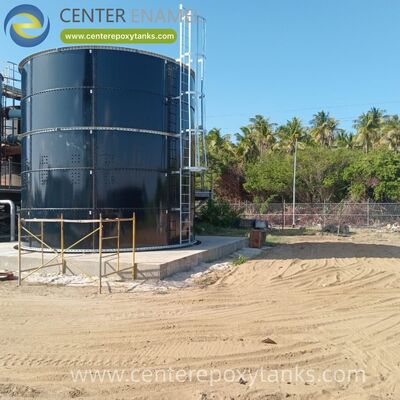
Epoxy Bonded Steel Bolted Tanks as Biological Wastewater Tank: Provides a protected environment for critical microbial treatment processes.
| Place of Origin: | China |
| Brand Name: | CEC TANKS |
| Certification: | ISO 9001:2008, AWWA D103 , OSHA , BSCI |
| Model Number: | W201691123005 |
| Minimum Order Quantity: | 1set |
| Price: | $5000~$20000 one set |
| Packaging Details: | PE poly-foam between each two steel plates ; wooden pallet and wooden box |
| Delivery Time: | 0-60 days after deposit received |
| Payment Terms: | L/C, T/T |
| Supply Ability: | 60 sets per month |
|
Detail Information |
|||
| Place of Origin | China | Brand Name | CEC TANKS |
|---|---|---|---|
| Certification | ISO 9001:2008, AWWA D103 , OSHA , BSCI | Model Number | W201691123005 |
| Steel Plates Thickness: | 3mm To 12mm , Depends On The Tank Structure | Corrosion Integrity: | Excellent |
| Chemical Resistance: | Excellent | Capacity: | 20 M3 To 18,000 M3 |
| Service Life: | ≥30 Years | Permeability: | Gas / Liquid Impermeable |
| Highlight: | epoxy bonded steel bolted tanks,biological wastewater treatment tanks,fusion bonded epoxy wastewater tanks |
||
Product Description
Epoxy Bonded Steel Bolted Tanks as Biological Wastewater Tank: Provides a protected environment for critical microbial treatment processes.
In the realm of modern environmental engineering, biological wastewater treatment stands as the most sophisticated and sustainable method for neutralizing complex organic pollutants. This process relies on the regulated activity of vast microbial populations—bacteria, fungi, and protozoa—to break down contaminants into harmless byproducts. Whether the system utilizes aerobic processes, which require oxygen, or anaerobic digestion, which occurs in the absence of oxygen, the success of the treatment depends entirely on the stability and security of the environment within the process vessel. The tank is not merely a container; it is a living reactor that must protect sensitive microbial colonies while withstanding the aggressive chemical byproducts of their metabolism.
Traditional containment solutions often struggle to meet the exacting demands of biological treatment. Concrete structures are prone to microbial-induced corrosion, as certain bacteria produce acidic byproducts that leach the calcium from concrete, leading to structural weakening and eventual leakage. Similarly, standard steel tanks can suffer from rapid oxidation and pitting when exposed to the humid, gas-rich atmospheres typical of biological reactors.
Epoxy Coated Tanks, specifically engineered as Epoxy Bonded Steel Bolted Tanks, have become the definitive choice for biological treatment facilities worldwide. By providing a factory-fused, non-porous barrier, these tanks ensure a protected and optimized environment for critical microbial processes. Their modular design, combined with superior chemical resistance, allows for the creation of high-performance reactors that support the long-term efficiency of wastewater treatment plants.
The Delicate Balance of the Biological Reactor Environment
A biological wastewater tank must function as a high-precision habitat. The microbes responsible for treating the waste are highly sensitive to their surroundings, and the vessel must be designed to manage several critical environmental factors:
Resistance to Metabolic Byproducts: During the biological breakdown of organic matter, various gases and acids are generated. In anaerobic systems, the production of hydrogen sulfide and methane creates a volatile and corrosive atmosphere. In aerobic systems, the high levels of dissolved oxygen can accelerate the corrosion of unprotected metal. The internal lining of the tank must be chemically inert to prevent these byproducts from compromising the structural integrity of the vessel.
Surface Hygiene and Biofilm Control: While biofilms are essential for treatment, uncontrolled growth on tank walls can lead to clogging, uneven flow patterns, and the harbor of undesirable pathogens. The smooth, non-porous surface of a high-quality epoxy coating inhibits the excessive adhesion of organic matter, facilitating easier cleaning and more predictable hydraulic performance.
Thermal Stability for Microbial Activity: Biological processes are highly temperature-dependent. Many microbial colonies require a stable, warm environment to thrive. The design of the tank must allow for the seamless integration of insulation and heating systems to prevent thermal shocks that could "kill off" the biological load.
Structural Integrity Under Aeration and Mixing: Biological reactors often involve intense mechanical activity, such as heavy aeration or high-torque mixing. The tank must be structurally robust enough to withstand these dynamic loads without the risk of vibration-induced fatigue or coating delamination.
By utilizing Epoxy Coated Tanks, engineers can provide a vessel that meets these complex requirements, ensuring that the biological treatment remains stable, efficient, and reliable over a vast service life.
Advanced Fusion Bonded Epoxy: The Shield for Microbial Habitats
The technical superiority of Epoxy Bonded Steel Bolted Tanks is rooted in the advanced manufacturing process of the coating. This is not a conventional liquid paint; it is a high-performance polymer barrier that is molecularly fused to the steel substrate.
The manufacturing process begins in a strictly controlled factory environment. Each steel panel is subjected to high-intensity grit blasting to achieve a near-white finish. This step is crucial as it removes all microscopic impurities and creates a specific surface anchor profile that maximizes mechanical bonding. Following this, a high-grade epoxy powder is electrostatically applied to the panels. The panels are then moved into specialized ovens where they are heated to extreme temperatures.
During this thermal phase, the epoxy powder melts, flows, and undergoes a complex chemical cross-linking reaction. The result is a dense, uniform, and incredibly tough barrier that is chemically bonded to the steel. Unlike field-applied coatings, which are subject to the inconsistencies of weather and human application, this factory-applied epoxy is monitored for thickness, holiday-free integrity, and bond strength. This ensures that every panel, including the critical edges and bolt holes, is fully encapsulated and protected against the aggressive liquids and gases found in biological wastewater.
The Vital Role of Aluminum Dome Roofs in Biological Containment
For biological treatment processes, the area above the liquid level—the headspace—is often the most challenging to manage. To address the unique demands of this zone, the integration of Aluminum Dome Roofs has become an industry standard for several high-value reasons:
Corrosion Resistance in the Gas Zone: Biological processes frequently produce hydrogen sulfide gas, which, when combined with moisture, creates a highly corrosive environment in the top of the tank. While steel roofs would require constant maintenance and recoating to prevent structural failure, aluminum is naturally resistant to these gases. The use of an aluminum dome ensures a corrosion-free headspace that requires minimal intervention.
Odor and Methane Containment: Many biological reactors, particularly anaerobic digesters, must be completely gas-tight to prevent the escape of foul odors and to capture methane for energy production. Aluminum Dome Roofs provide an exceptional seal, allowing facilities to comply with environmental regulations and maximize the capture of renewable energy.
Heat Retention and Process Stability: The geodesic design of the aluminum dome can be easily outfitted with insulation. By reducing heat loss through the roof, the facility can maintain the optimal temperatures required for microbial activity, even in cold climates.
Lightweight and Clear-Span Structural Efficiency: Aluminum domes are significantly lighter than traditional steel covers. This reduces the dead load on the tank walls and foundation, which is particularly beneficial for large-diameter biological reactors. Furthermore, the clear-span design eliminates the need for internal support columns, which would otherwise be exposed to the corrosive liquid and gas, complicating the maintenance process.
Sustainability and Efficiency in Construction
Beyond their operational performance, Epoxy Bonded Steel Bolted Tanks offer significant advantages in terms of sustainability and project logistics. Because the tanks are modular and prefabricated, they can be shipped in compact kits and assembled on-site with minimal specialized equipment. This reduces the carbon footprint associated with transportation and eliminates the need for large-scale on-site welding or the massive material waste common with concrete construction.
For biological treatment plants, where the "seeding" of the microbes is a time-sensitive process, the rapid installation of bolted tanks is a major benefit. These tanks can be erected in a fraction of the time required for concrete or welded steel, allowing the facility to begin its biological commissioning much sooner. This speed, combined with the low maintenance requirements of the FBE coating, makes the bolted system an exceptionally economical choice for long-term waste management infrastructure.
Project Cases: Delivering Reliable Biological Containment
The following non-fictitious projects highlight the successful implementation of our Epoxy Coated Tanks in demanding biological and wastewater treatment applications:
Inner Mongolia Xing'an League Bio-natural Gas Project: This project represents a flagship for biological energy production, requiring a secure environment for large-scale anaerobic digestion. The facility utilized 4 units of tanks, with each tank having a volume of 2,963 cubic meters. These vessels have provided a gas-tight and chemically resistant environment for processing complex organic feedstocks into renewable biogas.
Sichuan Chengdu Wastewater Treatment Plant Project: To support the municipal and biological treatment needs of a major metropolitan hub, this project deployed a high-capacity containment system. The installation featured 16 units of tanks, each with a volume of 3,804 cubic meters. This project demonstrates the structural stability and long-term durability of the bolted system in a large-scale biological treatment context.
Shandong Large-Scale Breeding Wastewater Project: This agricultural project required a robust solution to manage high organic loads through biological treatment. The site utilized 2 units of tanks, with each tank having a volume of 4,450 cubic meters. The high resistance of the epoxy-bonded coating to ammonia and organic acids has ensured the reliable performance of the biological process.
Conclusion: Securing the Heart of Wastewater Treatment
The biological treatment stage is the core of any modern wastewater management strategy. To ensure the success of these sensitive microbial processes, the containment infrastructure must be engineered for total protection and long-term stability.
The Epoxy Bonded Steel Bolted Tank provides the perfect intersection of advanced material science and structural engineering. By providing a factory-fused, chemically inert barrier and incorporating the advanced protection of Aluminum Dome Roofs, these tanks safeguard the microbial environment against the aggressive byproducts of waste decomposition. They offer a durable, efficient, and sustainable solution that allows treatment facilities to operate with maximum reliability, protecting public health and the environment for generations to come.