-
Glass Fused To Steel Tanks (596)
-
Stainless Steel Tanks (434)
-
Fusion Bonded Epoxy Tanks (592)
-
Galvanized Steel Tanks (321)
-
Aluminum Dome Roofs (1316)
-
Wastewater Storage Tanks (231)
-
Welded Steel Tanks (457)
-
Pressure Vessels (295)
-
Anaerobic Digester (201)
-
Industrial Water Tanks (349)
-
Glass Lined Steel Tanks (180)
-
Bolted Steel Tanks (390)
-
Sludge Storage Tank (115)
-
Biogas Storage Tank (173)
-
Leachate Storage Tanks (133)
-
Agricultural Water Storage Tanks (179)
-
Fire Water Tank (166)
-
Grain Storage Silos (146)
-
Biogas Projects (425)
-
Wastewater Treatment Projects (788)
-
Double Membrane Roof (223)

|
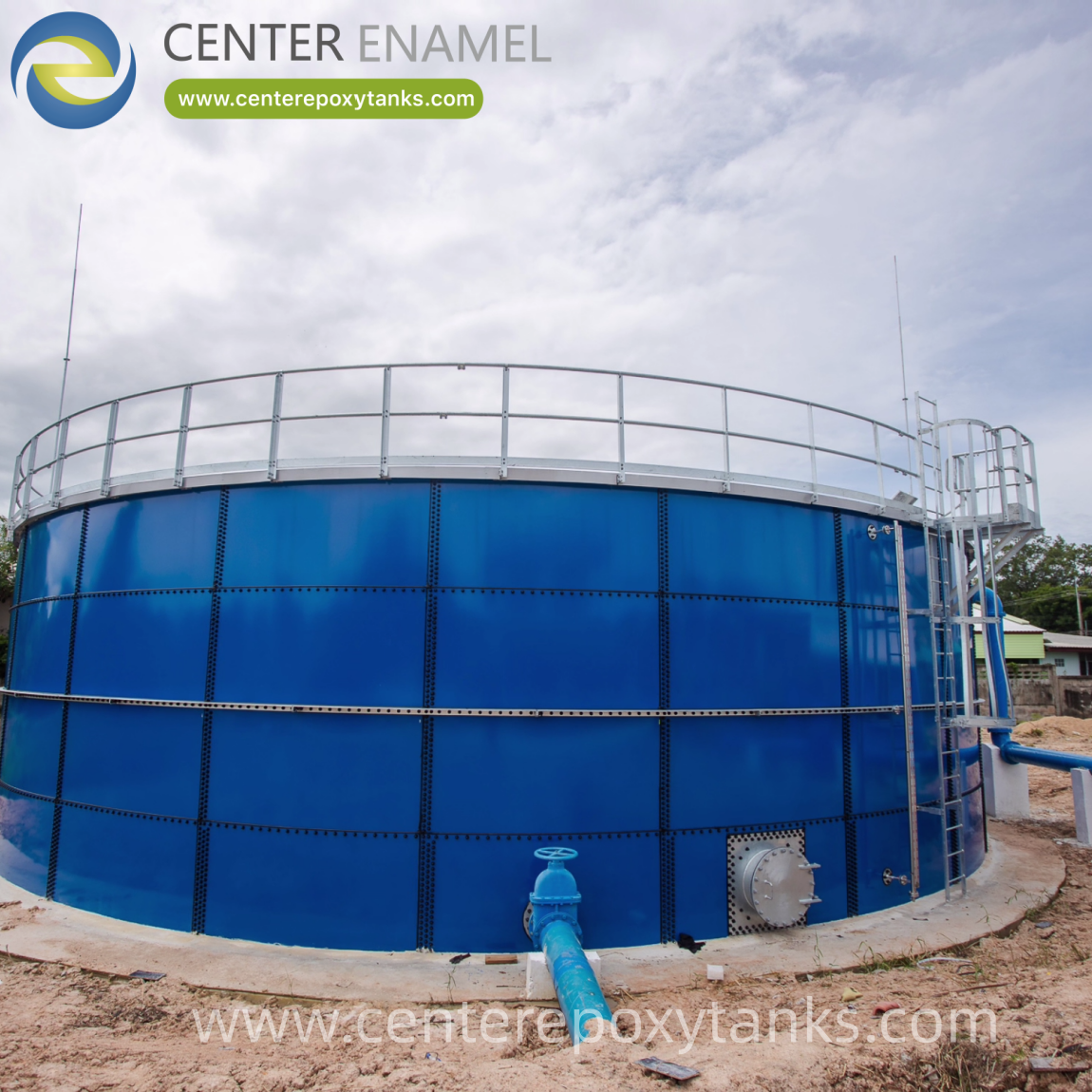
Epoxy Bonded Steel Bolted Tanks as Palm Oil Mill Effluent (POME) Tanks: Specifically built to handle hot and acidic palm oil waste.
| Place of Origin: | China |
| Brand Name: | CEC TANKS |
| Certification: | ISO 9001:2008, AWWA D103 , OSHA , BSCI |
| Model Number: | W201691123005 |
| Minimum Order Quantity: | 1set |
| Price: | $5000~$20000 one set |
| Packaging Details: | PE poly-foam between each two steel plates ; wooden pallet and wooden box |
| Delivery Time: | 0-60 days after deposit received |
| Payment Terms: | L/C, T/T |
| Supply Ability: | 60 sets per month |
|
Detail Information |
|||
| Place of Origin | China | Brand Name | CEC TANKS |
|---|---|---|---|
| Certification | ISO 9001:2008, AWWA D103 , OSHA , BSCI | Model Number | W201691123005 |
| Steel Plates Thickness: | 3mm To 12mm , Depends On The Tank Structure | Corrosion Integrity: | Excellent |
| Chemical Resistance: | Excellent | Capacity: | 20 M3 To 18,000 M3 |
| Service Life: | ≥30 Years | Permeability: | Gas / Liquid Impermeable |
| Highlight: | epoxy bonded steel POME tanks,fusion bonded epoxy palm oil tanks,acid-resistant bolted effluent storage tanks |
||
Product Description
Epoxy Bonded Steel Bolted Tanks as Palm Oil Mill Effluent (POME) Tanks: Specifically built to handle hot and acidic palm oil waste.
The palm oil industry is a vital pillar of the global economy, providing essential oils for food, cosmetics, and biofuels. However, the production process generates a significant environmental challenge in the form of Palm Oil Mill Effluent (POME). This industrial byproduct is recognized as one of the most difficult waste streams to manage due to its high organic content, elevated discharge temperatures, and significant acidity. Without a robust and technologically advanced containment strategy, POME poses a severe risk to local aquatic ecosystems and soil health.
Traditional storage solutions, such as open lagoons or concrete pits, are increasingly viewed as inadequate for modern environmental standards. Lagoons occupy vast amounts of land and release substantial amounts of greenhouse gases, while concrete structures are highly susceptible to the corrosive nature of the acidic effluent. For palm oil mills seeking to improve their sustainability profile and operational efficiency, Epoxy Coated Tanks represent the most advanced engineering solution.
Epoxy Bonded Steel Bolted Tanks are specifically engineered to thrive in the harsh conditions of palm oil processing. By utilizing a factory-fused, high-performance epoxy barrier, these tanks provide an inert and durable environment that can withstand the unique thermal and chemical stresses of POME. Whether used for equalization, anaerobic digestion, or final polishing, these tanks ensure secure containment and support the transition toward renewable energy through biogas capture.
The Extreme Challenges of POME Containment
To understand the necessity of specialized Epoxy Coated Tanks, one must examine the punishing characteristics of the effluent itself. POME is not a standard industrial wastewater; it is a complex, biological "cocktail" with several destructive properties:
High Thermal Stress: POME is typically discharged from the milling process at temperatures well above the ambient level. These high temperatures can cause standard field-applied coatings to soften, peel, or lose their bond with the steel substrate. A containment vessel must possess high thermal stability to maintain its integrity under constant heat.
Aggressive Acidity: The effluent is naturally acidic. This acidity is highly corrosive to unprotected carbon steel and can lead to the rapid degradation of concrete through chemical leaching. The internal lining of the tank must provide a permanent barrier that is completely resistant to low acidity levels.
Heavy Organic and Oil Load: POME contains high concentrations of suspended solids, plant fibers, and residual oils. These substances can lead to the formation of thick scums and greasy biofilms. The internal surface of the tank must be smooth and non-porous to inhibit the adhesion of these materials, facilitating efficient mixing and cleaning.
Corrosive Gaseous Environment: During the anaerobic treatment of POME, large volumes of biogas—including methane and hydrogen sulfide—are produced. When hydrogen sulfide combines with moisture in the vapor space of the tank, it creates a highly corrosive atmosphere that relentlessly attacks the roof and upper sections of the vessel.
By addressing these specific factors through advanced material science, the Epoxy Bonded Steel Bolted Tank ensures that palm oil mills can manage their waste streams with absolute confidence.
Engineering Excellence: The Fusion Bonded Epoxy Process
The reliability of these tanks is derived from the Fusion Bonded Epoxy (FBE) technology. This manufacturing process is conducted entirely within a controlled factory environment, ensuring a level of quality and consistency that is impossible to achieve with on-site welding or painting.
The process begins with the rigorous preparation of high-strength steel panels. Each panel is grit-blasted to achieve a specific anchor profile, which is essential for maximum adhesion. A high-performance, thermosetting epoxy powder is then electrostatically applied to the panels. The coated steel is moved into specialized curing ovens where it is heated to high temperatures, causing the epoxy to melt, flow, and chemically cross-link.
This results in a coating that is molecularly bonded to the steel. The finished surface is hard, smooth, and incredibly tough. Because the panels are coated before assembly, every part of the structure—including the edges and the pre-punched bolt holes—is fully encapsulated. This is a critical advantage for POME applications, as it eliminates the "edge corrosion" and joint vulnerabilities that typically lead to the failure of welded tanks. The panels are then joined on-site using specialized high-strength fasteners and industrial-grade sealants, creating a liquid-tight and gas-tight structure.
The Critical Integration of Aluminum Dome Roofs
In modern POME management, the containment of the liquid is only half of the challenge; the management of the vapor and gas is equally vital. This is why the integration of Aluminum Dome Roofs has become an industry standard for palm oil mill treatment systems:
Gas-Tight Biogas Capture: Many mills now utilize anaerobic digestion to convert POME into renewable energy. Aluminum Dome Roofs provide a secure, gas-tight cover that allows for the efficient collection of methane. The geodesic design is inherently strong and can support the pressures associated with biogas accumulation.
Unmatched Corrosion Resistance: The headspace of a POME tank is a highly corrosive environment filled with warm, moist, and acidic gases. While a steel roof would require constant maintenance and repainting to prevent rust, aluminum is naturally resistant to these gases. This ensures the roof remains corrosion-free throughout the entire service life of the tank.
Lightweight and Clear-Span Design: Aluminum is a lightweight material, which reduces the structural load on the tank walls and foundation. Furthermore, the clear-span nature of the dome means there are no internal support columns. This is a massive advantage for POME treatment, as it leaves the internal volume unobstructed for the heavy-duty mixing equipment required to prevent solids from settling.
Odor and Emission Control: POME treatment can produce intense odors that can affect the surrounding environment. Aluminum Dome Roofs trap these odors within the system, allowing them to be safely managed or utilized as fuel, ensuring the mill complies with environmental and community standards.
Sustainability and Operational Efficiency
The transition to Epoxy Bonded Steel Bolted Tanks offers significant economic and logistical benefits to palm oil mills. Because the tanks are modular and prefabricated, they can be shipped in compact kits to remote mill locations and assembled rapidly on-site. This significantly reduces construction timelines compared to concrete lagoons or welded tanks.
Furthermore, the long-term durability and low maintenance requirements of the FBE coating result in a much lower Total Cost of Ownership. By avoiding the need for periodic recoating or structural repairs, mills can focus their resources on production. The modular design also provides flexibility; if the capacity of the mill increases, the tanks can often be expanded by adding more rings of panels, providing a scalable solution for growing operations.
Project Cases: Proven Reliability in POME and Industrial Waste
The following non-fictitious projects highlight the successful deployment of our Epoxy Coated Tanks in demanding industrial wastewater and organic waste environments:
Malaysia Palm Oil Mill Effluent (POME) Treatment Project: This project required a high-performance solution for the anaerobic digestion of hot, acidic POME. The facility utilized 2 units of tanks, with each tank having a volume of 5,500 cubic meters. The use of the epoxy-bonded system has ensured a secure, gas-tight environment for biogas production and effluent stabilization.
Indonesia POME Biogas and Waste Management Project: To support a large-scale renewable energy initiative, this mill deployed a series of process vessels. The installation included 4 units of tanks, with each tank having a volume of 3,200 cubic meters. These tanks, equipped with specialized covers, have provided a durable and corrosion-free solution for handling aggressive palm oil waste.
Thailand Palm Oil Industry Effluent Project: This project focused on the equalization and primary treatment of mill runoff. The site utilized 1 unit of tank with a volume of 7,000 cubic meters. This project demonstrates the structural stability and modular efficiency of the bolted system when handling the high volumes and organic loads typical of the palm oil sector.
Conclusion: A Robust Future for Palm Oil Sustainability
The palm oil industry is under increasing pressure to adopt more sustainable and environmentally responsible waste management practices. The Epoxy Bonded Steel Bolted Tank represents the most advanced and reliable infrastructure for meeting these challenges.
By providing a factory-fused barrier that resists the punishing effects of heat and acidity, and by incorporating the advanced protection and gas-capture capabilities of Aluminum Dome Roofs, these tanks transform POME from an environmental liability into a manageable resource. They offer a high-strength, low-maintenance, and scalable solution that protects the environment and supports the long-term success of the global palm oil industry.