-
Glass Fused To Steel Tanks (596)
-
Stainless Steel Tanks (434)
-
Fusion Bonded Epoxy Tanks (592)
-
Galvanized Steel Tanks (321)
-
Aluminum Dome Roofs (1316)
-
Wastewater Storage Tanks (231)
-
Welded Steel Tanks (457)
-
Pressure Vessels (295)
-
Anaerobic Digester (201)
-
Industrial Water Tanks (349)
-
Glass Lined Steel Tanks (180)
-
Bolted Steel Tanks (390)
-
Sludge Storage Tank (115)
-
Biogas Storage Tank (173)
-
Leachate Storage Tanks (133)
-
Agricultural Water Storage Tanks (179)
-
Fire Water Tank (166)
-
Grain Storage Silos (146)
-
Biogas Projects (425)
-
Wastewater Treatment Projects (788)
-
Double Membrane Roof (223)


|
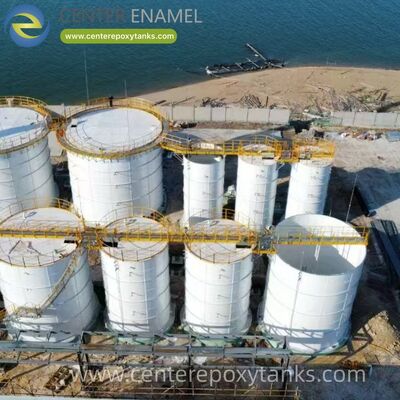
Epoxy Bonded Steel Bolted Tanks as Food Processing Wastewater Tank: Meets strict sanitation requirements for organic waste streams.
| Place of Origin: | China |
| Brand Name: | CEC TANKS |
| Certification: | ISO 9001:2008, AWWA D103 , OSHA , BSCI |
| Model Number: | W201691123005 |
| Minimum Order Quantity: | 1set |
| Price: | $5000~$20000 one set |
| Packaging Details: | PE poly-foam between each two steel plates ; wooden pallet and wooden box |
| Delivery Time: | 0-60 days after deposit received |
| Payment Terms: | L/C, T/T |
| Supply Ability: | 60 sets per month |
|
Detail Information |
|||
| Place of Origin | China | Brand Name | CEC TANKS |
|---|---|---|---|
| Certification | ISO 9001:2008, AWWA D103 , OSHA , BSCI | Model Number | W201691123005 |
| Steel Plates Thickness: | 3mm To 12mm , Depends On The Tank Structure | Corrosion Integrity: | Excellent |
| Chemical Resistance: | Excellent | Capacity: | 20 M3 To 18,000 M3 |
| Service Life: | ≥30 Years | Permeability: | Gas / Liquid Impermeable |
| Highlight: | epoxy bonded steel bolted tanks,food processing wastewater tank,fusion bonded epoxy sanitation tanks |
||
Product Description
Epoxy Bonded Steel Bolted Tanks as Food Processing Wastewater Tank: Meets strict sanitation requirements for organic waste streams.
The global food and beverage industry operates under some of the most stringent regulatory frameworks in existence. From the initial processing of raw agricultural products to the final packaging of consumer goods, every stage must prioritize hygiene, safety, and environmental responsibility. A significant byproduct of this massive industrial sector is food processing wastewater. These organic waste streams—originating from dairies, slaughterhouses, fruit and vegetable processing plants, breweries, and prepared food facilities—carry high concentrations of biodegradable organic matter, suspended solids, and fats, oils, and grease.
Managing this effluent is not merely a matter of disposal; it is a critical component of a facility’s sanitary perimeter. If wastewater is not contained in a high-integrity vessel, it can become a breeding ground for pathogens, release foul odors that compromise the production environment, and lead to severe environmental penalties. Traditional storage solutions, such as concrete basins or standard welded steel tanks, often struggle to meet the dual demands of high-level sanitation and long-term resistance to organic acidity.
Epoxy Coated Tanks, specifically engineered as Epoxy Bonded Steel Bolted Tanks, represent the peak of containment technology for the food processing sector. By utilizing a factory-applied, fusion-bonded epoxy barrier, these tanks provide a non-porous, inert, and highly durable environment that meets the most demanding sanitation requirements. These tanks ensure that organic waste streams are managed securely, supporting the facility’s commitment to purity and environmental stewardship.
The Complex Nature of Food Processing Organic Waste
Wastewater generated in food processing facilities is vastly different from standard municipal sewage. It is often characterized by its "strength" and the presence of specific biological and chemical challenges:
High Organic Load and Biological Activity: Food waste contains high levels of sugars, proteins, and carbohydrates. This leads to rapid biological degradation, which can produce high concentrations of organic acids. These acids are naturally corrosive to concrete and unprotected metals.
Fats, Oils, and Grease (FOG): Many food processes, particularly in meat and dairy, result in high FOG content. These substances tend to adhere to the walls of the storage vessel, creating thick, rancid layers that are difficult to clean and can harbor harmful bacteria.
Variable Acidity and Alkalinity: The wastewater profile can shift dramatically throughout the day. For instance, fruit processing may produce highly acidic runoff, while the subsequent cleaning and sanitation of the equipment (Clean-in-Place or CIP processes) introduces highly alkaline detergents and sanitizers.
Temperature Fluctuations: Wastewater from cooking, blanching, or sterilization processes is often discharged at elevated temperatures. These thermal cycles place significant physical stress on the tank’s internal lining.
Epoxy Coated Tanks are designed to neutralize these threats. The fusion-bonded epoxy provides a smooth, glass-like finish that prevents the adhesion of fats and proteins, ensuring the tank remains a hygienic component of the facility’s infrastructure.
Fusion Bonded Epoxy: The Standard for Industrial Hygiene
The superior performance of Epoxy Bonded Steel Bolted Tanks is the result of the Fusion Bonded Epoxy (FBE) manufacturing process. Unlike conventional liquid paints that are applied in the field, FBE is a high-performance polymer coating applied in a strictly controlled factory environment.
The process begins with the precision engineering of high-strength steel panels. Each panel is subjected to high-intensity grit blasting to achieve a near-white finish, creating an ideal mechanical anchor profile. A high-grade epoxy powder is then electrostatically applied to the pre-heated panels. In the curing ovens, the powder melts, flows, and undergoes a chemical cross-linking reaction, molecularly fusing with the steel substrate.
The resulting barrier is dense, uniform, and completely non-porous. This is critical for the food industry because it eliminates the microscopic "hiding places" where bacteria and biofilms can take root. Because the panels are coated before assembly, every edge and pre-punched bolt hole is fully encapsulated. In the bolted system, these panels are joined using specialized food-grade sealants and high-strength fasteners, ensuring a liquid-tight structure that maintains its integrity even when exposed to aggressive organic acids and industrial cleaning agents.
The Strategic Integration of Aluminum Dome Roofs
In the food processing industry, managing the environment outside the liquid is just as important as containing the liquid itself. This is why the integration of Aluminum Dome Roofs has become an essential feature for food processing wastewater tanks.
Unparalleled Odor Control: Organic waste streams, particularly those undergoing anaerobic breakdown, can produce intense and unpleasant odors. For a food facility, these odors are more than a nuisance; they are a threat to the perceived and actual cleanliness of the production site. Aluminum Dome Roofs provide a secure, gas-tight cover that traps odors within the tank, allowing them to be diverted to specialized treatment systems.
Resisting Corrosive Vapors: The "headspace" above the wastewater is often a highly corrosive environment filled with moisture and gases such as Hydrogen Sulfide. While steel roofs would require constant maintenance and recoating to prevent rust and potential structural failure, aluminum is naturally resistant to these vapors. This ensures the roof remains corrosion-free and requires no maintenance throughout its long service life.
Hygienic Clear-Span Design: The geodesic design of the aluminum dome provides immense structural strength without the need for internal support columns. This clear-span architecture is a major advantage for food processing tanks, as it eliminates internal structures that could collect grease, mold, or bacteria, making the tank much easier to clean and inspect.
Weather Protection and Temperature Stability: The dome protects the organic waste from external elements like rainwater, which could dilute the waste and disrupt the efficiency of the treatment process. It also provides a degree of thermal insulation, helping to maintain the stable temperatures required for the biological treatment of organic solids.
Economic Efficiency and Modular Versatility
For food processing companies, operational downtime is a significant cost. One of the primary advantages of the Epoxy Bonded Steel Bolted Tank is its rapid installation. Because the components are prefabricated and coated in the factory, the on-site assembly is fast and efficient, requiring minimal specialized equipment and no on-site welding. This allows facilities to upgrade their wastewater infrastructure with minimal disruption to their production schedules.
Furthermore, the modular nature of the bolted system provides a level of flexibility that concrete cannot match. If a production facility expands and increases its wastewater volume, these tanks can often be heightened by adding additional rings of panels. This scalability makes the FBE tank a future-proof investment for growing food and beverage brands.
Project Case Studies: Proven Performance in Organic Waste Management
The following non-fictitious projects illustrate the successful implementation of our Epoxy Coated Tanks in handling high-organic loads and industrial wastewater across various sectors:
Kitchen Waste Treatment Project in China: This project required a high-integrity solution for the processing of concentrated organic kitchen waste, which is notoriously acidic and high in oils. The facility utilized 4 units of tanks to serve as primary fermentation and storage vessels. The high resistance of the epoxy-bonded coating to organic acids has ensured the long-term structural integrity of the system in an extremely aggressive environment.
Shandong Large-Scale Breeding Wastewater Project: To manage the high organic and ammonia loads from a massive livestock facility—similar in profile to meat processing waste—this project deployed a comprehensive treatment system. The installation featured 2 units of tanks. The use of FBE technology has provided a durable and corrosion-free solution that withstands both the liquid waste and the corrosive gaseous headspace.
Inner Mongolia Xing'an League Bio-natural Gas Project: This large-scale organic waste-to-energy project utilized a series of high-capacity tanks for the anaerobic digestion of agricultural and food-related residues. The facility employed 4 units of tanks. This project demonstrates the gas-tight performance and structural stability of the bolted system when used for the complex biological processing of organic waste streams.
Conclusion: Securing the Sanitary Perimeter
The effective management of organic waste is a non-negotiable requirement for the modern food processing industry. To protect their products, their reputation, and the environment, facilities must invest in storage infrastructure that is as hygienic as it is durable.
The Epoxy Bonded Steel Bolted Tank provides the ideal solution. By offering a factory-fused, non-porous barrier that resists organic acids and cleaning chemicals, and by incorporating the advanced protection of Aluminum Dome Roofs, these tanks ensure that wastewater remains a managed and contained process. They offer a high-strength, low-maintenance, and scalable asset that meets the substantial needs of the global food and beverage sector, ensuring operational excellence for decades to come.