-
Glass Fused To Steel Tanks (596)
-
Stainless Steel Tanks (434)
-
Fusion Bonded Epoxy Tanks (592)
-
Galvanized Steel Tanks (321)
-
Aluminum Dome Roofs (1316)
-
Wastewater Storage Tanks (231)
-
Welded Steel Tanks (457)
-
Pressure Vessels (295)
-
Anaerobic Digester (201)
-
Industrial Water Tanks (349)
-
Glass Lined Steel Tanks (180)
-
Bolted Steel Tanks (390)
-
Sludge Storage Tank (115)
-
Biogas Storage Tank (173)
-
Leachate Storage Tanks (133)
-
Agricultural Water Storage Tanks (179)
-
Fire Water Tank (166)
-
Grain Storage Silos (146)
-
Biogas Projects (425)
-
Wastewater Treatment Projects (788)
-
Double Membrane Roof (223)
|
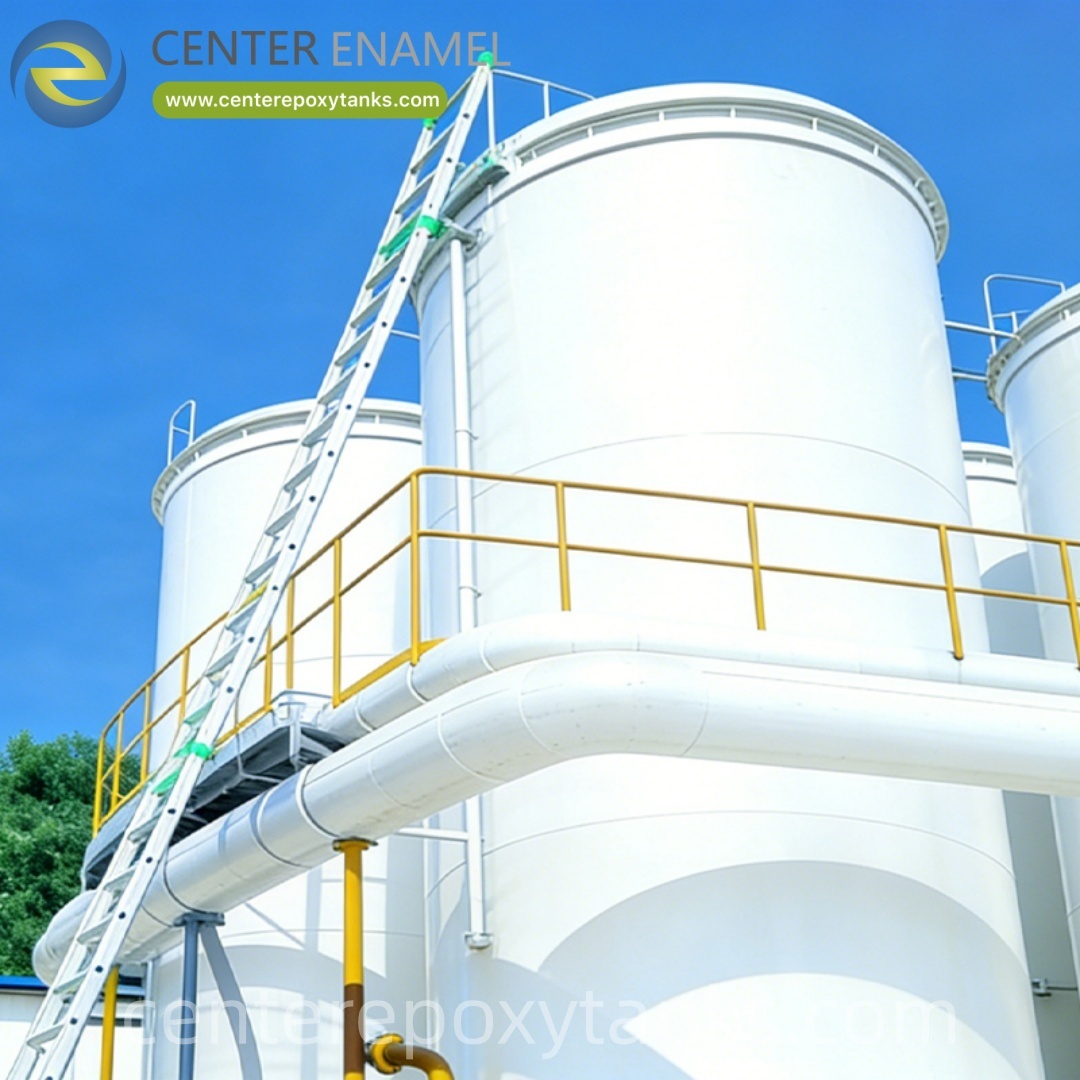
External Floating Roof for Welded Carbon Steel Bitumen Tanks: Effectively Controls Fumes while Preserving Thermal Integrity
| Place of Origin: | China |
| Brand Name: | Center Enamel |
| Certification: | ISO 9001 |
| Model Number: | Aluminum Dome Roofs |
| Minimum Order Quantity: | 1 |
| Price: | 100-50000 |
| Packaging Details: | 2000 |
| Delivery Time: | 8 weeks |
| Payment Terms: | L/C, T/T |
| Supply Ability: | 6000 |
|
Detail Information |
|||
Product Description
External Floating Roof for Welded Carbon Steel Bitumen Tanks: Effectively Controls Fumes while Preserving Thermal Integrity
In the construction and road-paving industries, the storage of bitumen (asphalt) presents a unique set of engineering challenges. Unlike lighter petroleum products, bitumen must be stored at extremely high temperatures to maintain the fluidity required for pumping and processing. However, these high temperatures lead to the continuous release of heavy hydrocarbon fumes and sulfurous vapors, which are both an environmental concern and a safety hazard for site personnel. External Floating Roofs for Welded Carbon Steel Bitumen Tanks are the advanced technical solution for this demanding application. This configuration is vital because it effectively controls fumes while preserving thermal integrity, utilizing a specialized floating deck that remains in constant contact with the molten product to suppress emissions and act as a primary insulation layer.
Eliminating the Vapor Space in High-Temperature Storage
The primary obstacle in bitumen storage is the management of the "vapor headspace." In a traditional fixed-roof tank, the area above the heated bitumen becomes a reservoir for concentrated fumes and steam. When the tank is filled, these fumes are displaced into the atmosphere, often resulting in significant odor complaints and environmental permit violations. External Floating Roofs for Welded Carbon Steel Bitumen Tanks eliminate this issue by resting directly on the liquid surface.
By ensuring there is no air-to-liquid interface, the floating roof prevents the light-end components of the bitumen from vaporizing. This constant physical suppression is the fundamental mechanism that effectively controls fumes. To further enhance this protection and manage the significant heat loss associated with high-temperature storage, many modern asphalt terminals integrate Aluminum Dome Roofs into their tank infrastructure. While the floating roof manages the product surface, the Aluminum Dome Roof acts as a superior external weather shield. The geodesic design of the Aluminum Dome Roof is a clear-span structure, requiring no internal support columns. This is a decisive advantage; in traditional tanks, support columns penetrate the floating roof, creating thermal bridges and escape points for fumes. By utilizing a column-free aluminum dome, the floating roof remains a continuous barrier, providing a superior seal that traps fumes and prevents rainwater from entering the tank, which could cause a dangerous steam explosion in molten bitumen.
Material Resilience and Advanced Thermal Management
Carbon steel is the preferred material for bitumen tanks due to its exceptional structural strength and its ability to withstand constant thermal expansion and contraction cycles. The construction of External Floating Roofs for Welded Carbon Steel Bitumen Tanks utilizes automated precision welding to ensure a robust primary container capable of holding high-density bitumen at temperatures often exceeding 150 degrees Celsius. To prevent heat loss and ensure the structural longevity of the tank, the carbon steel shell is typically wrapped in high-performance mineral wool insulation and protected by a metal jacket.
The addition of an external Aluminum Dome Roof further reinforces this durability through advanced thermal regulation. Aluminum is highly reflective and naturally resistant to the corrosive sulfurous gases that can be present in bitumen fumes. The Aluminum Dome Roof acts as a permanent thermal regulator; by creating a dead-air space between the dome and the floating roof, it provides a secondary layer of insulation. This "double-roof" effect is essential for preserving thermal integrity, significantly reducing the energy required to keep the bitumen in a molten state. By keeping the tank environment stable and protected from wind-driven cooling, the combination of a welded carbon steel shell and a maintenance-free aluminum dome results in a storage system that offers the highest level of energy efficiency and fume control.
Enhancing Operational Efficiency and Maintenance Safety
The clear-span nature of the Aluminum Dome Roof also facilitates easier and more effective inspection and maintenance, which is critical for meeting safety audits in high-temperature environments. Bitumen tanks require frequent monitoring of the heating coils and the condition of the floating roof seals, which must be rated for high-temperature service. Without internal columns obstructing the view or the movement of the floating roof, technicians can more easily verify the condition of the deck and the effectiveness of the perimeter seals. This structural simplicity reduces the time the tank must spend offline during maintenance, maximizing the facility's operational throughput.
Furthermore, the absence of internal columns eliminates the risk of "hang-ups," where a floating roof might become stuck on a pillar during level changes. In a bitumen reservoir, a stuck roof can lead to a sudden exposure of the heated liquid surface or mechanical damage to the tank structure, creating an immediate fire and fume emergency. By providing a clear-span environment, the aluminum dome ensures that the floating roof operates smoothly and predictably, maintaining its role to control fumes and preserve heat without interruption. This synergy between the carbon steel shell and the aluminum dome represents a world-class standard for industrial risk management and the protection of high-temperature assets.
Application Areas
The need for high-capacity fume suppression and thermal efficiency makes these tanks essential for:
Asphalt and Bitumen Terminals: Managing bulk storage for regional road construction projects.
Refinery Residual Units: Providing stable storage for heavy bitumen byproducts.
Roofing Material Manufacturing Plants: Where hot bitumen is used as a primary raw material.
Coastal and Marine Terminals: Where the combination of a carbon steel shell and an Aluminum Dome Roof provides the best protection against salt-air corrosion and heat loss.
Company Advantage and Comprehensive Service
Center Enamel is recognized globally for its expertise in providing high-performance industrial containment for demanding thermal applications. Our approach to External Floating Roofs for Welded Carbon Steel Bitumen Tanks is defined by a commitment to technical precision and environmental protection:
Thermal-Focused Engineering: We design tank systems specifically to maximize heat retention and eliminate hazardous fumes, frequently incorporating Aluminum Dome Roofs for a column-free internal environment.
Advanced Manufacturing Standards: Our facility utilizes precision automated welding and high-grade carbon steel to ensure the tank shell is a seamless, high-strength primary container.
Global Technical Support: We provide expert technical supervision for the assembly of floating decks and geodesic domes worldwide, ensuring absolute reliability for high-temperature service.
Conclusion
In the modern infrastructure landscape, the quality of bitumen storage is a key factor in operational efficiency and environmental safety. External Floating Roofs for Welded Carbon Steel Bitumen Tanks provide the most effective barrier against the primary causes of fume loss and heat dissipation. By prioritizing a design that effectively controls fumes while preserving thermal integrity, operators protect their personnel and reduce their energy costs. When these tanks are reinforced with the maintenance-free protection of an Aluminum Dome Roof, they represent a world-class solution that balances safety, durability, and operational excellence.