-
Glass Fused To Steel Tanks (596)
-
Stainless Steel Tanks (434)
-
Fusion Bonded Epoxy Tanks (592)
-
Galvanized Steel Tanks (321)
-
Aluminum Dome Roofs (1336)
-
Wastewater Storage Tanks (232)
-
Welded Steel Tanks (457)
-
Pressure Vessels (295)
-
Anaerobic Digester (202)
-
Industrial Water Tanks (349)
-
Glass Lined Steel Tanks (180)
-
Bolted Steel Tanks (389)
-
Sludge Storage Tank (115)
-
Biogas Storage Tank (173)
-
Leachate Storage Tanks (133)
-
Agricultural Water Storage Tanks (179)
-
Fire Water Tank (166)
-
Grain Storage Silos (146)
-
Biogas Projects (424)
-
Wastewater Treatment Projects (1058)
-
Double Membrane Roof (223)


|
Fast And Low-Cost Construction Aluminum Floating Roof For Crude Oil Storage Tanks
| Place of Origin: | China |
| Brand Name: | Center Enamel |
| Certification: | ISO 9001 |
| Model Number: | Aluminum Dome Roofs |
| Minimum Order Quantity: | 1 |
| Price: | 100-50000 |
| Packaging Details: | 2000 |
| Delivery Time: | 8 weeks |
| Payment Terms: | L/C,T/T |
| Supply Ability: | 6000 |
|
Detail Information |
|||
| Place of Origin | China | Brand Name | Center Enamel |
|---|---|---|---|
| Certification | ISO 9001 | Model Number | Aluminum Dome Roofs |
| Material: | Aluminum | Structure: | Self-supporting Structure |
| Corrosion Resistant: | High Corrosion Resistant | Maintenance: | Virtually Maintenance Free |
| Installation: | Quick Field Installation | Design: | Clear Span Design |
| Highlight: | Clear Span Aluminum Floating Roof,Aluminum Floating Roof |
||
Product Description
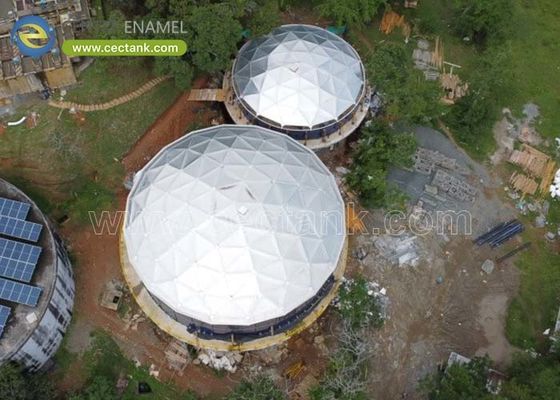
An aluminum floating roof (typically implemented as an internal floating roof beneath a fixed dome or cone roof) is a lightweight, high-performance structural deck designed to float directly on the surface of stored crude oil, eliminating vapor space. Constructed from high-strength, marine-grade aluminum and assembled using modular, bolt-together components, these roofs offer a swift, cost-effective alternative to heavy welded steel decks. Compliant with standards like API 650 Annex H, aluminum floating roofs drastically minimize Volatile Organic Compound (VOC) emissions, mitigate fire risks, and accelerate project turnaround times for oil refineries and storage terminals.
In the upstream and midstream oil sectors, tank downtime translates directly to lost revenue. Traditional carbon steel floating roofs require extensive field welding, heavy crane deployment, and continuous protective coatings.
An aluminum floating roof redefines project economics through two critical pillars:
-
Rapid Modular Erection: Prefabricated aluminum panels arrive as flat-packed kits that can be assembled quickly inside new or existing tanks by local crews using simple hand tools, cutting on-site construction time by up to 50%.
-
Zero "Hot Work" Permits: Because aluminum floating roofs utilize cold-bolted mechanical connections instead of field welding, operators avoid hazardous hot-work safety protocols, expensive insurance premiums, and prolonged plant shutdowns.
Aluminum is inherently lightweight yet structurally rigid. This low dead weight enhances the buoyancy and stability of the deck, ensuring smooth vertical travel along the tank shell without binding or tilting, even during rapid liquid level fluctuations.
Crude oil often contains sulfur compounds, water, and acidic residues that aggressively corrode ordinary carbon steel. Aluminum naturally forms a passive, self-healing oxide layer that resists petroleum vapor corrosion without requiring specialized internal linings or periodic repainting.
By resting directly on the crude oil liquid surface, the aluminum floating roof eliminates the vapor pocket where light hydrocarbons accumulate and evaporate. Combined with advanced primary and secondary rim seals, these roofs achieve vapor emission reduction efficiencies exceeding 98%.
| Performance Metric | Aluminum Floating Roof (IFR) | Welded Carbon Steel Floating Roof |
| Construction Speed | Fast (Prefabricated, bolted modular kit) | Slow (Requires extensive field welding) |
| Initial Installation Cost | Economical (Low labor and crane costs) | High (Specialized welding crews required) |
| Corrosion Protection | Inherent (No painting or coating needed) | Low (Requires regular maintenance coatings) |
| Dead Weight & Buoyancy | Ultra-lightweight (Optimized buoyancy) | Heavy (Requires larger pontoon volumes) |
| Hot Work Requirements | None (Cold-bolted construction) | Extensive (High safety risk and permitting) |
One of the most powerful cost-saving advantages of aluminum floating roofs is their adaptability for tank upgrades. Many older fixed-roof crude storage tanks suffer from high evaporation losses or regulatory non-compliance. Installing an aluminum internal floating roof inside an existing fixed-roof tank transforms the asset into a high-efficiency containment vessel without requiring the capital expenditure of building a brand-new tank.
A: Yes. Marine-grade aluminum alloys used in these roofs are fully compatible with crude oil, refined fuels, and various petroleum distillates. They are engineered in strict compliance with API 650 Annex H guidelines.
A: Cost savings come from multiple fronts: lightweight materials reduce shipping expenses, modular bolt-together assembly eliminates the need for expensive welding specialists, and fast installation minimizes costly facility downtime.
A: When installed as an Internal Floating Roof (IFR) beneath a fixed dome or cone roof, the structure is shielded from rain, meaning deck drains are generally unnecessary. For open-top external applications, appropriate drainage and buoyancy configurations are engineered per project specifications.
A: The perimeter of the aluminum floating roof is equipped with high-performance rim seal systems (such as mechanical shoe seals or wiper seals) that maintain continuous contact with the tank shell, effectively trapping vapors and preventing product loss.
At Center Enamel, we deliver world-class engineering and storage system solutions designed to optimize your industrial operations, enhance environmental safety, and maximize asset longevity.
Are you planning a tank upgrade or crude oil storage project? Contact our engineering team today for a technical consultation, capacity analysis, and a customized proposal.