Catagories
-
Glass Fused To Steel Tanks (596)
-
Stainless Steel Tanks (434)
-
Fusion Bonded Epoxy Tanks (592)
-
Galvanized Steel Tanks (321)
-
Aluminum Dome Roofs (1336)
-
Wastewater Storage Tanks (232)
-
Welded Steel Tanks (457)
-
Pressure Vessels (295)
-
Anaerobic Digester (202)
-
Industrial Water Tanks (349)
-
Glass Lined Steel Tanks (180)
-
Bolted Steel Tanks (389)
-
Sludge Storage Tank (115)
-
Biogas Storage Tank (173)
-
Leachate Storage Tanks (133)
-
Agricultural Water Storage Tanks (179)
-
Fire Water Tank (166)
-
Grain Storage Silos (146)
-
Biogas Projects (424)
-
Wastewater Treatment Projects (1198)
-
Double Membrane Roof (223)

|
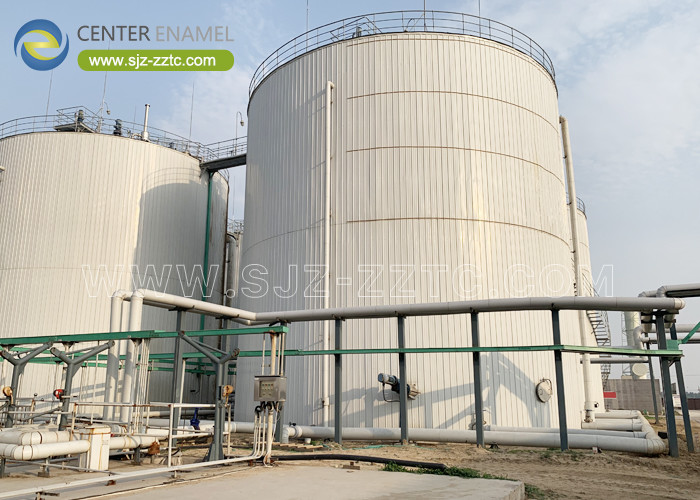
Leading Biogas Project Contractor: Professional Solutions by Shijiazhuang Zhengzhong Technology Co., Ltd.
Product Details
| Place of Origin: | China |
| Brand Name: | CEC TANKS |
| Certification: | ISO 9001:2008, AWWA D103 , OSHA , BSCI |
| Model Number: | W201609013 |
Payment & Shipping Terms
| Minimum Order Quantity: | 1set |
| Price: | $5000~$20000 one set |
| Packaging Details: | PE poly-foam between each two steel plates ; wooden pallet and wooden box |
| Delivery Time: | 0-60 days after deposit received |
| Payment Terms: | L/C,T/T |
| Supply Ability: | 60 sets per month |
|
Detail Information |
|||
| Place of Origin | China | Brand Name | CEC TANKS |
|---|---|---|---|
| Certification | ISO 9001:2008, AWWA D103 , OSHA , BSCI | Model Number | W201609013 |
| Coating Thickness: | 0.25mm~0.40mm & Double Coating | Adhesion: | 3,450N/cm |
| Service Life: | ≥30 Years | Holiday Test: | >1500v |
| Elastic: | Same As Steel Sheet ,around 500KN /mm | Capacity: | 20 M3 To 18,000 M3 |
| Highlight: | Biogas Project Contractor 18 000 m3,Double coating Biogas Project Contractor |
||
Product Description
Leading Biogas Project Contractor: Professional Solutions by Shijiazhuang Zhengzhong Technology Co., Ltd.
As global industries, agricultural complexes, and municipal authorities accelerate the transition toward net-zero carbon operations, anaerobic digestion (AD) has become the cornerstone of organic waste management and renewable energy generation. Transforming massive volumes of livestock manure, food waste, industrial wastewater sludge, and municipal biomass into clean, methane-rich biogas requires a sophisticated synthesis of biological engineering, chemical containment, and power conversion systems.
Executing a successful waste-to-energy facility demands more than individual equipment components; it requires a trusted, vertically integrated general contractor capable of delivering seamless turnkey execution. As a premier global pioneer in advanced containment and environmental engineering, Shijiazhuang Zhengzhong Technology Co., Ltd. (Center Enamel) stands as a Leading Biogas Project Contractor, offering comprehensive, professional solutions from initial concept to final commissioning.
Comprehensive Turnkey Capabilities of Center Enamel
Managing a complex bioenergy project requires multidisciplinary expertise. Center Enamel delivers end-to-end turnkey contracting services that eliminate the risks associated with multi-vendor fragmentation:
-
Custom Engineering and Process Design: Utilizing advanced Finite Element Analysis (FEA) and proprietary process engineering, our technical teams design optimized anaerobic digestion systems tailored to the specific feedstock characteristics and volume requirements of each client.
-
Proprietary Manufacturing Excellence: Unlike contractors who outsource core components, Center Enamel manufactures world-class containment structures—including modular Glass-Fused-to-Steel (GFS) anaerobic digesters, gas holders, and storage silos—under strict ISO-certified factory conditions.
-
System Integration and Commissioning: We seamlessly integrate biological reactors with pre-treatment units, desulfurization systems, biogas generators, and CHP (Combined Heat and Power) co-generation setups to maximize overall energy recovery.
Technical Superiority of Center Enamel Biogas Infrastructure
The backbone of any successful biogas plant is its primary anaerobic digester. Center Enamel integrates advanced structural technologies that ensure decades of reliable operation:
-
Glass-Fused-to-Steel (GFS) Protection: Fusing inorganic glass frit to high-strength steel at temperatures between $820^\circ\text{C}$ and $930^\circ\text{C}$ creates an impermeable molecular bond. This glass-lined surface completely resists corrosive volatile fatty acids, hydrogen sulfide, and aggressive microbial environments.
-
Hermetically Sealed Gas Containment: Specially engineered double-membrane gas holders and modular roof systems capture and store biogas securely, preventing fugitive emissions and maintaining stable operating pressures.
-
Modular Scalability: Prefabricated bolted panel designs allow rapid on-site assembly, significantly reducing construction timelines and enabling future capacity expansions with zero structural disruption.
Comparative Matrix: Biogas Project Contracting Models
| Evaluation Metric | Center Enamel Turnkey EPC Contracting | Fragmented Multi-Vendor Approach | Traditional Civil Contractor Build |
| Project Accountability | Single-Source (Complete accountability from design to commissioning and maintenance) | Divided (Multiple subcontractors create finger-pointing during operational disputes) | Split (Civil contractors lack specialized biological and gas-handling expertise) |
| Construction Velocity | Fast (Prefabricated modular GFS tanks and standardized skids accelerate timelines) | Slow (Delays coordinating equipment delivery schedules across multiple vendors) | Very Slow (Months of concrete formwork, pouring, and curing delays) |
| Corrosion Defense & Lifespan | Superior (Factory-fused GFS tanks offer 30 to 50+ years of corrosion-free service) | Variable (Dependent on mismatched coatings applied by different subcontractors) | Low (Concrete basins vulnerable to acid spalling and structural cracking) |
| System Integration | Seamless (Engineered specifically for optimal biological and energy synergy) | Moderate (Risk of interface mismatches between tanks, piping, and generators) | Low (Civil structures often require expensive mechanical retrofitting) |
Engineering Assurance: Every biogas project executed by Center Enamel adheres strictly to international quality and safety benchmarks, including ISO 9001, ISO 28765, and global structural design codes, backed by rigorous factory quality controls such as 100% high-voltage holiday spark testing.
Frequently Asked Questions (FAQ)
Q: What services does Center Enamel provide as a leading biogas project contractor?
A: Center Enamel provides comprehensive turnkey engineering, procurement, and construction (EPC) services for biogas and anaerobic digestion projects. This includes process design, proprietary GFS tank manufacturing, civil integration, equipment installation, gas handling system integration, and plant commissioning.
Q: Why are Glass-Fused-to-Steel (GFS) tanks preferred for anaerobic digesters?
A: GFS tanks combine the high tensile strength of steel with the absolute chemical inertness of glass. They provide superior resistance to corrosive volatile fatty acids and hydrogen sulfide produced during anaerobic digestion, eliminating interior repainting and ensuring a 30+ year lifespan.
Q: Can Center Enamel customize biogas plants for different types of organic feedstock?
A: Yes. Center Enamel's engineering team custom-designs anaerobic digestion systems to handle diverse feedstocks, including agricultural manure, food processing wastewater, industrial organic effluent, and municipal sewage sludge, optimizing biological conversion efficiency.
Q: How does single-source turnkey contracting benefit a bioenergy project?
A: Single-source turnkey contracting ensures unified accountability, streamlines project communication, accelerates construction timelines through modular prefabrication, and eliminates compatibility risks between biological reactors, storage vessels, and power generation equipment.
Want to Know more details about this product
Similar Products
Shijiazhuang Zhengzhong Technology Co., Ltd
sales@cectank.com86-20-34061629
Fuli Commercial Center room 301#, Xingang West Rd.11#, Haizhu area, Guangzhou, Guangdong province, China.
China Good Quality Glass Fused To Steel Tanks Supplier. Copyright © 2016-2026 cectanks.com . All Rights Reserved.