-
Glass Fused To Steel Tanks (596)
-
Stainless Steel Tanks (434)
-
Fusion Bonded Epoxy Tanks (592)
-
Galvanized Steel Tanks (321)
-
Aluminum Dome Roofs (1336)
-
Wastewater Storage Tanks (232)
-
Welded Steel Tanks (457)
-
Pressure Vessels (295)
-
Anaerobic Digester (202)
-
Industrial Water Tanks (349)
-
Glass Lined Steel Tanks (180)
-
Bolted Steel Tanks (389)
-
Sludge Storage Tank (115)
-
Biogas Storage Tank (173)
-
Leachate Storage Tanks (133)
-
Agricultural Water Storage Tanks (179)
-
Fire Water Tank (166)
-
Grain Storage Silos (146)
-
Biogas Projects (424)
-
Wastewater Treatment Projects (1208)
-
Double Membrane Roof (223)

|
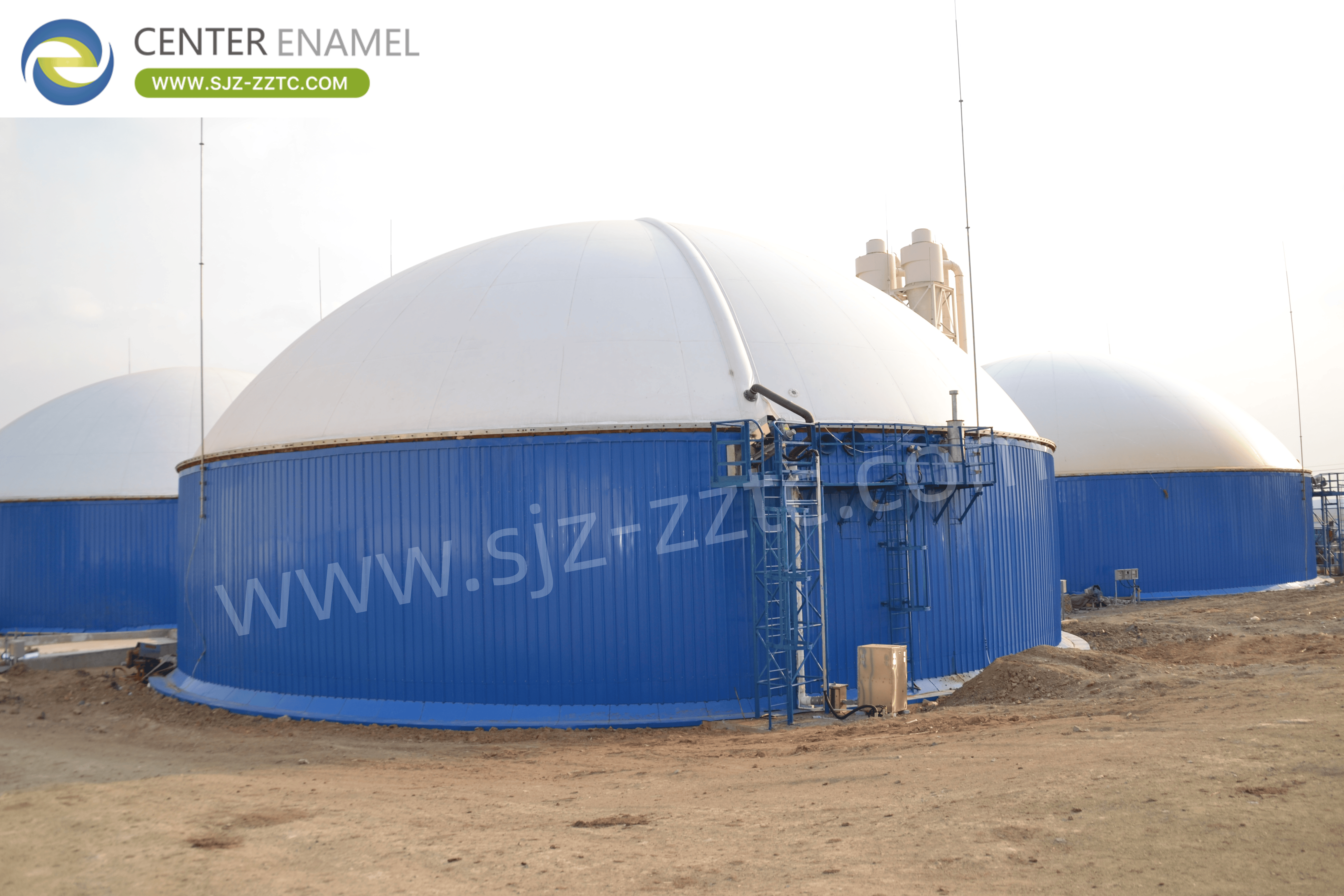
Leading Biogas Solution Provider with CSTR Process for Egypt Livestock Manure Treatment
| Place of Origin: | China |
| Brand Name: | CEC TANKS |
| Certification: | ISO 9001:2008, AWWA D103 , OSHA , BSCI |
| Model Number: | W |
| Minimum Order Quantity: | 1set |
| Price: | $5000~$20000 one set |
| Packaging Details: | PE poly-foam between each two steel plates ; wooden pallet and wooden |
| Delivery Time: | 10-30 days after deposit received |
| Payment Terms: | L/C,T/T |
| Supply Ability: | 60 sets per month |
|
Detail Information |
|||
| Place of Origin | China | Brand Name | CEC TANKS |
|---|---|---|---|
| Certification | ISO 9001:2008, AWWA D103 , OSHA , BSCI | Model Number | W |
| Tank Body Color: | Dark Green / Can Be Customized | Corrosion Integrity: | Excellent |
| Steel Plates Thickness: | 3mm To 12mm , Depends On The Tank Structure | Chemical Resistance: | Excellent |
| Size Of Panel: | 2.4M * 1.2M | Easy To Clean: | Smooth, Glossy, Inert, Anti-adhesion |
| Highlight: | Biogas solution for livestock manure,CSTR process wastewater treatment,Livestock manure treatment Egypt |
||
Product Description
This article explores the implementation of high-efficiency biogas engineering solutions in Egypt to address complex agricultural waste management challenges. By utilizing advanced CSTR processes and optimized anaerobic digestion systems, livestock operations can successfully convert organic waste into valuable renewable energy. This integrated approach promotes environmental sustainability while significantly improving regional energy independence. Discover how cutting-edge technology facilitates efficient manure processing and energy recovery in modern industrial facilities.
Livestock manure is a byproduct of extensive animal farming activities, encompassing waste generated from cattle, swine, and poultry production facilities. In Egypt, the rapid expansion of the livestock sector has led to massive volumes of organic waste, which, if left untreated, pose severe environmental and public health risks. Common challenges include the intensive emission of greenhouse gases like methane, which heavily impacts climate change, alongside the potential contamination of local water bodies through agricultural nutrient runoff. Furthermore, inadequate storage and improper disposal methods create severe odor nuisances for surrounding local communities. Addressing these pressing issues requires structured and robust waste management systems. Traditional methods of open stacking or basic lagoon storage are largely insufficient, as they fail to capture the high energy potential inherent in the biomass. Effective livestock manure treatment is therefore essential to mitigate ecological footprints while transforming an operational waste burden into a productive economic asset for agricultural development.
The conversion of livestock manure into biogas is a sophisticated biochemical process known as anaerobic digestion, which relies on specialized microbial communities to decompose organic materials entirely in the absence of oxygen. When manure is continuously fed into a sealed reaction environment, these specialized microorganisms break down complex organic compounds into simpler substances, predominantly generating methane and carbon dioxide. This biological process not only stabilizes the waste but also effectively neutralizes various pathogens, yielding a much safer and more hygienic final product. The overall efficiency of this conversion depends heavily on several critical operating parameters, including substrate composition, stable pH balance, and precise temperature regulation within the reactor vessel. By maintaining these optimal conditions, the anaerobic digestion system ensures a stable, high-yield production of clean biogas. This biological transformation represents a closed-loop system where agricultural waste, traditionally viewed as an environmental liability, is systematically harvested for its inherent energy content. The technology required to facilitate this critical reaction—ranging from preliminary mechanical screening to controlled fermentation—is vital for modern agricultural enterprises in Egypt striving to transition toward circular economic models. Through precise metabolic control, livestock manure is successfully repurposed as a continuous source of renewable fuel, reducing reliance on external power grids.
Once biogas is generated through anaerobic fermentation, it undergoes a critical purification phase to ensure absolute viability for diverse industrial and residential applications. Raw biogas typically contains moisture and hydrogen sulfide impurities, which must be thoroughly removed to prevent rapid corrosion and mechanical damage to downstream equipment while maximizing combustion efficiency. Specialized dehydration and desulfurization units are employed to clean the gas output, followed by precise metering and secure storage within high-capacity gas holders. The treated biogas is then fully prepared for utilization. It can be combusted directly in specialized industrial boilers to generate thermal energy for manufacturing or agricultural processes, or fed into generators to produce electricity for onsite consumption or grid integration. Alternatively, it can be upgraded into compressed natural gas for clean vehicle fuel. This crucial stage captures the maximum economic value from the entire waste-to-energy conversion cycle, turning raw byproducts into reliable energy outputs.
The Continuous Stirred-Tank Reactor serves as the absolute heart of modern industrial anaerobic digestion systems. As a core processing technology, the CSTR ensures that incoming fermentation raw materials and active microorganisms are thoroughly mixed within a closed and tightly controlled environment. Equipped with a high-performance mechanical stirring device, the reactor prevents any form of material stratification and keeps the waste suspension in a consistent, fully mixed state throughout operation. This uniform distribution is particularly crucial for handling high-solids substrates like livestock manure, where consistent contact is necessary for optimal microbial activity. By operating at constant mesophilic or thermophilic temperatures and maintaining continuous feeding regimes, the CSTR process effectively degrades organic matter, maximizes pathogen destruction, and stabilizes the resulting digestate. This high degree of process control guarantees predictable biogas yields and a homogenous output, establishing CSTR as the preferred technology for industrial-scale biogas power plants.
The Glass-Fused-to-Steel tank, when paired with an integrated double membrane roof, represents the ultimate industry standard for modern biogas storage and reaction infrastructure. GFS technology involves fusing premium molten glass with high-strength steel plates at extreme temperatures, creating an inert, inorganic molecular bond that offers exceptional mechanical strength, structural flexibility, and unmatched corrosion resistance—far superior to traditional epoxy coatings or welded painted tanks. This superior durability is essential within the harsh, corrosive chemical environment of an active anaerobic digester. The integrated double membrane roof functions as a dual-purpose engineering solution, providing both a secure, airtight containment barrier for safe biogas collection and a flexible storage volume that adjusts automatically to fluctuations in daily gas generation. This combined configuration significantly optimizes project capital expenditure by eliminating the need for standalone gas holders while minimizing required foundation space. Together, these components guarantee long-term operational integrity and environmental safety.
- Galvanized Steel Tanks: Manufactured using a specialized hot-dip galvanizing process to produce a tough, highly durable protective coating with outstanding resistance against environmental corrosion.
- Fusion Bonded Epoxy Tanks: Developed through strategic partnerships with global coating leaders, these tanks deliver innovative, smooth, and highly reliable surface protection.
- Stainless Steel Tanks: Fabricated using premium AISI 304 and 316 stainless steel grades to meet the most stringent specifications for harsh liquid containment environments.
- Aluminum Geodesic Dome Roofs: Engineered to provide expansive clear-span structural capability with minimal long-term maintenance costs and high corrosion resistance.
- Aluminum Alloy Trough Deck Roofs: An economical covering solution ideal for weather protection and basic odor containment where strict airtightness is not mandated.
- FRP Roofs: Versatile fiberglass-reinforced plastic structures suitable for diverse water and wastewater applications where standard atmospheric conditions apply.
Beyond primary containment tanks, Center Enamel supplies a complete range of essential auxiliary equipment for integrated biogas engineering systems:
- Gas Holders: Specialized high-capacity membrane structures engineered for safe and secure short- or long-term biogas storage.
- Black Membrane Systems: Cost-effective geosynthetic liners widely utilized for expansive liquid containment and environmental lagoon management.
- Solid-liquid Separators: High-performance mechanical units vital for processing raw digestate into manageable fibrous organic fertilizer and liquid fractions.
- Torch Systems: Essential safety flaring devices designed for reliable emergency pressure relief and controlled excess gas burning.
- Lifting Pumps: Heavy-duty, high-efficiency submersible pumps optimized for smooth substrate transfer and movement.
- Dehydration and Desulfurization Tanks: Specialized vessels engineered to extract harmful moisture and hydrogen sulfide impurities from raw biogas streams.
- Screw Sludge Dewatering Machines: Advanced mechanical equipment built for continuous, high-efficiency solids concentration and sludge dewatering.
Center Enamel stands prominently as a leading global one-stop solution provider for livestock manure biogas treatment and bio-energy projects. Backed by decades of professional industry experience, the company delivers an extensive, integrated service portfolio that encompasses every critical phase of a biogas facility's lifecycle. From initial custom process design and detailed engineering blueprints to precise equipment manufacturing and global installation guidance, Center Enamel ensures seamless coordination across all operational stages. Their comprehensive supply capabilities include complete process packages and rugged core hardware, headlined by their world-renowned GFS tanks. By strictly adhering to rigorous international quality certifications such as CE/EN1090, ISO9001, NSF61, and WARS, Center Enamel guarantees that all delivered systems meet the highest global standards for structural safety, environmental compliance, and long-term durability. Operating across more than one hundred countries worldwide, the company demonstrates an enduring commitment to excellence within the global wastewater, municipal sanitation, and renewable bio-energy sectors. For agricultural developers and livestock enterprises across Egypt seeking to process organic waste responsibly while capturing clean energy, Center Enamel provides the precise technological expertise and robust physical equipment required to build scalable, economically viable, and future-proof green energy infrastructure.
In conclusion, the successful integration of livestock manure treatment into modern biogas plant project design is essential for achieving long-term agricultural sustainability across Egypt. By leveraging advanced anaerobic digestion methodologies like CSTR processing, corrosion-resistant GFS tanks, and complete auxiliary equipment packages, facility operators can effectively convert complex organic waste into valuable renewable energy while neutralizing environmental pollution. Center Enamel's steadfast dedication to supplying comprehensive, high-quality engineering solutions empowers agribusinesses to optimize waste management workflows, attain greater energy independence, and secure commercial profitability. Embracing these innovative waste-to-energy systems represents a decisive step toward a cleaner, greener, and more resilient future for the regional livestock industry.
- Q: How does the CSTR system handle fluctuations in daily livestock manure loading?
- A: Continuous mechanical mixing and balanced retention times within the CSTR reactor buffer organic load variations, stabilizing microbial populations and ensuring steady biogas production.
- Q: What are the primary biological benefits of treating livestock manure through anaerobic digestion?
- A: Anaerobic digestion significantly reduces pathogen counts, neutralizes offensive odors, and converts volatile organic acids into stable, nutrient-rich organic fertilizer.
- Q: Why is consistent feedstock pre-treatment important before entering a biogas reactor?
- A: Pre-screening and homogenization remove large debris and grit, preventing equipment clogging and protecting downstream pumps and mixing mechanisms from premature mechanical wear.