-
Glass Fused To Steel Tanks (596)
-
Stainless Steel Tanks (434)
-
Fusion Bonded Epoxy Tanks (592)
-
Galvanized Steel Tanks (321)
-
Aluminum Dome Roofs (1336)
-
Wastewater Storage Tanks (232)
-
Welded Steel Tanks (457)
-
Pressure Vessels (295)
-
Anaerobic Digester (202)
-
Industrial Water Tanks (349)
-
Glass Lined Steel Tanks (180)
-
Bolted Steel Tanks (389)
-
Sludge Storage Tank (115)
-
Biogas Storage Tank (173)
-
Leachate Storage Tanks (133)
-
Agricultural Water Storage Tanks (179)
-
Fire Water Tank (166)
-
Grain Storage Silos (146)
-
Biogas Projects (424)
-
Wastewater Treatment Projects (1198)
-
Double Membrane Roof (223)

|
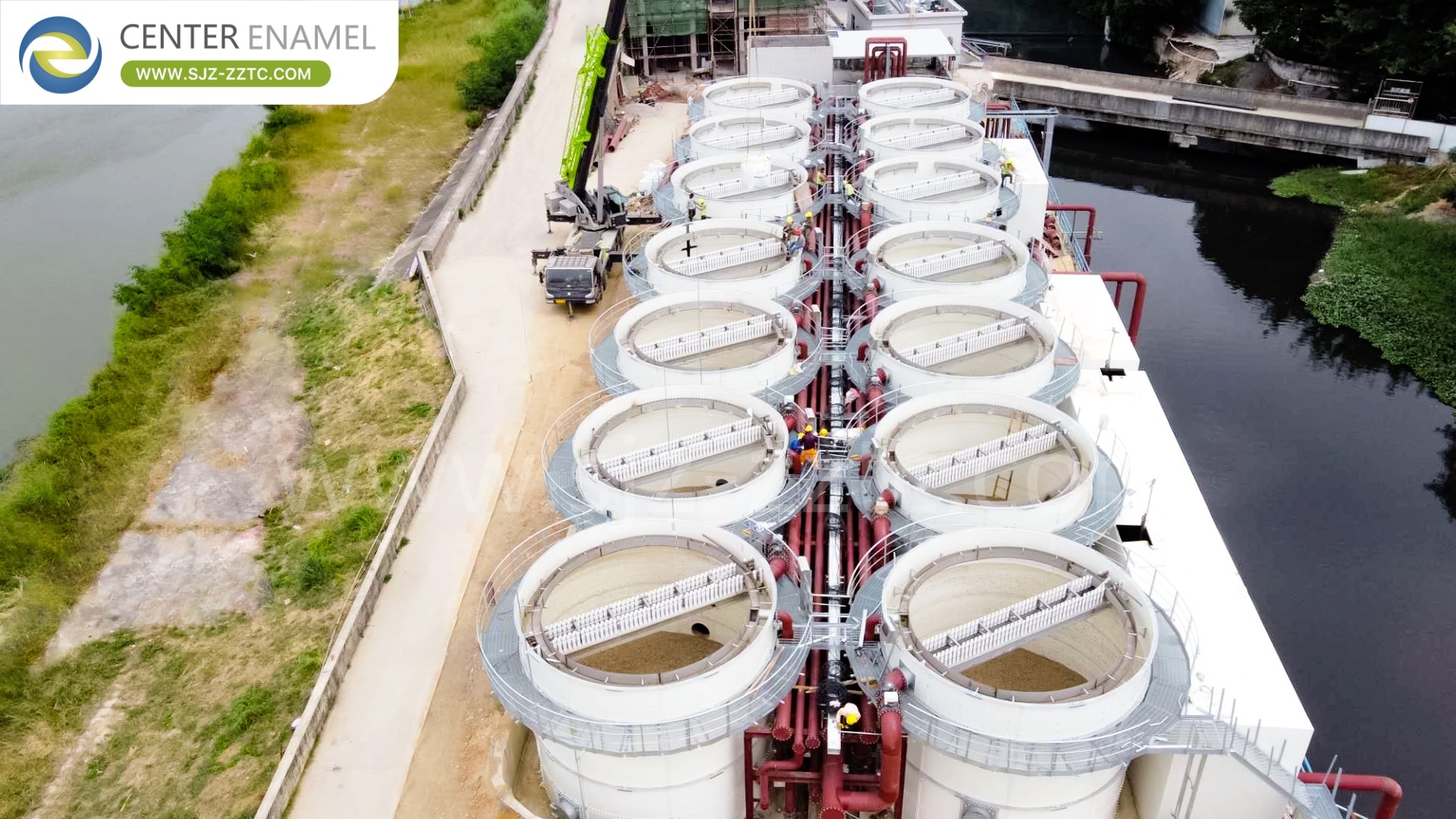
Innovative Biogas Power Plant and A2O Process for Municipal Sewage in Nigeria
| Place of Origin: | China |
| Brand Name: | CEC TANKS |
| Certification: | ISO 9001:2008, AWWA D103 , OSHA , BSCI |
| Model Number: | W |
| Minimum Order Quantity: | 1set |
| Price: | $5000~$20000 one set |
| Packaging Details: | PE poly-foam between each two steel plates ; wooden pallet and wooden |
| Delivery Time: | 10-30 days after deposit received |
| Payment Terms: | L/C,T/T |
| Supply Ability: | 60 sets per month |
|
Detail Information |
|||
| Place of Origin | China | Brand Name | CEC TANKS |
|---|---|---|---|
| Certification | ISO 9001:2008, AWWA D103 , OSHA , BSCI | Model Number | W |
| Tank Body Color: | Dark Green / Can Be Customized | Corrosion Integrity: | Excellent |
| Steel Plates Thickness: | 3mm To 12mm , Depends On The Tank Structure | Chemical Resistance: | Excellent |
| Size Of Panel: | 2.4M * 1.2M | Easy To Clean: | Smooth, Glossy, Inert, Anti-adhesion |
| Highlight: | biogas power plant for municipal sewage,A2O process wastewater treatment,Nigeria sewage treatment project |
||
Product Description
Sustainable urban infrastructure development across Nigeria faces increasing pressure to manage environmental impacts effectively. Modern engineering solutions are urgently required to handle growing volumes of community wastewater while generating clean energy. A well-designed biogas power plant integrates advanced biological systems to convert waste into valuable power resources. This article explores how our comprehensive treatment frameworks successfully address local sanitation and energy demands.
Municipal sewage originates from residential homes, commercial enterprises, and public facilities within urban communities. It contains a complex mixture of organic matter, excessive nutrients, hazardous pathogens, and suspended solids. In rapidly developing cities throughout Nigeria, managing these heavy pollutant loads creates significant operational difficulties. Without advanced treatment, these untreated components threaten local water resources, risk spreading infectious diseases, and cause severe ecosystem degradation. Proper management through specialized infrastructure is essential to ensure that treated effluent is safe for discharge or environmental reuse.
Transforming municipal sewage into sustainable green energy relies heavily on sophisticated anaerobic digestion technology. Collected raw wastewater is channeled directly into anaerobic tanks where specialized microorganisms thrive in an oxygen-free environment. These active microbes decompose organic materials, breaking down complex molecules into simpler compounds which ultimately generates biogas rich in methane. This biological conversion process successfully achieves a dual objective: it significantly reduces the organic pollutant load of the sewage to protect ecological safety while capturing renewable energy that can be utilized for power generation, heating, or industrial fuel applications.
The A2O (Anaerobic-Anoxic-Oxic) process is an advanced biological method utilized to remove organic matter, nitrogen, and phosphorus from wastewater. In the anaerobic tank, microorganisms decompose organic material and initiate biological phosphorus release. Subsequently, the effluent flows into the anoxic tank, where denitrifying bacteria use organic matter as a carbon source to reduce nitrate nitrogen into nitrogen gas for removal. Part of this mixed liquid flows back to the anaerobic tank to maintain optimal substrate levels. Finally, sewage enters the aerobic tank, where microorganisms further metabolize organic pollutants and convert ammonia nitrogen into nitrate nitrogen through active nitrification.
Glass-Fused-to-Steel (GFS) tanks represent the premier containment technology in the global storage market, offering exceptional durability and structural reliability. Created by fusing molten glass to high-strength steel plate surfaces at temperatures between 820°C and 930°C, these tanks form an inert, inorganic bond that combines the strength of steel with superior corrosion resistance. Compared to standard welded or painted storage options, GFS tanks require minimal maintenance, resist harsh chemical environments, and provide an extended service life ideal for municipal sewage and biogas engineering projects.
- Galvanized Steel Tanks: Manufactured using a specialized galvanizing process to produce a tough, wear-resistant, and durable protective coating that delivers superior corrosion resistance.
- Fusion Bonded Epoxy Tanks: Developed in strategic partnership with AkzoNobel, featuring advanced coating technology for exceptional surface protection.
- Stainless Steel Tanks: Constructed from high-grade AISI 304/316 stainless steel, engineered to meet stringent standards for storing high-purity liquids in harsh operational environments.
- Aluminum Geodesic Dome Roofs: Provide expansive clear-span capability, advanced corrosion resistance, efficient construction, and minimal ongoing maintenance costs.
- Membrane Roofs: Superior airtight solutions specifically optimized for anaerobic digestion processes, biogas collection, and effective odor control.
- Screw Stack Sludge Dewatering Machine: Efficiently extracts moisture from residual sludge to drastically reduce volume before final disposal.
- Sludge Transfer Pumps: Precision-engineered pumps designed to ensure smooth, continuous, and reliable movement of sludge across different treatment stages.
- Submersible Mixers: Maintain uniform fluid distribution and prevent biological settling or dead zones inside large treatment tanks.
- UV Sterilizers: Utilize advanced ultraviolet radiation to effectively eliminate remaining pathogens, bacteria, and viruses to ensure compliance with strict discharge standards.
- Sludge Return Pumps: Facilitate precise internal sludge recirculation to sustain balanced biological populations within the biological tanks.
Center Enamel operates as a comprehensive one-stop solutions provider, managing the complete lifecycle of municipal sewage treatment and biogas power plant initiatives. From initial engineering design and precision equipment manufacturing to on-site construction and system commissioning, our integrated team ensures seamless execution. We specialize in designing robust systems that efficiently convert community wastewater into renewable energy, helping clients in Nigeria achieve their environmental sustainability goals. Our unified approach minimizes project coordination risks, optimizes capital expenditure, and guarantees that every individual component within the treatment facility works in perfect operational harmony.
Investing in modern municipal sewage treatment infrastructure is essential for sustainable urban growth in Nigeria. By implementing advanced technologies like the A2O process and robust GFS containment systems, communities can effectively resolve wastewater challenges while generating valuable renewable energy for a cleaner future.
Q: What causes foul odors in municipal wastewater collection systems?
A: Odors primarily result from the anaerobic breakdown of sulfur compounds and organic matter in stagnant wastewater lines.
Q: Why is biological nutrient removal critical for natural water bodies?
A: Removing excess nitrogen and phosphorus prevents eutrophication, which causes oxygen depletion and harms aquatic ecosystems.
Q: What is the primary purpose of primary sedimentation in wastewater treatment?
A: Primary sedimentation allows heavy suspended solids to settle out of the wastewater stream before biological processing begins.