Catagories
-
Glass Fused To Steel Tanks (596)
-
Stainless Steel Tanks (434)
-
Fusion Bonded Epoxy Tanks (592)
-
Galvanized Steel Tanks (321)
-
Aluminum Dome Roofs (1336)
-
Wastewater Storage Tanks (232)
-
Welded Steel Tanks (457)
-
Pressure Vessels (295)
-
Anaerobic Digester (202)
-
Industrial Water Tanks (349)
-
Glass Lined Steel Tanks (180)
-
Bolted Steel Tanks (389)
-
Sludge Storage Tank (115)
-
Biogas Storage Tank (173)
-
Leachate Storage Tanks (133)
-
Agricultural Water Storage Tanks (179)
-
Fire Water Tank (166)
-
Grain Storage Silos (146)
-
Biogas Projects (424)
-
Wastewater Treatment Projects (1198)
-
Double Membrane Roof (223)

|
Easily Expanded GLS Tanks As Agricultural Water Tanks: Scalable Solutions for Modern Farming
Product Details
| Place of Origin: | China |
| Brand Name: | CEC TANKS |
| Certification: | ISO 9001:2008, AWWA D103 , OSHA , BSCI |
| Model Number: | W20171016013 |
Payment & Shipping Terms
| Minimum Order Quantity: | 1set |
| Price: | $5000~$20000 one set |
| Packaging Details: | PE poly-foam between each two steel plates ; wooden pallet and wooden box |
| Delivery Time: | 10-30 days after deposit received |
| Supply Ability: | 60 sets per month |
|
Detail Information |
|||
Product Description
Easily Expanded GLS Tanks As Agricultural Water Tanks: Scalable Solutions for Modern Farming
In modern commercial agriculture, reliable water management is the bedrock of productivity. Whether sustaining extensive crop irrigation systems, providing continuous drinking water for livestock, or managing liquid organic fertilizer and wastewater, farms require robust, high-capacity liquid storage. However, agricultural operations are dynamic; as farming acreage expands, livestock herds grow, or irrigation demands increase, static storage reservoirs frequently become operational bottlenecks. Traditional poured-in-place concrete basins and fixed welded steel tanks cannot be scaled up, forcing farmers to build entirely new systems when capacity needs rise.
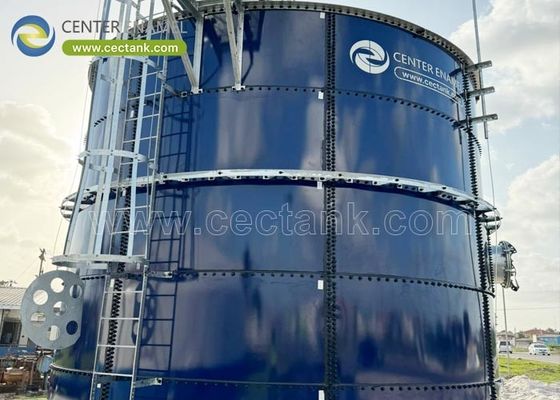
To eliminate this structural limitation, modern agricultural engineering relies on Easily Expanded GLS (Glass-Lined Steel) Tanks. Also known as Glass-Fused-to-Steel (GFS) tanks, these modular storage systems combine the structural strength of steel with the chemical inertness of glass, offering unmatched scalability and durability. Engineered by Shijiazhuang Zhengzhong Technology Co., Ltd. (Center Enamel), expandable GLS tanks provide agricultural enterprises with a future-proof storage solution that grows alongside their operations.
The Strategic Importance of Scalability in Agricultural Storage
Agricultural growth often happens in phases. Investing in water storage requires balancing immediate budget constraints with future operational demands. Expandable GLS tanks solve this dilemma through several key structural advantages:
-
Modular Bolt-Together Architecture: Because GLS tanks are constructed from standardized, precision-engineered steel panels bolted together on-site, expanding tank volume does not require demolition or civil reconstruction. Additional ring plates or diameter extensions can be integrated seamlessly.
-
Zero Structural Waste: When an agricultural facility needs to increase water storage capacity, existing foundation footings (when engineered with future loads in mind) and upper roof structures can often be preserved, significantly reducing capital expenditure during expansion phases.
-
Rapid Phased Deployment: Farmers can start with a tank capacity matched to their current irrigation needs and efficiently scale up volume as their agricultural footprint grows, preventing over-allocation of capital upfront.
Technical Superiority of Center Enamel GLS Tanks for Farming
Center Enamel's glass-lined steel tanks are manufactured to withstand the rigorous environmental and chemical stresses typical of agricultural environments:
-
High-Temperature Thermal Fusion: Specialized glass frit is applied to high-strength steel plates and fused at extreme temperatures between 820 degrees Celsius and 930 degrees Celsius, creating an inseparable molecular bond that resists cracking, chipping, and weathering.
-
Complete Corrosion Immunity: The inert glass surface is completely unaffected by UV radiation, moisture, mold, and corrosive water additives or fertilizers, ensuring a service life exceeding 30 to 50 years without interior repainting.
-
Hygienic Water Preservation: Compliant with strict health benchmarks like NSF/ANSI 61, the non-porous glass surface prevents bacterial proliferation and algae growth, keeping stored irrigation and livestock water clean and safe.
Comparative Matrix: Agricultural Water Storage Options
| Evaluation Metric | Center Enamel Expandable GLS Tank | Cast-in-Place Concrete Basin | Traditional Welded Steel Tank |
| Capacity Expandability | High (Modular bolted design allows effortless height or diameter expansion on-site) | None (Permanent civil structure; impossible to expand without major demolition) | Limited (Destructive cutting and field welding required to modify size) |
| Installation Velocity | Fast (Prefabricated modular panels bolted rapidly on-site with zero curing delays) | Very Slow (Months of formwork, concrete pouring, and multi-week curing phases) | Moderate (Requires heavy field plate rolling, welding, and radiograph testing) |
| Corrosion & UV Defense | Superior (Inert glass fused to steel resists rust, weathering, and agricultural chemicals) | Moderate (Vulnerable to concrete carbonation, freeze-thaw cracking, and leaks) | Low (Dependent on field-applied epoxy coatings that degrade and blister quickly) |
| Relocation Potential | High (Modular design enables complete tank dismantling and relocation if needed) | None (Permanent, immovable civil foundation) | Low (Destructive dismantling ruins structural plates) |
Engineering Assurance: All expandable GLS agricultural water tanks engineered by Center Enamel comply strictly with globally recognized standards, including ISO 28765, AWWA D103-09, and ISO 9001, backed by rigorous quality checks such as 100% high-voltage holiday spark testing prior to dispatch.
Frequently Asked Questions (FAQ)
Q: How can an agricultural GLS tank be expanded after it is already installed?
A: Because GLS tanks are built using a modular, bolted panel construction, facility operators can easily dismantle upper roof structures, add new horizontal shell rings or vertical panel sections to increase height or diameter, and reassemble the tank with new gasketing and hardware without destroying existing infrastructure.
Q: Are GLS tanks safe for storing livestock drinking water and irrigation supplies?
A: Yes. Center Enamel's GLS tanks feature non-toxic, food-grade glass interior finishes that comply strictly with international health standards like NSF/ANSI 61, ensuring that stored water remains clean, odorless, and free from harmful chemical leaching.
Q: How do GLS tanks compare to concrete ponds in terms of longevity and maintenance?
A: Unlike concrete basins, which are prone to structural micro-cracking, water seepage, and sulfate attack over time, GLS tanks provide a non-porous glass barrier that requires zero interior repainting, resists agricultural weathering, and delivers a 30 to 50+ year operational lifespan.
Q: Can GLS tanks resist harsh outdoor farm environments and UV exposure?
A: Yes. The exterior glass-fused-to-steel coating provides exceptional resistance to intense ultraviolet (UV) radiation, extreme temperature fluctuations, and corrosive agricultural atmospheres, ensuring the tank maintains its structural integrity and aesthetic finish outdoors.
Want to Know more details about this product
Similar Products

Shijiazhuang Zhengzhong Technology Co., Ltd
sales@cectank.com86-20-34061629
Fuli Commercial Center room 301#, Xingang West Rd.11#, Haizhu area, Guangzhou, Guangdong province, China.
China Good Quality Glass Fused To Steel Tanks Supplier. Copyright © 2016-2026 cectanks.com . All Rights Reserved.