Catagories
-
Glass Fused To Steel Tanks (596)
-
Stainless Steel Tanks (434)
-
Fusion Bonded Epoxy Tanks (592)
-
Galvanized Steel Tanks (321)
-
Aluminum Dome Roofs (1336)
-
Wastewater Storage Tanks (232)
-
Welded Steel Tanks (457)
-
Pressure Vessels (295)
-
Anaerobic Digester (202)
-
Industrial Water Tanks (349)
-
Glass Lined Steel Tanks (180)
-
Bolted Steel Tanks (389)
-
Sludge Storage Tank (115)
-
Biogas Storage Tank (173)
-
Leachate Storage Tanks (133)
-
Agricultural Water Storage Tanks (179)
-
Fire Water Tank (166)
-
Grain Storage Silos (146)
-
Biogas Projects (424)
-
Wastewater Treatment Projects (1198)
-
Double Membrane Roof (223)

|
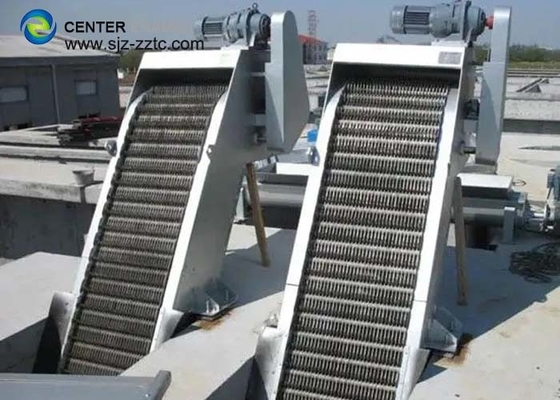
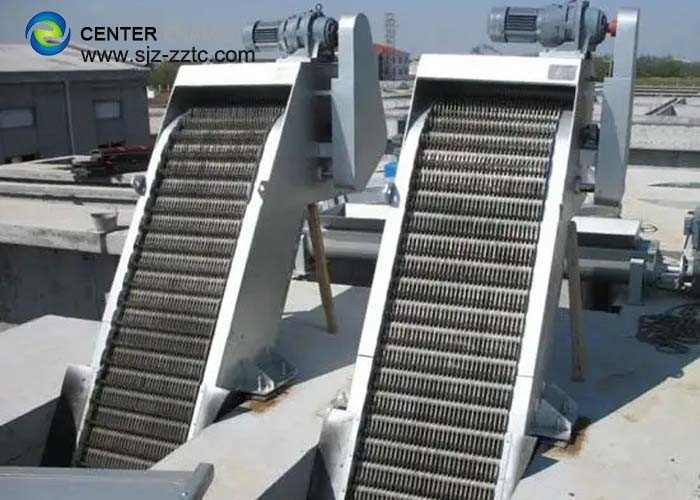
Mechanical Bar Screen for Wastewater Treatment Projects: Ensuring Optimal Screening Efficiency
Product Details
| Place of Origin: | China |
| Brand Name: | CEC TANKS |
| Certification: | ISO 9001:2008, AWWA D103 , OSHA , BSCI |
| Model Number: | W20161227006 |
Payment & Shipping Terms
| Minimum Order Quantity: | 1set |
| Price: | $5000~$20000 one set |
| Packaging Details: | PE poly-foam between each two steel plates ; wooden pallet and wooden box |
| Delivery Time: | 0-60 days after deposit received |
| Payment Terms: | L/C,T/T |
| Supply Ability: | 60 sets per month |
|
Detail Information |
|||
| Place of Origin | China | Brand Name | CEC TANKS |
|---|---|---|---|
| Certification | ISO 9001:2008, AWWA D103 , OSHA , BSCI | Model Number | W20161227006 |
| Applications: | Water , Waste Water, Digester , Reactor , Grain , Sludge , Chemicals | Acid And Alkalinity Proof: | PH1 - PH14 |
| Usage: | Waste Water Treatment , Sewage Treatment, Effluent Treatment, Ect. | Defect Free: | Minimum Maintenance Needed |
| Installation: | By Jacking Machine Or Steel Pole, Fast In Installation | Highlight: | Alkalinity Proof Mechanical Bar Screen,Wastewater Treatment Mechanical Bar Screen |
Product Description
Mechanical Bar Screen for Wastewater Treatment Projects: Ensuring Optimal Screening Efficiency
In municipal wastewater treatment plants, industrial effluent facilities, and stormwater pump stations, the primary treatment stage sets the operational foundation for the entire plant. Raw influent arriving at the headworks carries a diverse mixture of coarse solids, rags, plastics, paper, wood, and floating debris. If left unmanaged, these materials cause severe mechanical damage, clog downstream pumps, foul biological treatment reactors, and disrupt biological processes.
To safeguard plant infrastructure and achieve peak solid-liquid separation, modern facilities rely on the Mechanical Bar Screen. As a trusted global leader in environmental engineering and wastewater containment systems, Shijiazhuang Zhengzhong Technology Co., Ltd. (Center Enamel) delivers advanced, high-efficiency mechanical bar screening solutions designed to ensure uninterrupted headworks operation.
The Critical Role of Bar Screens in Wastewater Pretreatment
As the frontline defense of any wastewater treatment plant (WWTP), mechanical bar screens perform vital engineering functions:
-
Protection of Downstream Equipment: Capturing coarse debris prevents entanglement and wear in downstream centrifugal pumps, grit collectors, aeration blowers, and sludge dewatering machinery.
-
Continuous Automated Operation: Unlike manual bar racks that require constant operator intervention and risk overflowing during peak flow surges, mechanical bar screens operate automatically based on timer intervals or differential liquid level triggers.
-
Hydraulic Flow Optimization: Maintaining clean screening bars prevents head loss accumulation, ensuring smooth, predictable influent channel velocity and consistent plant hydraulic throughput.
Technical Superiority of Center Enamel's Mechanical Bar Screens
Center Enamel's mechanical screening systems incorporate advanced structural and mechanical features engineered for durability in harsh sewage environments:
-
Corrosion-Resistant Stainless Steel Construction: Fabricated primarily from high-grade austenitic stainless steel (such as Grade 304 or 316), the screen bars, frame, and rake mechanisms resist hydrogen sulfide corrosion, moisture, and chemical attack.
-
Precision Bar Spacing and Raking Efficiency: Engineered with exact bar clearances (ranging from fine to coarse spacing), the automated rake mechanism continuously clears trapped debris from the screen field, lifting solids cleanly out of the water channel without jamming.
-
Low Energy Consumption and Smart Control: Integrated with intelligent control panels, the system operates efficiently on demand, minimizing power usage while maximizing debris removal rates.
Comparative Matrix: Wastewater Screening Technologies
| Evaluation Metric | Center Enamel Mechanical Bar Screen | Traditional Manual Bar Rack | Static Inclined Wedge Wire Screen |
| Automation & Labor | Fully Automated (Continuous self-cleaning rake mechanism requires zero manual clearing) | Low (Requires labor-intensive manual raking and frequent clearing) | Moderate (Passive screening with no moving parts, but prone to rapid blinding) |
| Screening Efficiency & Flow | High (Maintains low head loss and consistent throughput under heavy loads) | Variable (Prone to sudden head loss spikes if operators delay manual cleaning) | Moderate (Vulnerable to surface blinding and overflow during peak surges) |
| Corrosion Defense & Lifespan | Superior (High-grade stainless steel construction ensures 25+ years of service) | Variable (Dependent on structural steel painting and prone to rust) | High (Corrosion-resistant wedges, but limited self-cleaning capability) |
| Operational Reliability | High (Continuous duty-cycle engineering prevents clogging and pump failure) | Low (High risk of sewage backup and pump damage during unattended surges) | Moderate (Requires frequent manual washdowns to clear grease and fine solids) |
Engineering Assurance: Every mechanical bar screen engineered by Center Enamel undergoes rigorous factory testing for mechanical alignment, motor torque limits, and structural load capacity, ensuring reliable, continuous-duty performance in demanding municipal and industrial headworks.
Frequently Asked Questions (FAQ)
Q: What is the primary function of a mechanical bar screen in a wastewater treatment plant?
A: A mechanical bar screen is installed at the headworks of a wastewater treatment plant to capture and remove coarse solids, rags, plastics, and floating debris from raw incoming sewage, protecting downstream pumps and treatment equipment from damage and clogging.
Q: How does an automatic mechanical bar screen clean itself?
A: The system utilizes an automated rake mechanism driven by a motor and chain or cable assembly. Triggered by a timer or a differential water level sensor across the screen, the rake travels across the bar grid, lifts trapped solids out of the channel, and discharges them into a conveyor or collection bin.
Q: What materials are used to manufacture Center Enamel's mechanical bar screens?
A: Center Enamel constructs its mechanical bar screens using premium corrosion-resistant stainless steel (primarily Grade 304 or 316), ensuring exceptional resistance to moisture, hydrogen sulfide gases, and aggressive municipal or industrial wastewater environments.
Q: Can bar spacing be customized for specific project requirements?
A: Yes. Bar spacing can be custom-engineered to meet specific pretreatment requirements, ranging from coarse screening (for large debris removal) to fine screening specifications depending on downstream treatment sensitivities.
Want to Know more details about this product
Similar Products
Shijiazhuang Zhengzhong Technology Co., Ltd
sales@cectank.com86-20-34061629
Fuli Commercial Center room 301#, Xingang West Rd.11#, Haizhu area, Guangzhou, Guangdong province, China.
China Good Quality Glass Fused To Steel Tanks Supplier. Copyright © 2016-2026 cectanks.com . All Rights Reserved.