-
Glass Fused To Steel Tanks (596)
-
Stainless Steel Tanks (434)
-
Fusion Bonded Epoxy Tanks (592)
-
Galvanized Steel Tanks (321)
-
Aluminum Dome Roofs (1336)
-
Wastewater Storage Tanks (232)
-
Welded Steel Tanks (457)
-
Pressure Vessels (295)
-
Anaerobic Digester (202)
-
Industrial Water Tanks (349)
-
Glass Lined Steel Tanks (180)
-
Bolted Steel Tanks (389)
-
Sludge Storage Tank (115)
-
Biogas Storage Tank (173)
-
Leachate Storage Tanks (133)
-
Agricultural Water Storage Tanks (179)
-
Fire Water Tank (166)
-
Grain Storage Silos (146)
-
Biogas Projects (424)
-
Wastewater Treatment Projects (1178)
-
Double Membrane Roof (223)
|
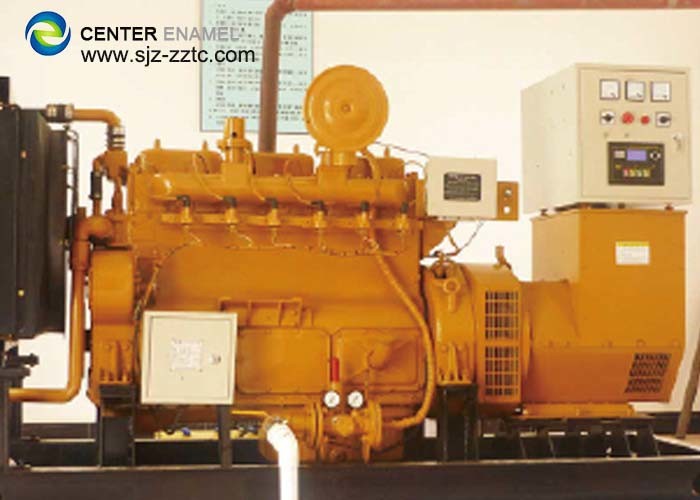
Biogas Generators for Biogas Projects: Maximizing Energy Recovery and Efficiency
| Place of Origin: | China |
| Brand Name: | CEC TANKS |
| Certification: | ISO 9001:2008, AWWA D103 , OSHA , BSCI |
| Model Number: | W201609013 |
| Minimum Order Quantity: | 1set |
| Price: | $5000~$20000 one set |
| Packaging Details: | PE poly-foam between each two steel plates ; wooden pallet and wooden box |
| Delivery Time: | 0-60 days after deposit received |
| Payment Terms: | L/C,T/T |
| Supply Ability: | 60 sets per month |
|
Detail Information |
|||
Product Description
As global industrial facilities, municipal wastewater treatment plants, and large agricultural farms adopt anaerobic digestion to manage organic waste and curb greenhouse gas emissions, capturing methane is only half the operational equation. To turn waste-to-energy projects into profitable, self-sustaining assets, operators must convert the captured biogas into reliable electricity and thermal energy. Without high-performance power conversion equipment, valuable renewable gas goes underutilized or wasted.
To bridge the gap between biological waste digestion and clean power generation, modern facilities rely on advanced Biogas Generators for Biogas Projects. Leveraging decades of expertise in anaerobic digestion and environmental engineering, Shijiazhuang Zhengzhong Technology Co., Ltd. (Center Enamel) integrates world-class biogas generation systems that maximize energy recovery, ensure electrical stability, and accelerate project return on investment.
A successful biogas plant requires seamless synergy between the biological digestion reactor—such as Center Enamel's modular Glass-Fused-to-Steel (GFS) anaerobic tanks—and the power conversion genset. Biogas generators perform several vital functions:
- Conversion of Methane into Usable Power: Utilizing internal combustion engines optimized for low-to-medium BTU biogas (typically 50% to 70% methane), these generators produce steady electrical power for on-site facility consumption or grid export.
- Combined Heat and Power (CHP) Co-Generation: Advanced CHP configurations capture waste thermal energy from engine exhaust and cooling jackets, routing hot water or steam back to the anaerobic digester to maintain optimal biological reaction temperatures (mesophilic or thermophilic ranges).
- Mitigation of Environmental Emissions: Transforming raw biogas into electricity prevents fugitive methane release, directly supporting corporate net-zero carbon mandates and environmental compliance.
Center Enamel's engineered biogas generation solutions incorporate advanced technological features designed to withstand the unique properties of renewable gas:
- Robust Gas Conditioning Integration: High-performance desulfurization, moisture knockout, and siloxane removal units protect engine internal components from corrosive hydrogen sulfide (H_2S) and abrasive deposits.
- High Electrical and Thermal Efficiency: Modern lean-burn engine designs optimize air-fuel ratios, delivering high electrical conversion efficiency while minimizing NOx emissions.
- Modular and Scalable Configuration: Gensets are engineered in modular footprints that scale effortlessly from small farm-scale biogas projects to massive municipal wastewater co-generation facilities.
| Evaluation Metric | Center Enamel Integrated Biogas CHP Genset | Basic Electrical-Only Generator | Direct Gas Flaring (No Generation) |
|---|---|---|---|
| Energy Utilization Efficiency | High (Combined electrical and thermal recovery exceeds 80% total efficiency) | Low (Converts only a fraction of gas to electricity; thermal energy is lost) | Zero (Destroys methane without recovering electrical or thermal power) |
| Digester Temperature Support | Self-Sustaining (CHP waste heat directly warms the anaerobic digestion tank) | Dependent (Requires external boilers or auxiliary heaters to maintain warmth) | None (Does not provide thermal recovery for biological processes) |
| Financial Return on Investment | High (Offsets facility power bills and generates revenue via grid feed-in tariffs) | Moderate (Limited revenue due to lower overall energy harvesting) | Negative (Ongoing operational cost with zero energy payback) |
| Environmental Impact | Net-Positive (Replaces fossil fuels and cuts carbon emissions significantly) | Positive (Reduces emissions but wastes recoverable heat energy) | Baseline (Prevents raw methane venting, but squanders energy asset potential) |
Engineering Assurance: All biogas generation and anaerobic digestion systems engineered by Center Enamel comply strictly with global safety and electrical engineering benchmarks, ensuring reliable, continuous-duty performance in demanding industrial environments.
A: Biogas contains variable methane percentages, moisture, and trace contaminants like hydrogen sulfide (H_2S) that can corrode standard engines. Specialized biogas generators feature corrosion-resistant internal components, modified compression ratios, and pre-combustion gas conditioning to handle renewable gas safely.
A: CHP systems generate both electricity and usable thermal energy simultaneously. The waste heat recovered from the engine is channeled back to heat the anaerobic digestion tank, maintaining the precise thermal conditions required for maximum bacterial activity and biogas production.
A: Yes. Center Enamel provides comprehensive turnkey solutions, seamlessly connecting our modular Glass-Fused-to-Steel (GFS) anaerobic digesters, gas holders, and desulfurization units directly with high-efficiency biogas generation and CHP systems.
A: Routine maintenance includes monitoring gas purity and moisture levels, servicing desulfurization filters, performing oil and spark plug changes at scheduled operating hours, and conducting regular emissions tuning to maintain peak electrical efficiency.