-
Glass Fused To Steel Tanks (596)
-
Stainless Steel Tanks (434)
-
Fusion Bonded Epoxy Tanks (592)
-
Galvanized Steel Tanks (321)
-
Aluminum Dome Roofs (1336)
-
Wastewater Storage Tanks (232)
-
Welded Steel Tanks (457)
-
Pressure Vessels (295)
-
Anaerobic Digester (202)
-
Industrial Water Tanks (349)
-
Glass Lined Steel Tanks (180)
-
Bolted Steel Tanks (389)
-
Sludge Storage Tank (115)
-
Biogas Storage Tank (173)
-
Leachate Storage Tanks (133)
-
Agricultural Water Storage Tanks (179)
-
Fire Water Tank (166)
-
Grain Storage Silos (146)
-
Biogas Projects (424)
-
Wastewater Treatment Projects (1078)
-
Double Membrane Roof (223)

|
Center Enamel Provides CSTR Reactor for Pulp and Paper Industry: Advanced Anaerobic Treatment Solutions
| Place of Origin: | China |
| Brand Name: | CEC TANKS |
| Certification: | ISO 9001:2008, AWWA D103 , OSHA , BSCI |
| Model Number: | W |
| Minimum Order Quantity: | 1set |
| Price: | $5000~$20000 one set |
| Packaging Details: | PE poly-foam between each two steel plates ; wooden pallet and wooden |
| Delivery Time: | 10-30 days after deposit received |
| Payment Terms: | L/C,T/T |
| Supply Ability: | 60 sets per month |
|
Detail Information |
|||
| Place of Origin | China | Brand Name | CEC TANKS |
|---|---|---|---|
| Certification | ISO 9001:2008, AWWA D103 , OSHA , BSCI | Model Number | W |
| Tank Material: | Glass Fused To Steel | Foundation: | Concrete Or Glass Fused Steel |
| Steel Plates Thickness: | 3mm To 12mm , Depends On The Tank Structure | Size Of Panel: | 2.4M * 1.2M |
| Easy To Clean: | Smooth, Glossy, Inert, Anti-adhesion | Permeability: | Gas / Liquid Impermeable |
| Highlight: | CSTR reactor for pulp industry,biogas CSTR reactor,enamel CSTR reactor |
||
Product Description
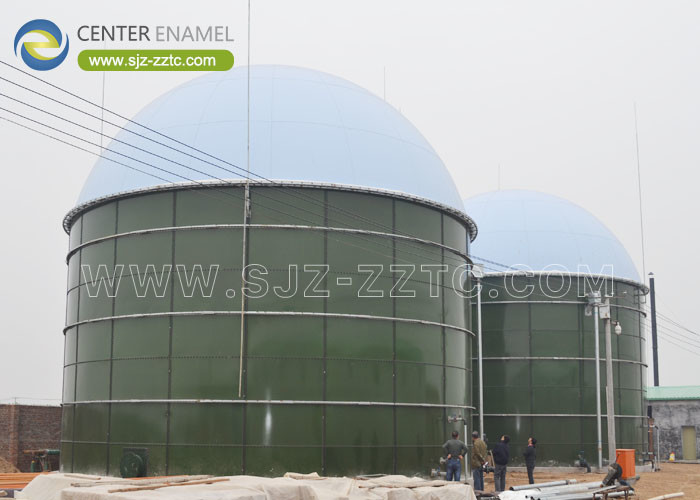
A Continuous Stirred-Tank Reactor (CSTR) for the pulp and paper industry is an advanced, heavy-duty anaerobic digestion system engineered specifically to treat complex, high-strength industrial effluent generated by pulp mills and paper manufacturing plants. Pulp and paper production consumes vast water resources and yields wastewater laden with recalcitrant lignin, cellulose fibers, suspended solids, and bleaching chemicals, resulting in exceptionally high Chemical Oxygen Demand (COD). By combining continuous mechanical agitation with robust Glass-Fused-to-Steel (GFS) tank construction, Center Enamel delivers CSTR systems that ensure uniform biological mixing, prevent solids stratification, and maximize methane-rich biogas recovery under aggressive operating conditions.
Pulp and paper processing facilities face severe environmental and operational hurdles regarding wastewater compliance and effluent management:
Complex, Recalcitrant Organic Loadings: Effluents contain high concentrations of lignin, tannins, and resin acids that resist rapid biological breakdown, creating massive COD and BOD loads.
Suspended Solids and Sludge Settling Issues: High fiber and particulate content in pulp mill waste tends to form floating mats or heavy sludge layers in conventional basins, clogging equipment and stalling biological digestion.
High Corrosivity and Temperature Extremes: Pulp mill wastewater frequently exhibits acidic or alkaline pH shifts and contains sulfur compounds that aggressively corrode standard carbon steel or concrete containment structures.
Unlike fixed-bed reactors, Center Enamel’s CSTR systems feature heavy-duty industrial agitators and optimized internal baffling designed to keep high-solids pulp waste continuously suspended. This ensures intimate contact between anaerobic microbes and complex organic molecules, accelerating digestion rates.
The internal environment of a pulp mill anaerobic digester generates moisture, organic acids, and hydrogen sulfide. Center Enamel utilizes GFS technology—fusing inorganic glass enamel to structural steel at over 800°C—to create an impenetrable, inert barrier that completely resists chemical attack without requiring interior recoating.
By converting complex cellulose and lignin derivatives into biogas (CH4 and CO2) under strict anaerobic conditions, pulp mills can capture renewable energy to power internal boilers, significantly reducing operational carbon footprints and energy overhead.
| Performance Metric | Center Enamel GFS CSTR Reactor | Conventional Aerobic Lagoon | Upflow Anaerobic Sludge Blanket (UASB) |
|---|---|---|---|
| High Solids & Fiber Handling | Superior (Continuous mechanical mixing prevents clogging) | Low (Fibers accumulate and cause odor and scum mats) | Low (Prone to clogging with high suspended solids) |
| Corrosion Resistance | Superior (Inert glass enamel barrier against acids & H2S) | Low (Vulnerable to chemical degradation) | High (When constructed with GFS panels) |
| Energy Consumption | Low (Anaerobic process requiring no oxygen aeration) | Very High (Continuous intensive mechanical aeration) | Low (Anaerobic process) |
| Design Lifespan | 30–50+ Years | 10–15 Years | 30–50+ Years |
Center Enamel’s CSTR containment tanks are engineered in strict compliance with international structural and industrial standards, including AWWA D103, ISO 28765, and ISO 9001, guaranteeing precision fabrication, reliable bolting, and long-term structural safety for global pulp mill projects.
A: A Continuous Stirred-Tank Reactor (CSTR) is used for high-rate anaerobic digestion of pulp and paper mill wastewater, breaking down complex organic pollutants like lignin and high COD loads while generating renewable biogas.
A: Glass-Fused-to-Steel (GFS) tanks provide an inert, non-porous vitreous glass surface that resists harsh acids, sulfides, and aggressive chemical byproducts inherent in pulp and paper processing, ensuring a 30+ year lifespan.
A: CSTR systems utilize continuous mechanical agitation and engineered internal mixing to keep fibrous solids uniformly suspended, preventing the scum formation and settling issues that plague conventional basins.
A: Yes. By capturing methane-rich biogas produced during the breakdown of organic effluent, pulp mills can utilize the gas to offset thermal and electrical energy requirements.
At Center Enamel, we combine advanced manufacturing capabilities with deep environmental engineering expertise to deliver robust, high-performance CSTR anaerobic digestion and liquid containment solutions for pulp, paper, and industrial processing plants worldwide.
Are you planning a pulp mill wastewater treatment upgrade or biogas recovery project? Contact our engineering team today for a technical consultation, capacity sizing, and a customized proposal.